Number Matching File Folder Task Boxes
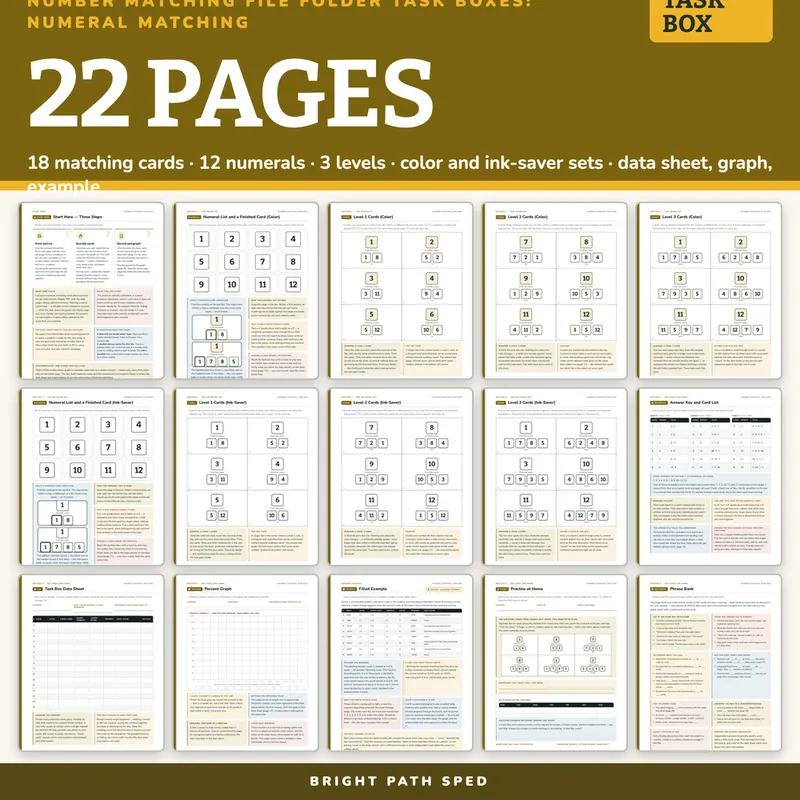
- 22 pages
- Not Grade Specific
$1.50 $3.00 on Teachers Pay Teachers
Half the Teachers Pay Teachers price. The same PDF, sold direct.
DownloadOr get it with All-Access: pick any 20 resources a month for $7.
New here? Your first month of All-Access is half off with code TEACHERTOK
Already bought this, or a member?
Instant download. One teacher's license: colleagues need their own copy. Each file carries a license number.
Also on Teachers Pay Teachers: see the Bright Path Sped store
About this resource
What Makes A Card Harder, And The One Pair That Never Meets
Reading a numeral isn't the same as counting with one, and this box only asks for the first: a child looks at the numeral on top and hunts for its twin among the tiles below. Nearly any two numerals are allowed to land on one card — telling them apart is the whole point — with a single exception. Turn a 6 upside down and it becomes a 9, close enough that shape alone could settle it without anyone reading the numeral at all, so the build keeps that pair off every card.
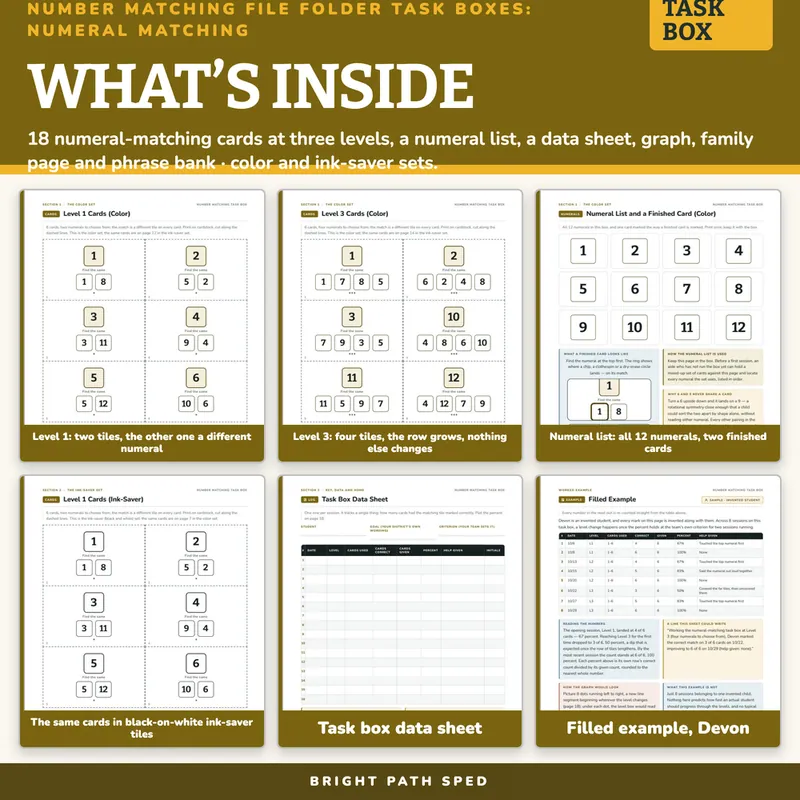
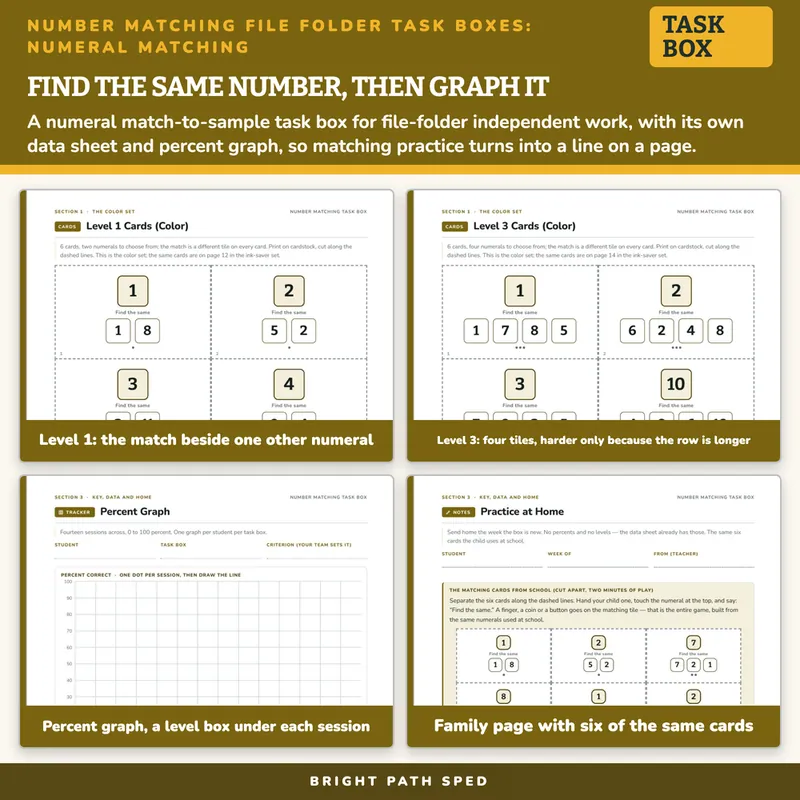
- Level 1 — 6 cards, 2 tiles: the match against one other numeral.
- Level 2 — 6 cards, 3 tiles: the match against two other numerals.
- Level 3 — 6 cards, 4 tiles: the match against three other numerals, asking only for a longer look across the row, never a close call between two numerals that look alike.
From card to card at every level, the matching tile moves to a different spot in the row (never sitting first every time), so a student who is guessing by position instead of reading the numeral shows up clearly on the data sheet.
A dot code tucked in the corner — one, two or three dots — is the only place a card's level ever appears, so a box that gets shuffled sorts itself back out.
What This Is, And What It Isn'T
Type straight into the data sheet, the graph header, the family page and the example-style notes, or print it all and use a pen — either way, this is a fillable PDF. Cards and the numeral list are meant for cardstock or plain paper, cut along dashed lines, six to a sheet, every cut a straight line. No account and no subscription; it opens and works offline. It is NOT an editable online slideshow or a word-processor document, it does not teach counting or explain what a numeral stands for, and it isn't a test of anything.
No prompt hierarchy, fading schedule or mastery rule rides along inside it, and nothing here decides what a percent should mean for a student or when a level change is due. The goal line and the criterion field stay blank, waiting on your district's own wording and your team's own number. What it tracks is narrow and specific: how many cards had the matching tile marked correctly.
Who This Is For
Special education teachers and paraprofessionals running independent work stations, file-folder tasks or task box rotations for students ready to match numerals by sight; case managers who need that practice turned into data; and the families who take the practice page home.
More In The Collection
This set belongs to the Task Box Collection, where new sort, counting, matching and sequencing boxes keep joining the same cards-plus-data shape on a regular basis.