Phonics Progress Monitoring Probes FREE
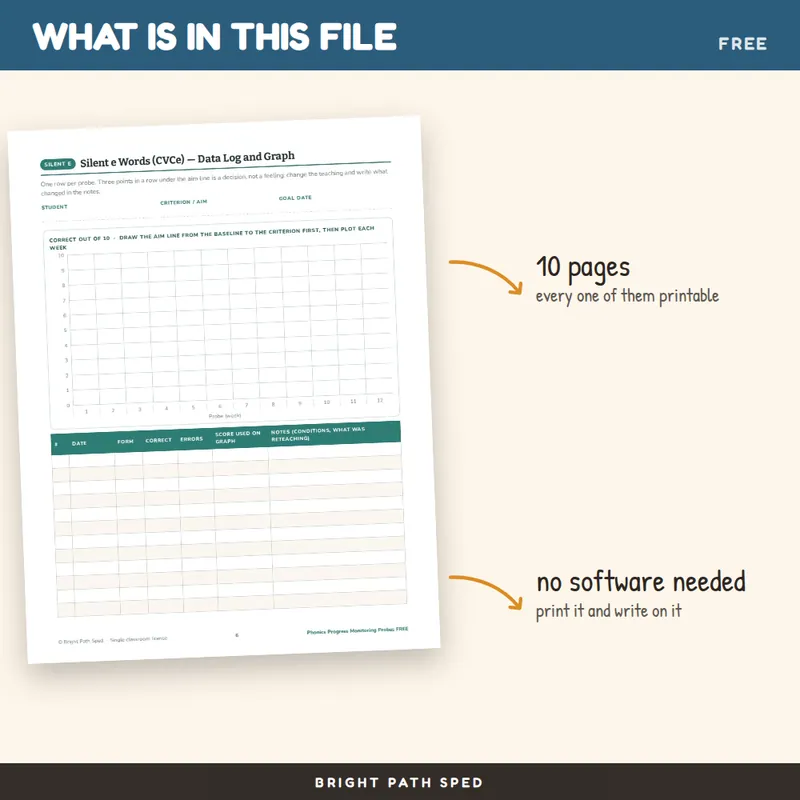
- 10 pages
- PreK, Kindergarten, 1st, 2nd
Also on Teachers Pay Teachers: see the Bright Path Sped store
About this resource
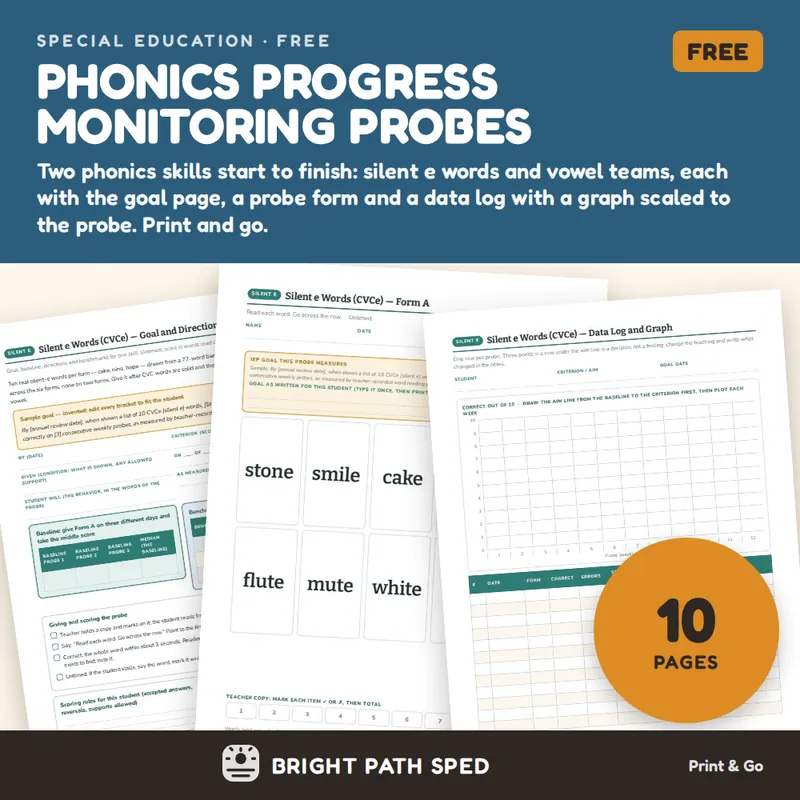
Two phonics skills start to finish, free: the goal, the probe that measures it, and the graph the decision is read from. Silent e words and vowel teams. Print and go.
Both probes are untimed and ten items long, so a score of 8 means the same thing every week, and no student is scored on speed.
WHAT IS INCLUDED - 10 pages, 2 skills
For Each Skill
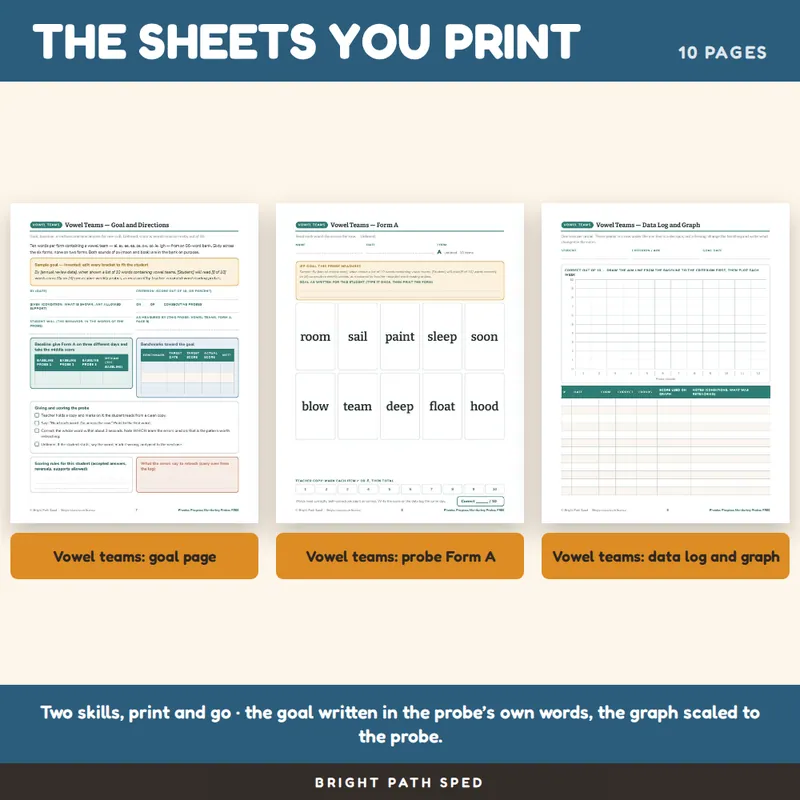
- A goal page: what the probe measures, a sample goal written in the probe's own words (invented, every bracket edited by your team), the six-part goal frame, a baseline table for three probes and the median, benchmark rows, the administration and scoring directions, and lines for this student's own scoring rules
- Probe Form A: ten words, printed large, with the goal on the sheet the person giving the probe is holding
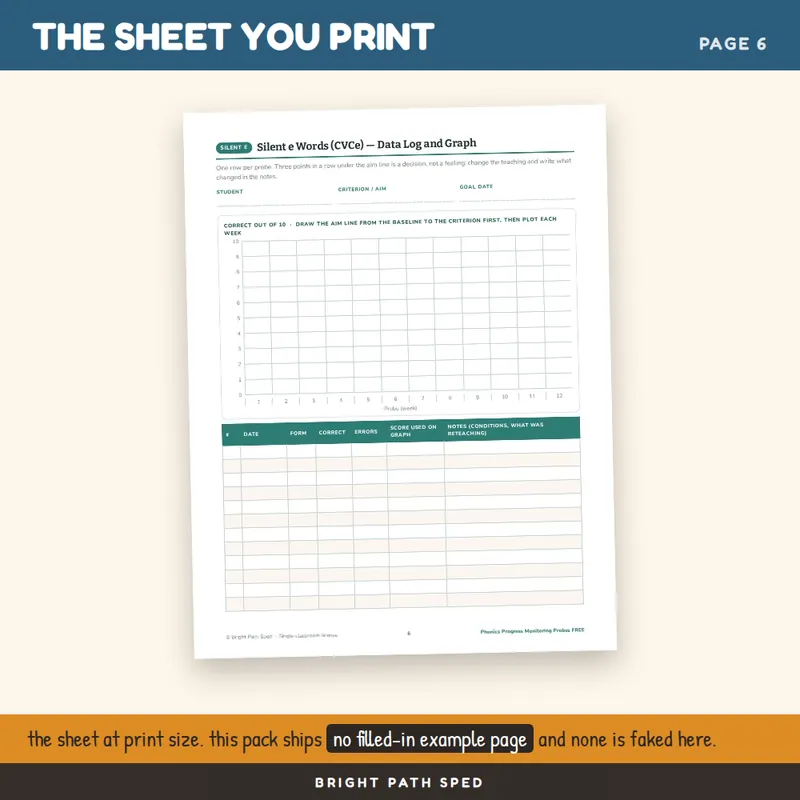
- A data log and graph: twelve rows, a y-axis already scaled 0 to 10, and the aim line drawn first
The Two Skills
- Silent e (CVCe) words - ten real silent-e words covering all five long vowels. Reading the vowel short (cap for cape) is the error this probe exists to find
- Vowel teams - ten words with ai, ay, ee, ea, oa, ow, oo, ie or igh. Both sounds of oo are in the bank on purpose, because a student who has only learned one of them should show it
Plus
- How These Pages Work: the six steps (baseline, write the goal, weekly probe, log and plot, decide from the graph, keep the conditions the same), the weekly routine, and the print plan
What This Is Not
Not a norm-referenced assessment. It carries no benchmark scores or "typical" rates; the criteria in the sample goals are in brackets because your team sets them from the baseline and the student's IEP. This free version has ONE form per skill; a weekly goal needs forms to rotate, or the student memorizes the page. It is a print PDF, not a Google Form or a spreadsheet, and it does not calculate or draw the graph.
If You Want More
Who This Is For
Special education teachers and case managers writing decoding goals for any age student, first and second grade intervention and Title teachers, and the paraprofessionals who give the weekly probe.