Rapid Automatic Naming RAN Probes
- 22 pages
- PreK, Kindergarten, 1st, 2nd
$3.50
DownloadOr get it with All-Access: pick any 20 resources a month for $7.
New here? Your first month of All-Access is half off with code TEACHERTOK
Already bought this, or a member?
Instant download. One teacher's license: colleagues need their own copy. Each file carries a license number.
Also on Teachers Pay Teachers: see the Bright Path Sped store
About this resource
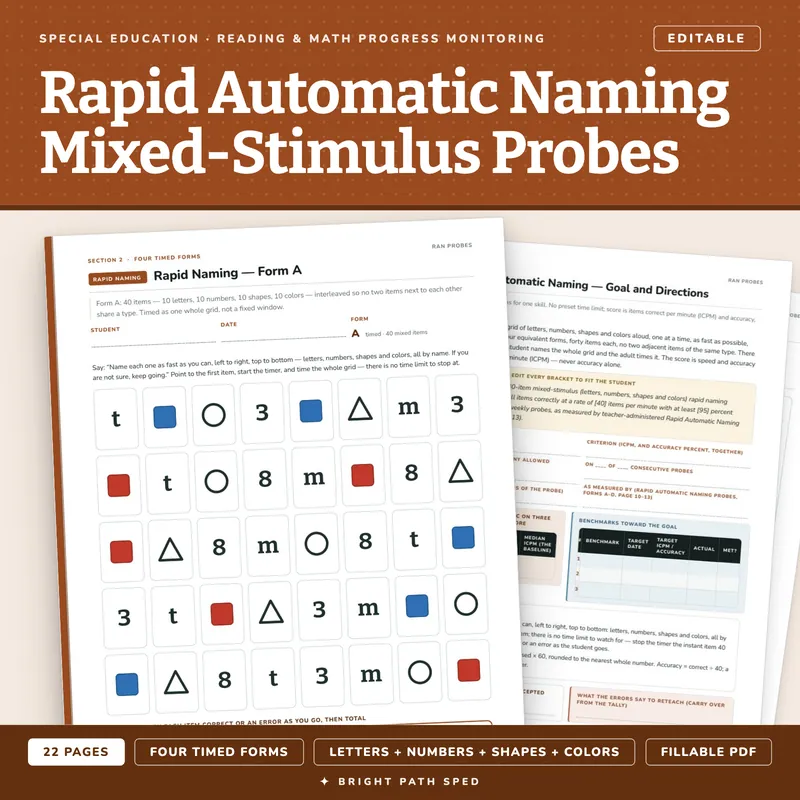
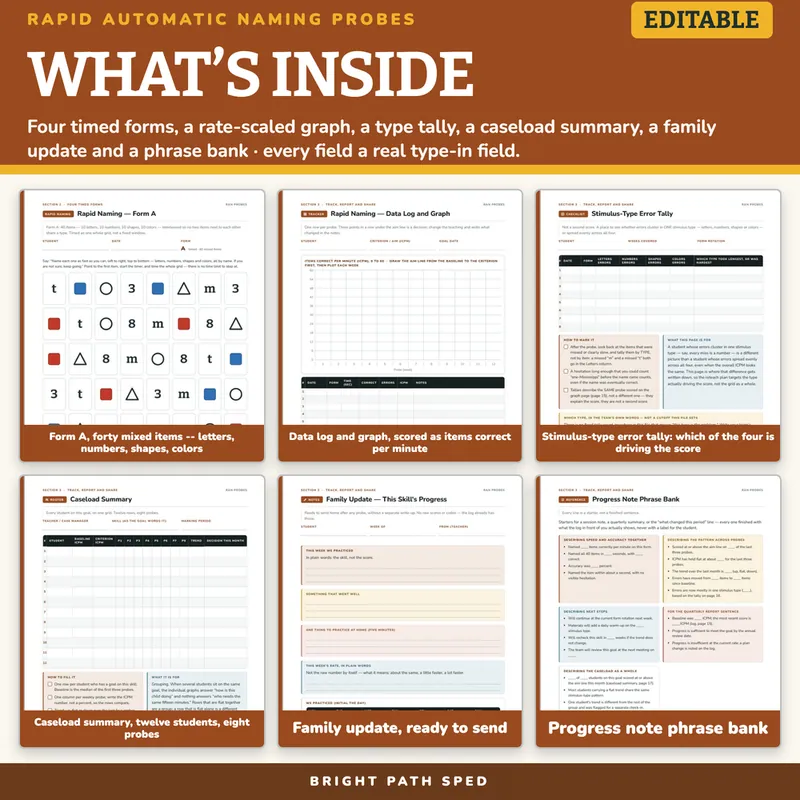
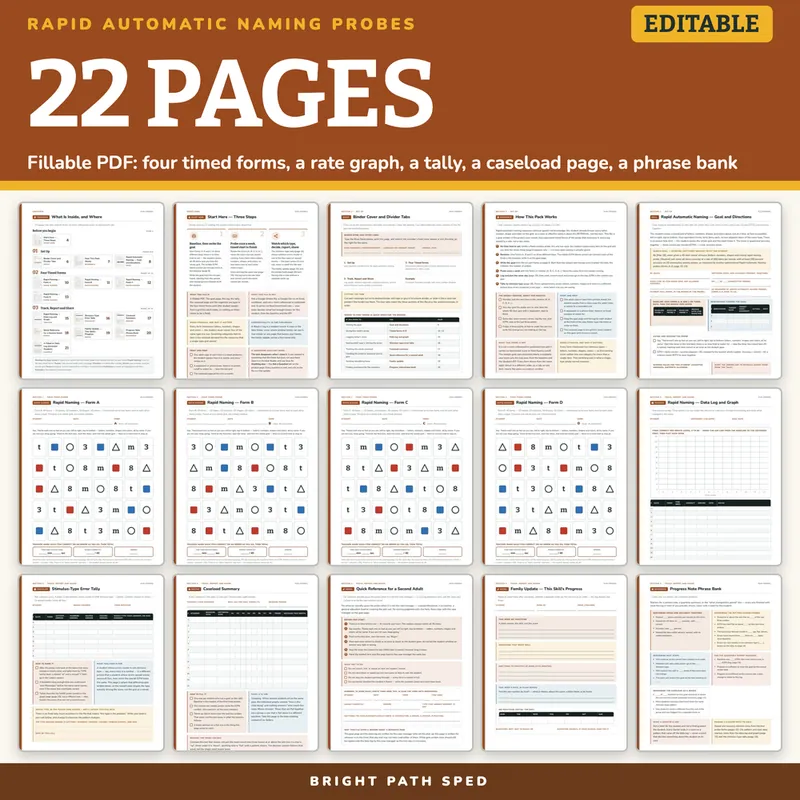
Everything inside: 22 pages · four timed forms (40 mixed letters, numbers, shapes and colors each) · a data log and graph scored as items correct per minute · a stimulus-type error tally · a caseload summary · a quick reference card for a second adult · a family update · a 19-starter phrase bank · a binder cover and 4 cut-out divider tabs · a worked, invented example.
Rapid automatic naming measures retrieval speed, not knowledge: the student already knows every letter, number, shape and color on the grid, so a slow or effortful name is about the retrieval, not the item — a documented predictor of reading fluency. This file interleaves four stimulus types on one grid (letters, numbers, shapes, colors), never four of the same type in a row, because switching categories item to item is the retrieval demand a single-type grid cannot measure. There is no preset time limit: the student names the full 40-item grid and the adult times how long it took, start to finish, then logs the rate (items correct per minute) and accuracy together.
WHAT IS INCLUDED — 22 pages, 377 type-in fields
Set Up
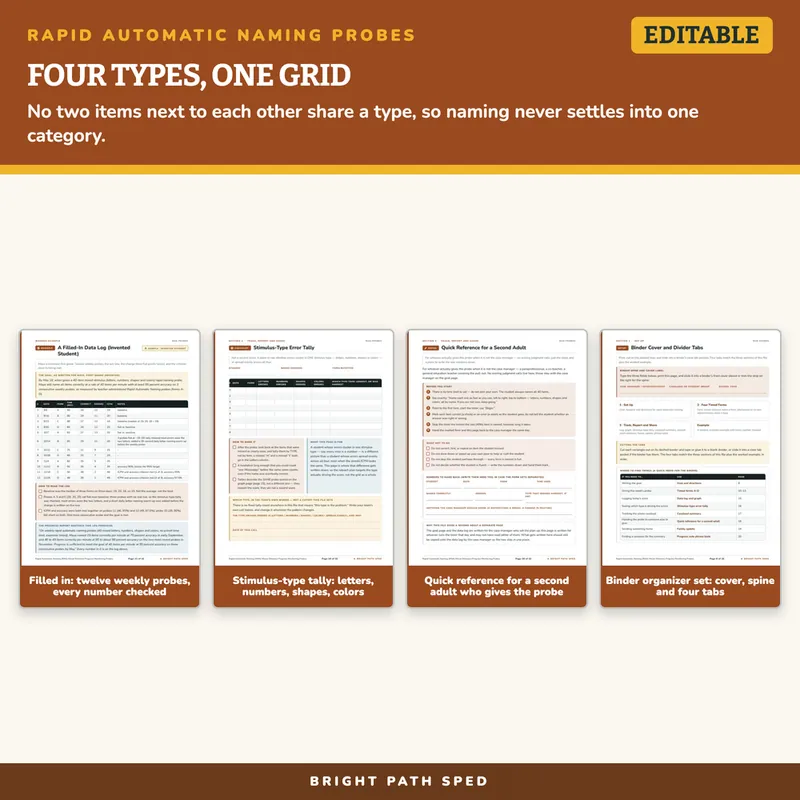
- Binder Cover and Divider Tabs — a spine/cover card, 4 cut-out tabs, and an 8-row "where to find things" index
- How This Pack Works — six numbered steps from baseline to weekly routine to reteach decision
- Rapid Automatic Naming — Goal and Directions — a sample goal with a six-part fill-in frame, a 3-probe baseline table, a 3-row benchmark table, and scoring directions including the ICPM (items correct per minute) formula
Four Timed Forms
- Forms A-D — 40 items each (10 letters, 10 numbers, 10 shapes, 10 colors), interleaved so no two items next to each other share a type, each with its own time/correct/errors scoring strip. No time limit is set in advance — the student names every item and the adult times the whole grid.
Track, Report And Share
- Rapid Naming — Data Log and Graph — a 12-row log (date, form, time, correct, errors, ICPM, notes) and a graph scaled 0-60 ICPM
- Stimulus-Type Error Tally — an 8-row tally log (errors by letters / numbers / shapes / colors) plus a write-in note on which type is driving the score — the team's own call, never a fixed cutoff
- Caseload Summary — 12 students by 8 probes, one decision column
- Quick Reference for a Second Adult — six numbered steps, a "what not to do" list, and a mini scoring strip to hand back, for whoever gives the probe when it is not the case manager
- Family Update — a ready-to-send communication page: what was practiced, one win, a home-practice idea, this week's rate in plain words, and a 7-day practiced table
- Progress Note Phrase Bank — 19 observable-language starters across 5 groups (speed/accuracy, pattern across probes, next steps, quarterly report sentence, caseload-wide)
- A Filled-In Data Log — a worked, invented example (Maya, first grade) with 12 weekly probes, every ICPM and accuracy number checked against its own row
Plus a Start Here quick-start, a 3-section contents page with real page thumbnails, 3 section dividers, and a "what's next" back page.
What This Is, And What It Is Not
It is a fillable PDF. Open it in a PDF reader, click a field, type, Save As once per student. It works offline with no account or subscription. It is NOT a Google Sheets file, a Google Doc, or an Excel workbook, and it is not a norm-referenced or published test — it carries no benchmark score or fixed fluency cutoff anywhere in the file, and it is not a reproduction of any commercially normed naming-speed instrument. The four timed forms print (an oral task — the student speaks from the grid, never writes on it); the goal page, log, tally, caseload page and organizer are type-in.
It is not the store's Letter Naming Progress Monitoring Probes (untimed, letters only), Math Counting Fluency and Number Identification Speed Probes (timed, numbers only, a fixed time limit), Number Sense and Quantity Fluency Probes (timed, but each of its seven forms is still one stimulus type), or Word Retrieval Expressive Naming Progress Monitoring Probes (untimed cued naming from a spoken description, no grid). This file is the only one in the store that interleaves letters, numbers, shapes and colors on a single timed grid.
It is not a curriculum, a diagnostic tool, or a rule about how many items per minute counts as "fast enough." What fast enough means for a given student is the team's own judgment, written in from the baseline and the IEP; this file never sets that number on its own — the stimulus-type tally page is a blank the team fills in, by design. No age, eligibility or IDEA-timeline claim anywhere; no health data is pre-filled, and the example student (Maya) is invented and named as such on page 21.
Who This Is For
Reading interventionists, speech-language pathologists, special education teachers and case managers who need a timed, repeatable naming-speed measure — plus a second, condensed page for whoever else gives the probe.
If You Want More
Letter Naming Progress Monitoring Probes is the untimed, letters-only companion. Math Counting Fluency and Number Identification Speed Probes is the timed, numbers-only companion with a fixed time limit. Number Sense and Quantity Fluency Probes covers seven more timed number-sense skills. Word Retrieval Expressive Naming Progress Monitoring Probes is a different retrieval task entirely — cued naming from a spoken description rather than reading a grid aloud.
You might also need
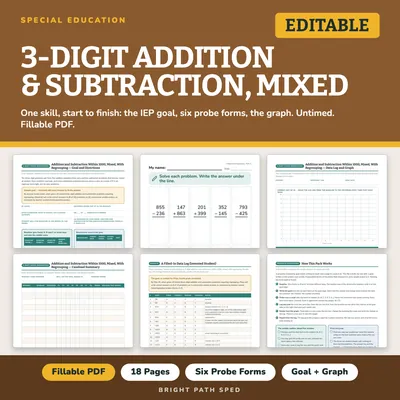
3-Digit Addition and Subtraction Mixed Regrouping Probes
$3.50 or with All-Access
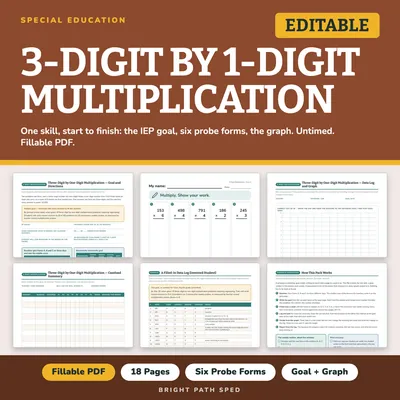
3-Digit by 1-Digit Multiplication Progress Monitoring Probes
$3.50 or with All-Access
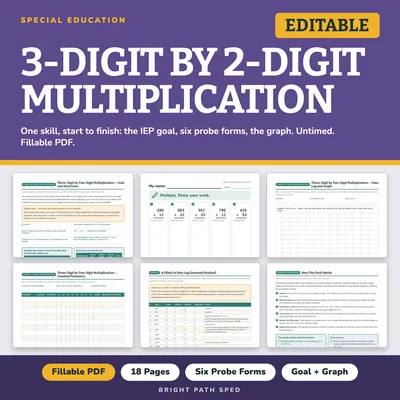
3-Digit by 2-Digit Multiplication Progress Monitoring Probes
$3.50 or with All-Access
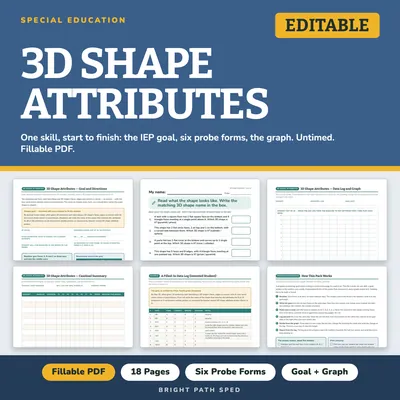
3D Shape Attributes (Faces/Edges/Vertices) Probes
$3.50 or with All-Access