Reading Intervention Data Sheets FREE
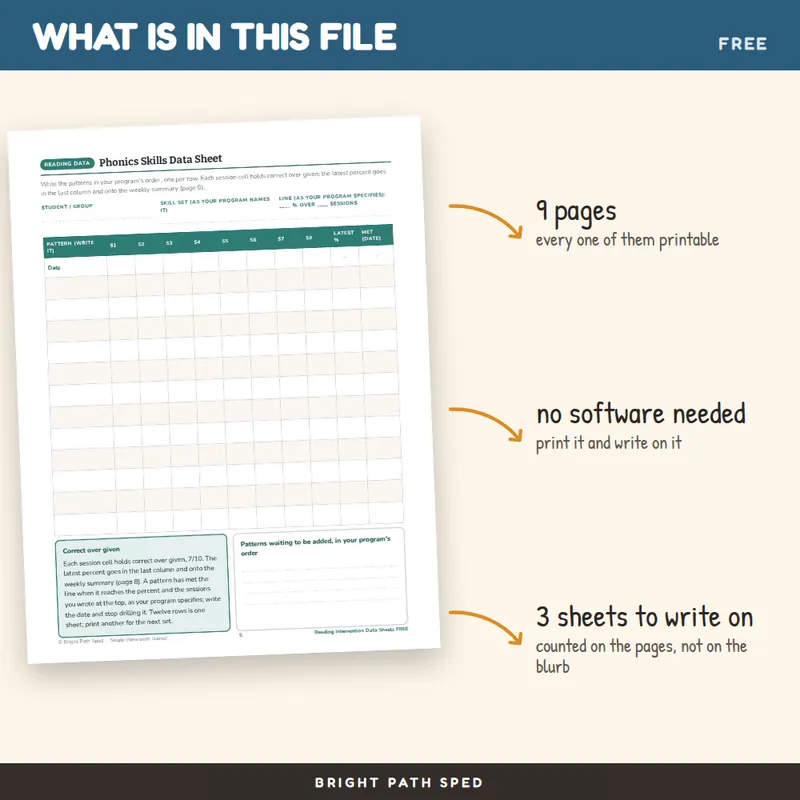
- 9 pages
- Kindergarten, 1st, 2nd, 3rd, 4th, 5th
Also on Teachers Pay Teachers: see the Bright Path Sped store
About this resource
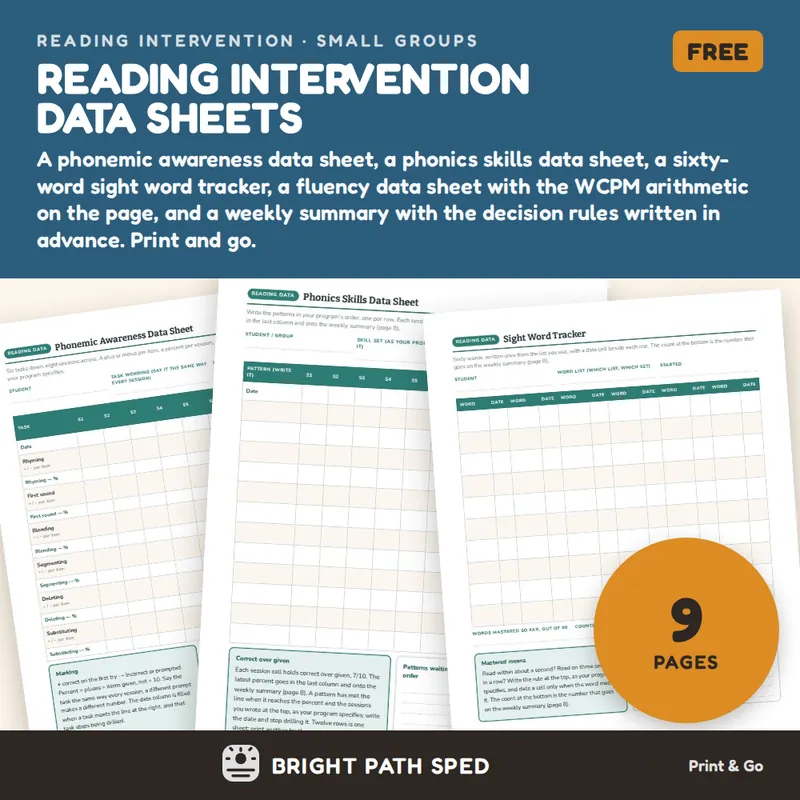
For the complete system with type-in fields across 20 pages plus a fluency graph and exit decision sheet, try Reading Intervention Data Sheets Editable. This free version is the core: the five sheets a small reading group is measured on, print and go: a phonemic awareness data sheet, a phonics skills data sheet, a sixty-word sight word tracker, a fluency data sheet with the WCPM arithmetic printed on the page, and the weekly progress monitoring summary with the decision rules written in advance.
WHAT IS INCLUDED - 9 pages, 5 sheets
- Phonemic Awareness Data Sheet - six tasks (rhyming, first sound, blending, segmenting, deleting, substituting) by eight sessions, a plus-or-minus row and a percent row per task, a date row across the top, and a date cell for when each task met the line your program specifies
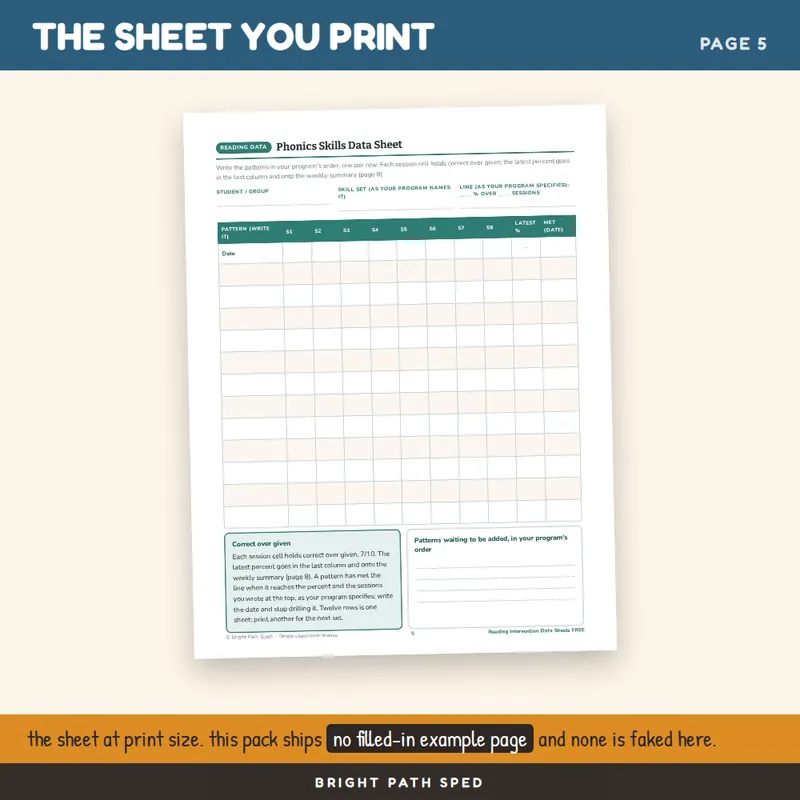
- Phonics Skills Data Sheet - 12 pattern rows you write in your program's order, by eight sessions, correct over given in each cell, a latest percent column and a date met column
- Sight Word Tracker - 60 word cells in a 6 by 10 grid with a date cell beside each one, and a count line (words mastered so far, counted on, next list starts)
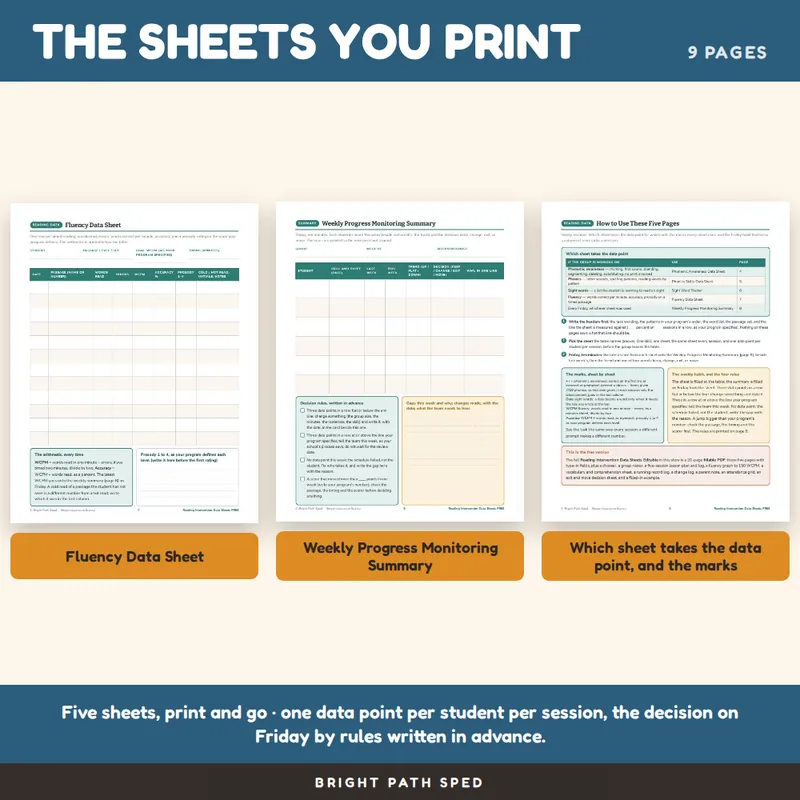
- Fluency Data Sheet - 12 rows: date, passage, words read, errors, WCPM, accuracy percent, prosody 1 to 4, cold or hot read and initials, with the arithmetic (WCPM = words read minus errors; accuracy = WCPM over words read) printed beside the table
- Weekly Progress Monitoring Summary - 6 student rows: skill and sheet, last week, this week, trend, decision (keep, change, exit, move) and why, with the four decision rules printed on the page and a box for gaps and changes
- How to Use These Five Pages - a table matching the skill the group is working on to the sheet that takes the data point, the three-step routine, the marks every sheet uses, and the Friday habit
The Full Pack
What This Is Not
Not a program, not a set of probes, and not a curriculum. It does not say which skill to teach next, what a student at a given grade should read, or what score means a student is done; your program and your team say that, and every place a threshold would go has a blank for it. It is a print PDF: nothing here calculates a percent or draws a graph, and it is not a spreadsheet.
Who This Is For
Reading interventionists and Title I teachers running small groups, special education teachers and case managers with a reading goal on the caseload, the paraprofessionals who take the data at the table, and classroom teachers asked to track a small group's progress the same way every week.