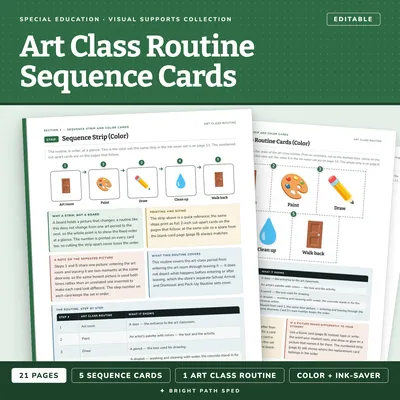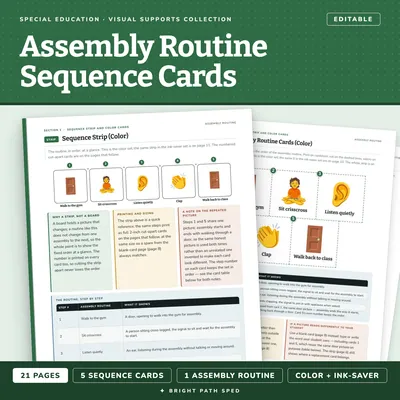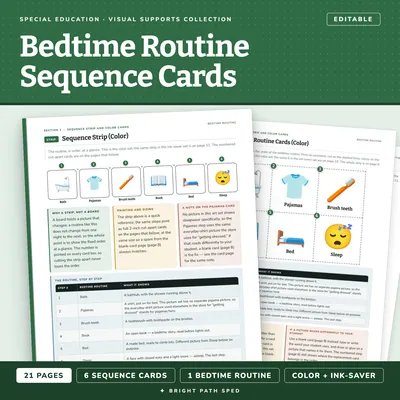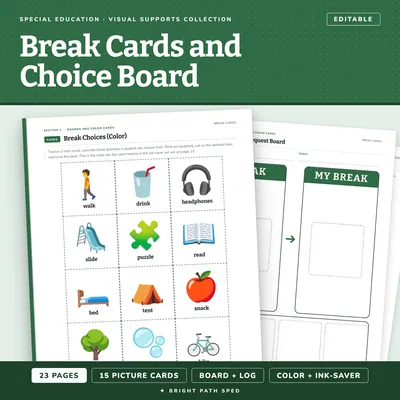
Apology Sequence Wearable Ring Cards
- 19 pages
- Not Grade Specific
$4.00
DownloadOr get it with All-Access: pick any 20 resources a month for $7.
New here? Your first month of All-Access is half off with code TEACHERTOK
Already bought this, or a member?
Instant download. One teacher's license: colleagues need their own copy. Each file carries a license number.
Also on Teachers Pay Teachers: see the Bright Path Sped store
About this resource
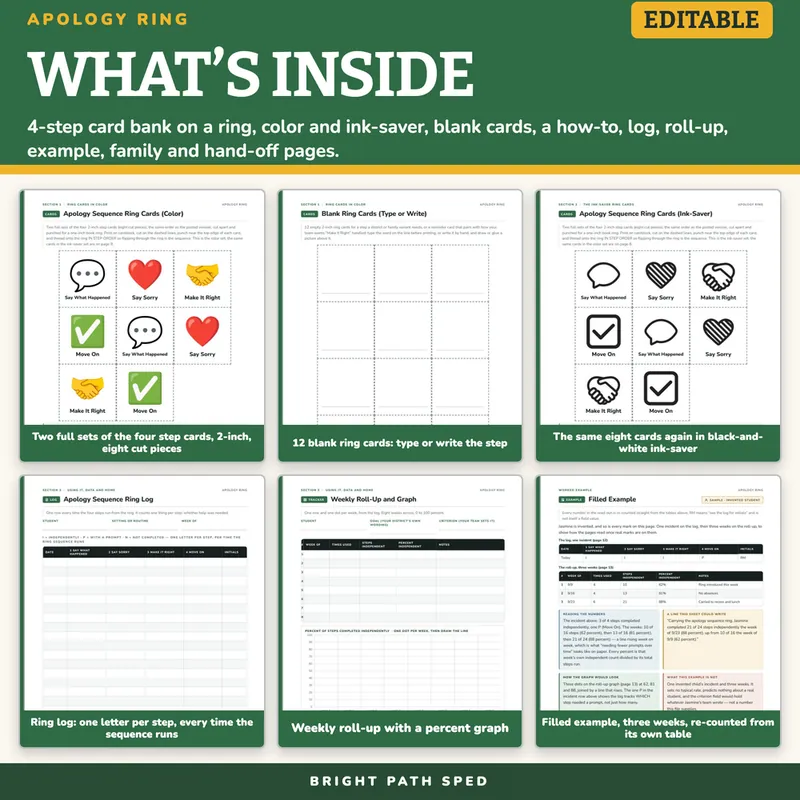
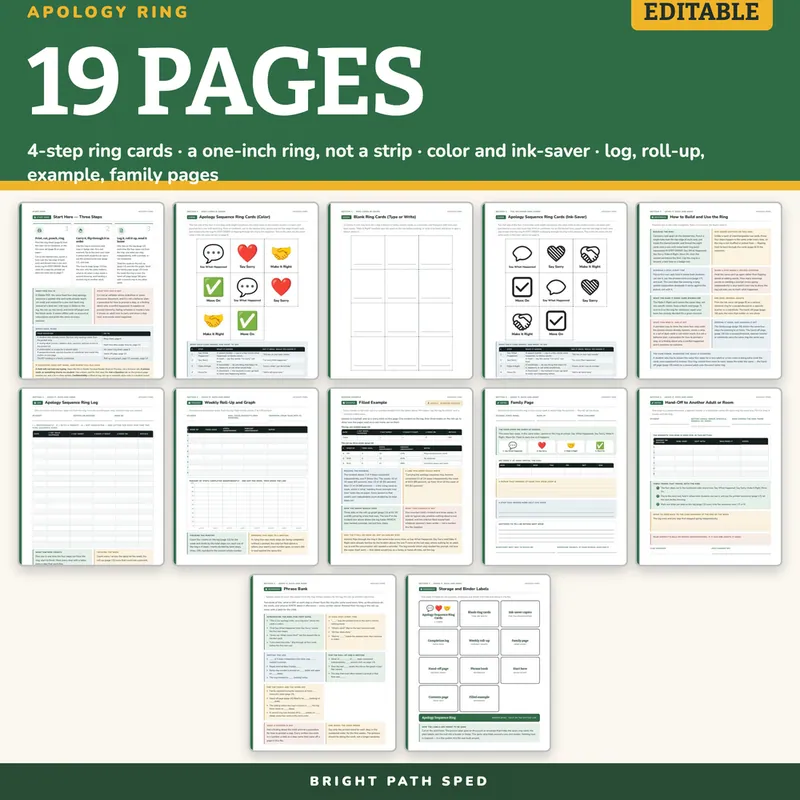
EVERYTHING INSIDE — 19 pages
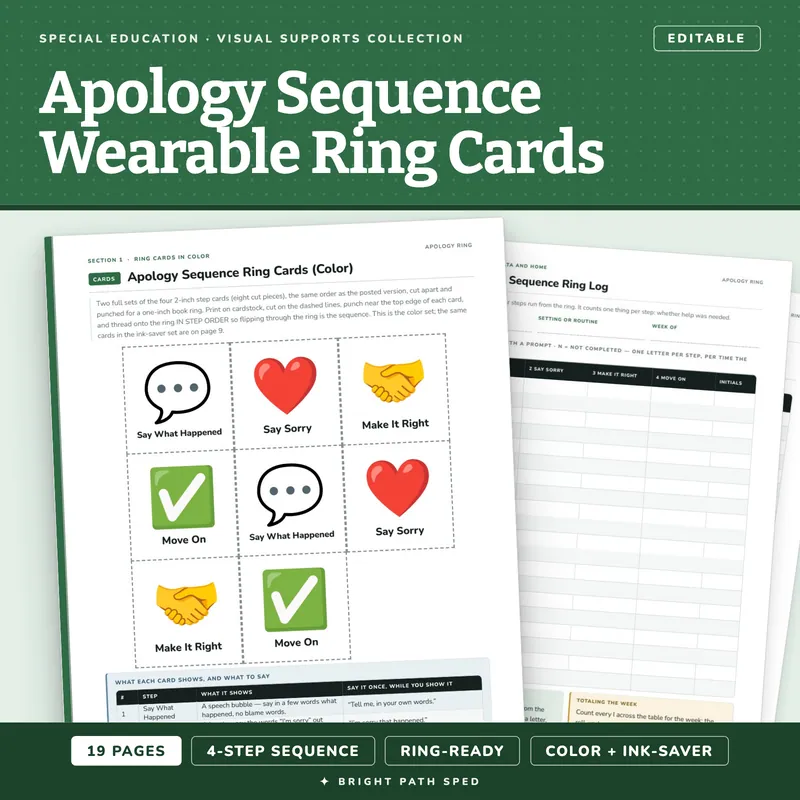
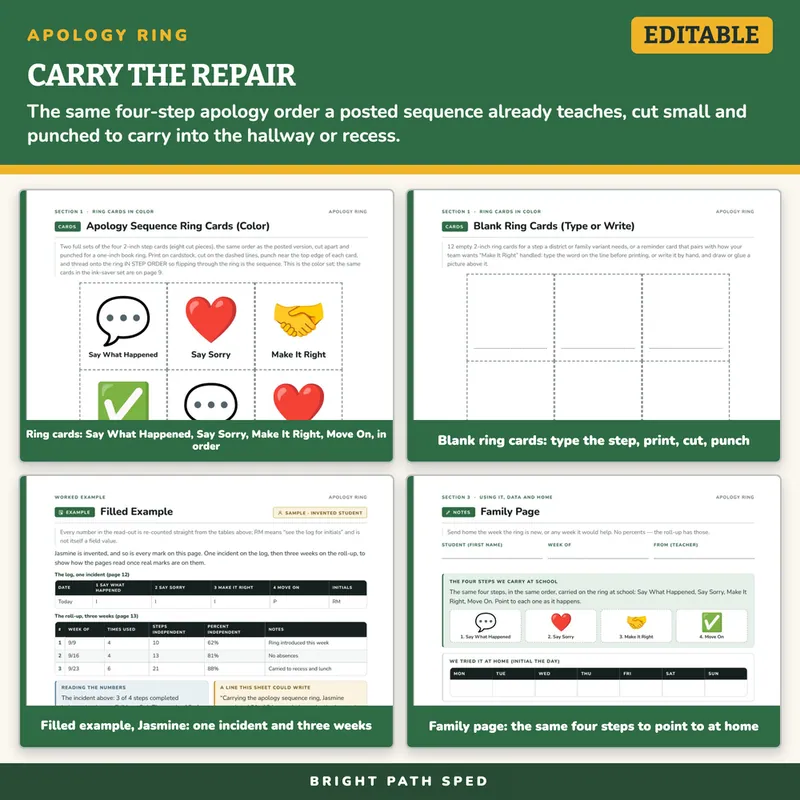
- 8 cut-apart ring cards, 2 inches square: two full sets of the same four apology steps (Say What Happened, Say Sorry, Make It Right, Move On), in the same order both times, punched for a one-inch book ring
- Every card twice: a full-color set for the ring and a black-and-white ink-saver set for a spare ring or a second adult
- A "what each card shows, and what to say" reference printed right on the ring sheet, so the card, the picture and the spoken line never separate
- 12 blank ring cards with a type-in word line, for a step a district or family variant needs, or a reminder card for how your team wants a repair handled
- A how-to page: building the ring (cut, punch, thread, in step order), why the order matters on this ring, showing a step, when a step needs a second showing, what the Make It Right card stands for, one ring for several adults, what this ring is and is not, sending it home and handing it off
- An Apology Sequence Ring Log (20 rows: one letter per step — independently, with a prompt, or not completed — each time the sequence runs)
- A weekly roll-up (8 weeks) with a percent-of-steps-independent graph
- A filled example — an invented student, one incident and three weeks on the roll-up, every percent re-counted from its own row
- A family page with the same four steps to point to at home and a week of home tries to initial
- A hand-off page so a paraprofessional, specials teacher or substitute carries the same ring the same way
- A phrase bank: 20 lines in 5 groups (spoken lines for showing a card in order, written starters for the log, the roll-up and the note home)
- A storage and binder label sheet: 11 labels and a spine strip
- Start Here, a contents page with page thumbnails, and a "what's next" back page
The strip-and-cards version of this same four-step order stays where it is posted at a desk or on a wall. This file prints no strip and no practice page: the same four cards, in the same fixed order, cut small, punched near the top edge and threaded onto a one-inch book ring, so the sequence travels on a lanyard or belt clip with whoever is wearing it — to recess, the cafeteria, a specials class, or anywhere a posted version is not within reach.
THE STEPS (reused verbatim from the posted version, same words and pictures)
1. Say What Happened — a speech bubble; say in a few words what happened
2. Say Sorry — a heart; say the words out loud
3. Make It Right — a handshake; do one thing that helps
4. Move On — a checkmark; the moment is over
Unlike a bank of interchangeable cue cards, these four steps are not a choice to pick from — they happen in the same order every time, so the ring sheet prints the same four cards twice (eight cut pieces total) rather than splitting them across two sheets: thread the first set, then the second, in order, and flipping front to back through the ring IS the sequence.
What This Is, And What It Is Not
It is a fillable PDF: type into the log, the roll-up, the family page, the hand-off page and the blank cards, or print and use a pen. The card sheet prints on cardstock or plain paper, cuts along dashed lines, and punches near the top edge for a one-inch book ring (sold separately). It works offline with no account or subscription. It is NOT an editable online slideshow or word-processor document.
It is a way for an adult to carry the same four-step order a posted version already teaches, so it travels from room to room, and to write down whether a step was completed without a prompt. It is not a behavior plan, a procedure for how to prompt a step, or a finding about why a conflict happened, and it promises no outcome. It supplies no prompt hierarchy, fading schedule or mastery rule. The goal line and the criterion field are blanks for your district's own wording and your team's own number.
Who This Is For
Special education teachers, paraprofessionals and specials teachers who already teach the four-step apology order and need it to travel with a roving adult — recess duty, cafeteria duty, a specials class, a substitute — plus the case managers who need that use to show up as data, and the families who get the home page sent home.
More In The Collection
This single sits alongside Apology Picture Cards and 4-Step Practice Sequence (the posted strip, cards and student practice-page version of the same four steps), Friendship Skills Cue Cards and Log, and Social Stories When Someone Is Unkind; more picture-card sets — schedule cards, routine strips, choice boards — are being added to the collection regularly, all on the same cards-plus-data shape.
Pictures (color pages): Noto Emoji by Google, Apache License 2.0. Pictures (ink-saver pages): Fluent Emoji, Copyright (c) Microsoft Corporation, MIT License.