Art Class Routine Visual Schedule Cards
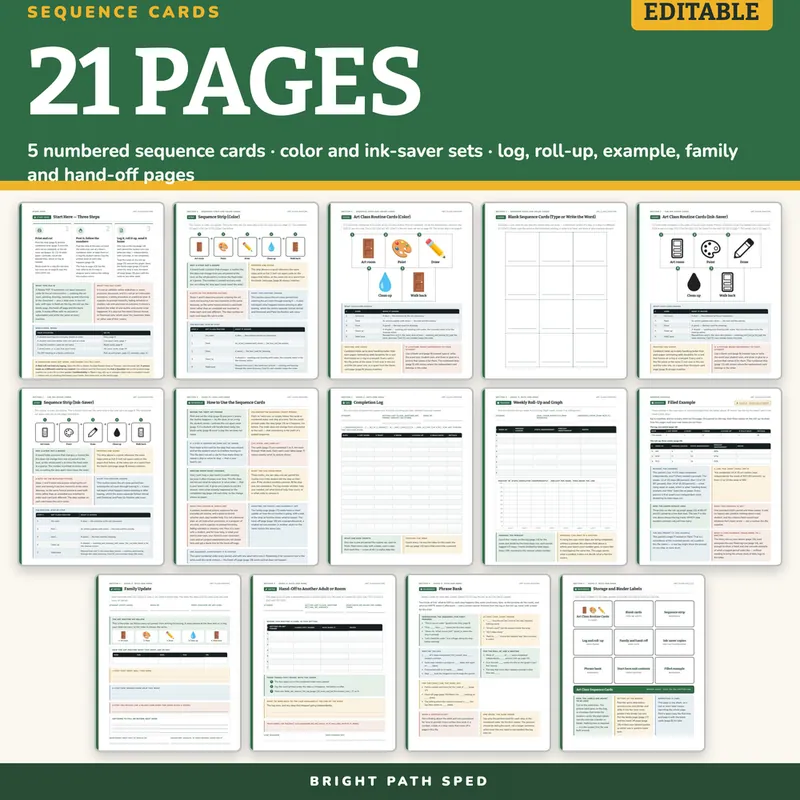
- 21 pages
- Not Grade Specific
$3.50
DownloadOr get it with All-Access: pick any 20 resources a month for $7.
New here? Your first month of All-Access is half off with code TEACHERTOK
Already bought this, or a member?
Instant download. One teacher's license: colleagues need their own copy. Each file carries a license number.
Also on Teachers Pay Teachers: see the Bright Path Sped store
About this resource
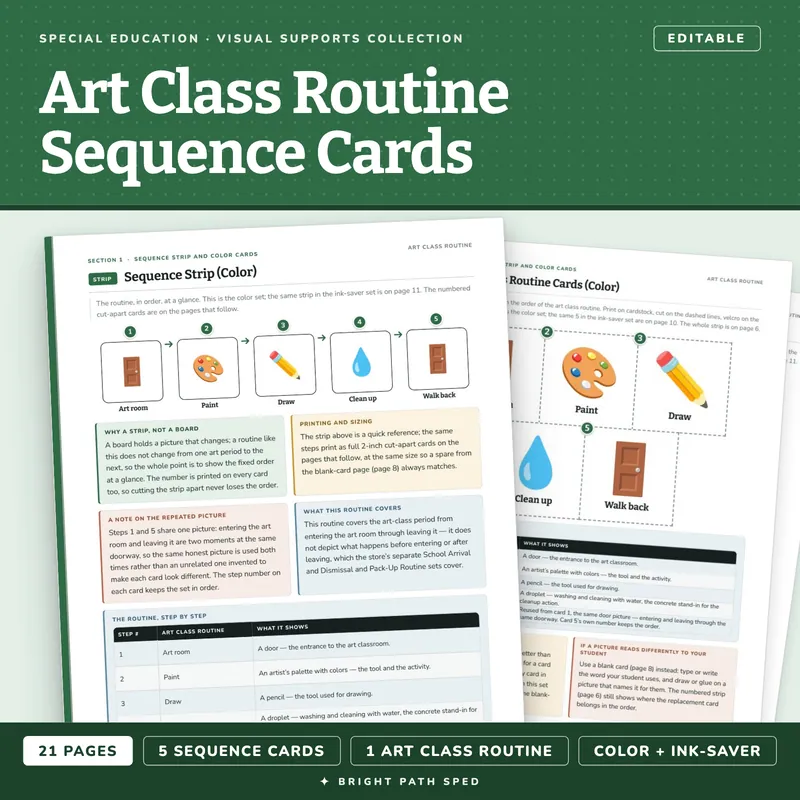
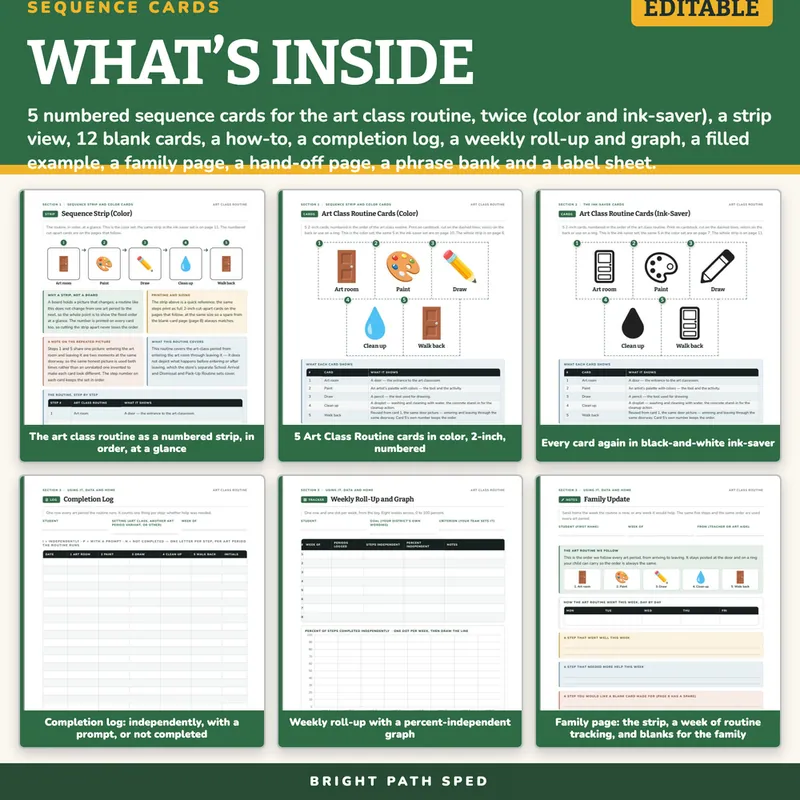
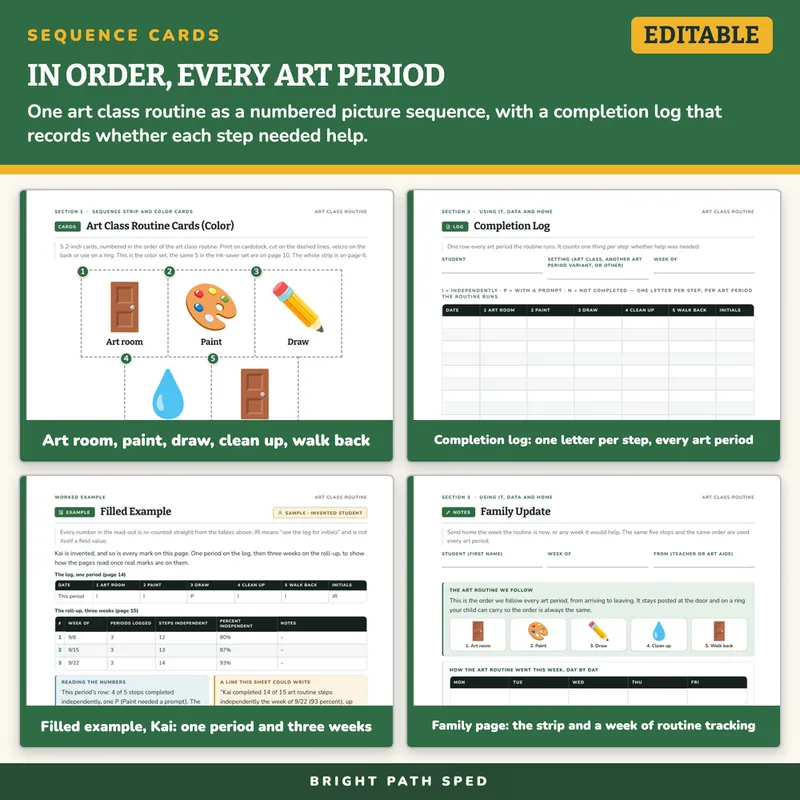
A posted, numbered sequence for the art class routine that comes with its own data. Most routine-sequence sets stop at the pictures; this one adds a completion log, a weekly roll-up and a phrase bank behind it, so a step that stops needing a prompt turns into a line on a page a case manager can bring to a meeting.
The Routine
- Art Class (5 steps) — art room, paint, draw, clean up, walk back
Every picture was chosen to be named in one word by a young child, in color AND in the black-and-white set: a door, a palette with colors, a pencil, a water droplet (for cleanup), and a door again. All five were checked directly at card size in both art sets before this file was built and read clearly with no substitute picture needed. Cards are 2 inches square. The Paint card's picture is a palette (this art set depicts the tool for painting), and the Clean Up card's picture is a water droplet (the concrete stand-in for washing/cleanup, since the action of cleaning up has no single drawable picture).
The Strip
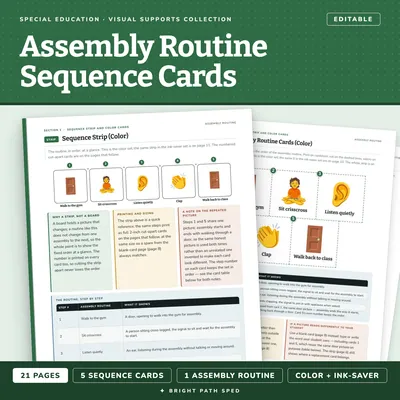
A quick-reference view of the whole routine in numbered order on one page, in color and in ink-saver, so the fixed order is visible at a glance without cutting anything apart. The number prints on every cut-apart card too, so a dropped or reshuffled set can always be put back in order. The routine begins with entering the art room and ends with leaving it, so the sequence closes on a stable next step rather than stopping mid-activity.
Picture Reuse Disclosure
Steps 1 (Art room) and 5 (Walk back) share one door picture. Entering the art room and leaving it are two moments at the same doorway, and no second Unicode picture distinguishes them — both states are the same real-world object (a door). Rather than force a second, unrelated picture onto a step that is honestly the same physical doorway, the identical picture is used again and disclosed, not hidden: the card's own description text on both the card-detail table (pages 7 and 10) and the strip page (page 6) says plainly that this is the same picture as step 1 and why. A dedicated callout card on the strip page repeats the same note. The step number on each card keeps the set in order.
What This Is, And What It Is Not
It is a fillable PDF: type into the log, the roll-up, the family page, the hand-off page and the blank cards, or print and use a pen. The card and strip pages print on cardstock or plain paper and cut along dashed lines. It works offline with no account or subscription. It is NOT an editable online slideshow or word-processor document.
It is a posted, numbered picture sequence for one everyday classroom routine, and a place to record whether each step needed help. It is not a safety procedure, an art instruction procedure, a behavior plan, or a program of any kind, and it promises no outcome. It carries no prompt hierarchy, fading schedule or mastery rule; how it is used with a student, and for how long, is what your team's plan says. The goal line and the criterion field are blanks for your district's own wording and your team's own number. The log counts one thing per step: whether help was needed, not what kind or in what order to remove it.
Who This Is For
Special education teachers and paraprofessionals who teach everyday routine sequences to early, pre-reading or emerging-language students, case managers who need that teaching to show up as data, and the families who get the update sent home.
More In The Collection
This is part of the Visual Supports Collection, alongside Cafeteria Routine Visual Schedule Cards, Recess Routine Visual Schedule Cards, and Bedtime Routine Visual Schedule Cards; more picture-card sets — routine strips, choice boards, calm-down cards — are being added to the collection regularly, all on the same cards-plus-data shape.
Pictures (color pages): Noto Emoji by Google, Apache License 2.0. Pictures (ink-saver pages): Fluent Emoji, Copyright (c) Microsoft Corporation, MIT License.