Big Problem vs Small Problem Sort
- 23 pages
- Not Grade Specific
$2.25 $4.50 on Teachers Pay Teachers
Half the Teachers Pay Teachers price. The same PDF, sold direct.
DownloadOr get it with All-Access: pick any 20 resources a month for $7.
New here? Your first month of All-Access is half off with code TEACHERTOK
Already bought this, or a member?
Instant download. One teacher's license: colleagues need their own copy. Each file carries a license number.
Also on Teachers Pay Teachers: see the Bright Path Sped store
About this resource
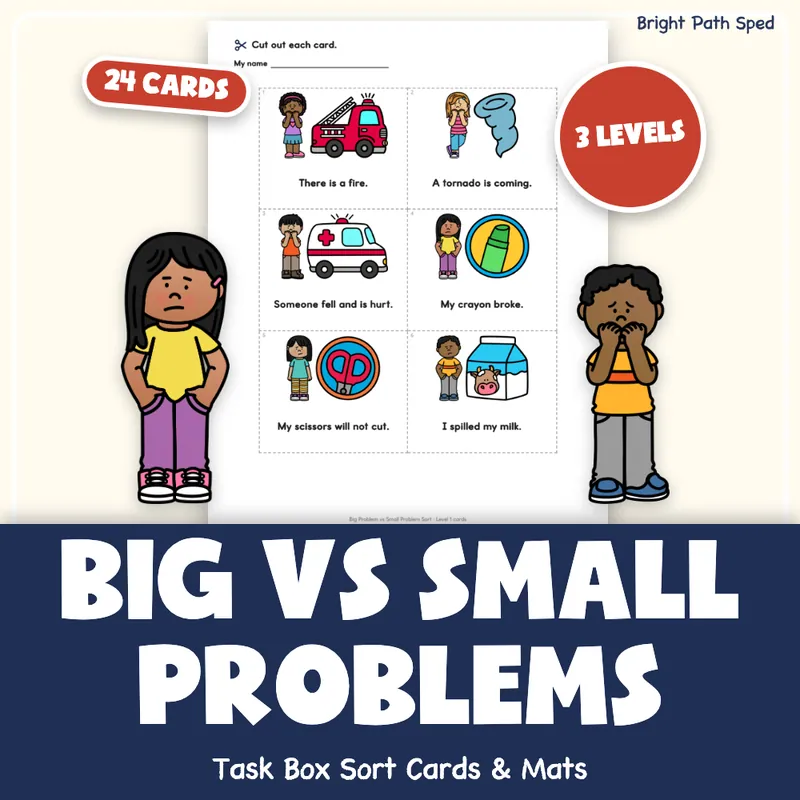
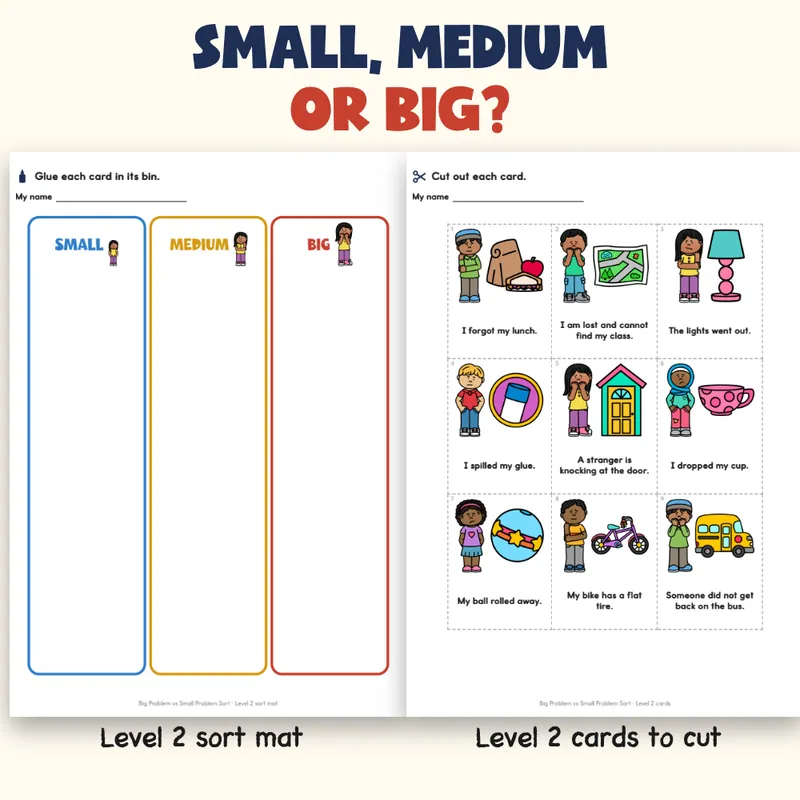
Is it a big problem or a small problem? A sorting task box for the day a crayon breaks and the day something really is wrong. Students read a short sentence with a picture, cut out the card and glue it in the SMALL, MEDIUM or BIG bin. Three levels, 24 scenario cards, a size-of-the-problem poster and a data sheet, all in one print-and-go PDF.
WHAT IS INCLUDED - 23 pages
- 24 scenario cards: a short first-person sentence and one picture on every card (9 small, 6 medium and 9 big problems), such as "I spilled my milk." and "There is a fire."
- Level 1 (circle): a SMALL and BIG sort mat with a small child picture labeling each bin, and a cut page of 6 cards (3 small, 3 big)
- Level 2 (square): a SMALL, MEDIUM and BIG sort mat with word labels, and a cut page of 9 cards (3 of each)
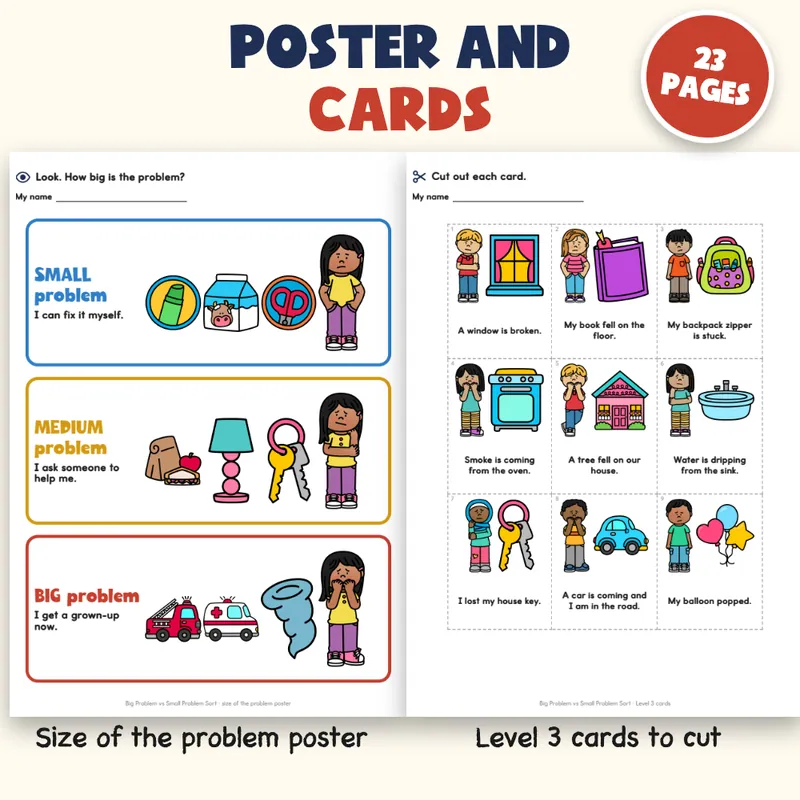
- Level 3 (triangle): the same three bins with a response under each name (I can fix it. I ask for help. Get a grown-up now.), a cut page of 9 new cards, and a write page with 4 problems where the student circles the size, circles what to do and writes a plan
- A "size of the problem" poster to teach the three names
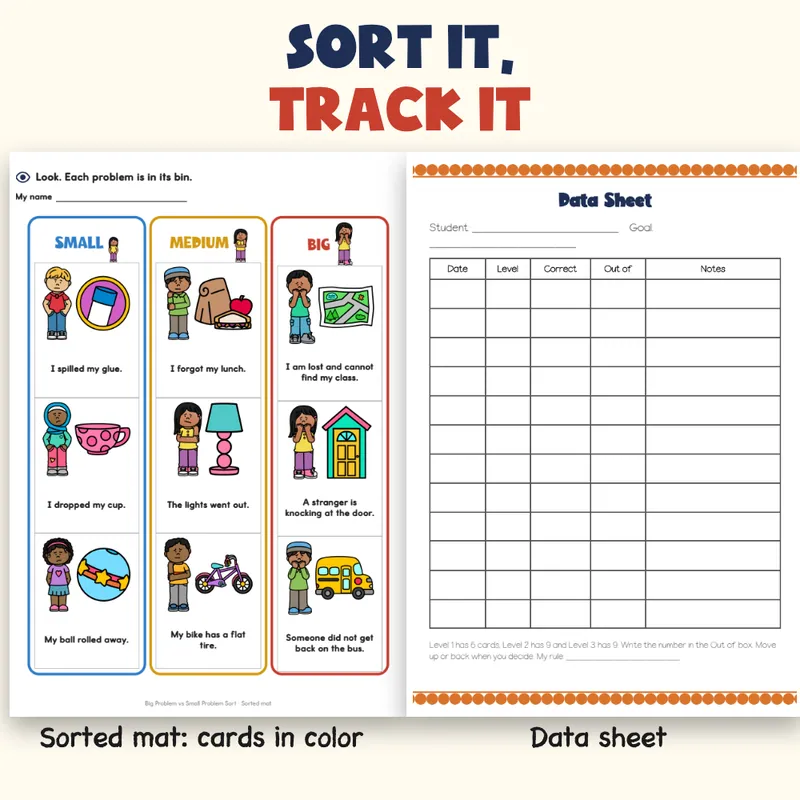
- A sorted-mat model page showing what a finished mat looks like
- Level 2 again as a black-and-white ink-saver mat and cut page
- A teacher note on who decides the size of a problem, with lines for your own room's words
- A "Talk About It" page: size words, sentence starters, questions to ask and ways to extend
- Answer key, data sheet (12 rows), a filled example with an invented student, a progress roll-up chart, a helper card for a para or sub, a note for home, a What's Next page and the credits page
How It Works
Print a mat and its cut page for each student. The student cuts the cards apart (straight lines only, the cards touch edge to edge) and glues each one in a bin. Level 1 has two choices, and small child pictures label the bins. Level 2 adds the middle bin and takes the child pictures away, so the student decides the size from the sentence. Level 3 pairs each size with what a student can do, then asks the student to write a plan. The level is marked by a small shape on the page, never a number the student compares. Each card pairs a small drawing (milk, a crayon, a fire truck, a bus) with a child's face showing how the problem feels. The face is a clue; the student decides the size from the sentence.
What This Is, And What It Is Not
It is a print-and-go PDF of cards, mats and teacher pages. It is NOT a digital or interactive file, and it does not teach safety procedures or tell you how to respond to any emergency. A grown-up decides how big a problem is, and the teacher note says so: the answer key is a starting point and has a line for the cards you would move. Your school sets its own rules for who a student tells; the pages have blank lines to write yours on.
Who This Is For
Special education teachers, paraprofessionals and K-3 classroom teachers who teach students to tell small problems from big ones, in a task box, a center or a small group.