Comparing Fractions on a Number Line Worksheets
- 37 pages
- 3rd, 4th
$2.00 $4.00 on Teachers Pay Teachers
Half the Teachers Pay Teachers price. The same PDF, sold direct.
DownloadOr get it with All-Access: pick any 20 resources a month for $7.
New here? Your first month of All-Access is half off with code TEACHERTOK
Already bought this, or a member?
Instant download. One teacher's license: colleagues need their own copy. Each file carries a license number.
Also on Teachers Pay Teachers: see the Bright Path Sped store
About this resource
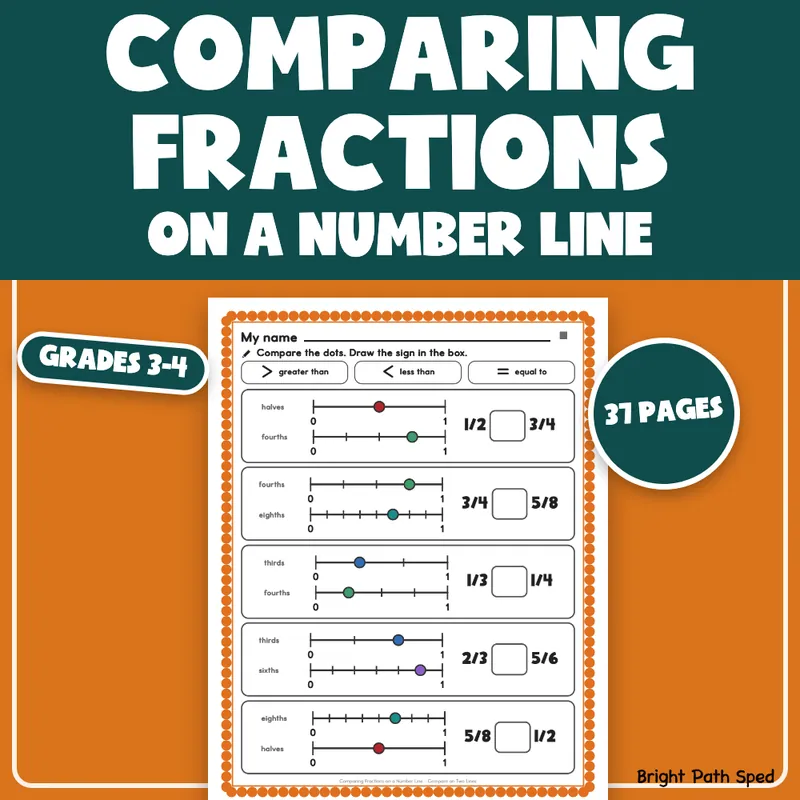
A fraction is easier to compare when children can see where it sits. These comparing fractions on a number line worksheets give grade 3 and grade 4 children a line from 0 to 1 cut into equal steps, and one rule to say out loud: the dot farther to the right is the greater fraction. Children place fractions on lines cut into halves, thirds, fourths, sixths and eighths, stack two lines to compare fractions with different bottom numbers, find fractions that land on the same spot, and use the benchmarks 0, 1/2 and 1 to tell how big a fraction is. It is a 37-page fillable PDF, and it practices skills named in CCSS 3.NF.A.2 and 4.NF.A.2.
WHAT IS INCLUDED (37 pages)
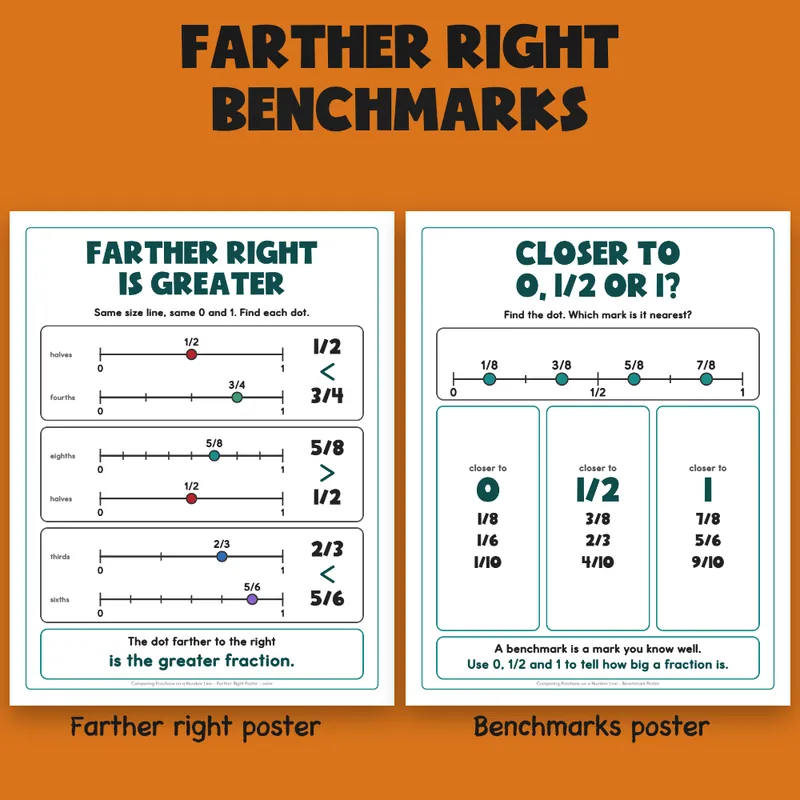
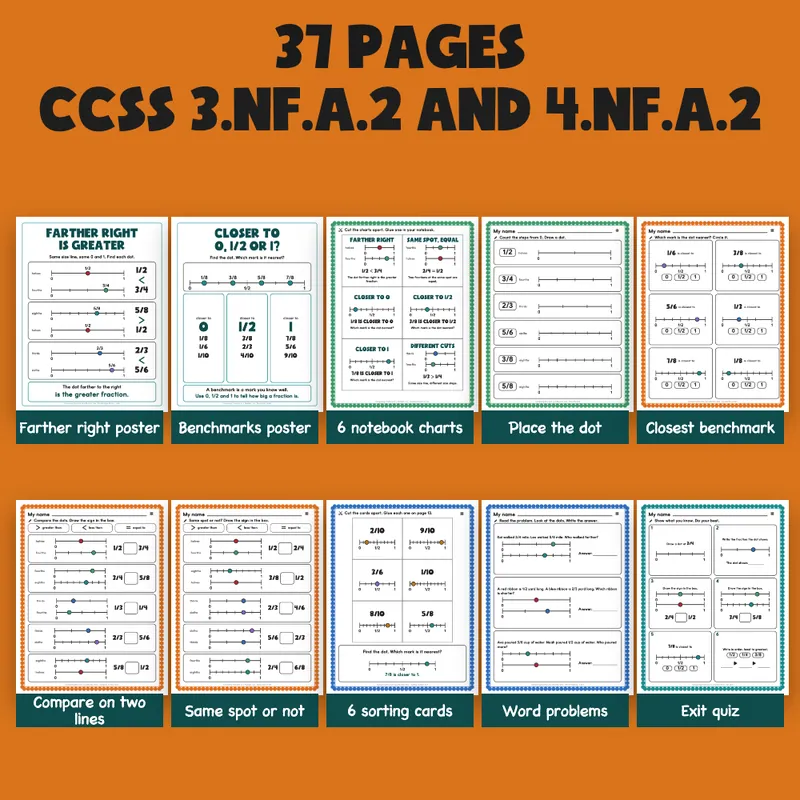
- 2 posters on 3 sheets for the wall: Farther Right Is Greater, with 3 pairs of fractions on stacked number lines (with an ink-saver copy), and Closer to 0, 1/2 or 1, with a benchmark line and fractions grouped by the benchmark they are nearest.
- 12 pieces to cut on 2 cut sheets, edge to edge so every cut is one straight line: 6 notebook-size charts and 6 benchmark sorting cards.
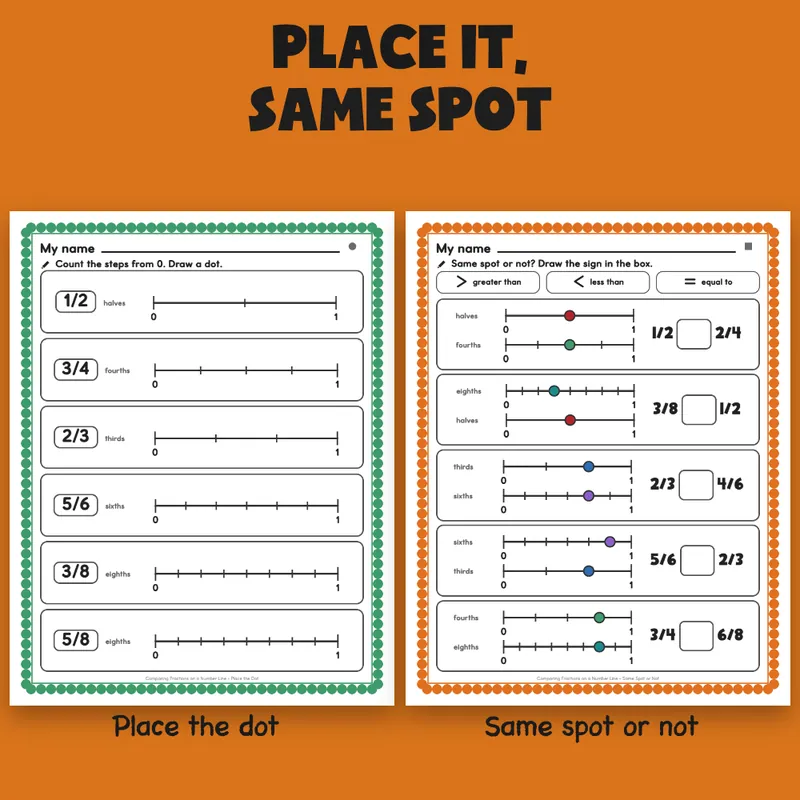
- 11 student pages, each with a "My name" line, one short direction and room to work: place the dot (6 fractions on number lines), name the dot (6 lines), closest benchmark (6 fractions), sort and glue (6 cards into rows for 0, 1/2 and 1), compare on two lines (5 pairs), same spot or not (5 pairs, with equal fractions), put three in order (3 items), say why (3 items), 2 word problem pages (6 problems with number lines) and an exit quiz (6 questions).
- An ink-saver set: all 11 student pages again with a thin gray border and gray dots, for a black-and-white printer. The two cut sheets are not repeated.
- 52 items for children to work, in all.
- Three levels on the core pages, marked with small shapes, not numbers.
- The less than, greater than and equal signs are drawn as big shapes children can see and copy.
- Teacher pages: Start Here with a which-page-when table, 4 short teaching routines, a filled example (an invented child; every answer on it is invented), 3 answer keys and a family note.
- Terms of use and a thank-you page with what's next.
How To Use It
Hang the Farther Right poster and read the rule together. Hand out the notebook charts, then the place the dot and name the dot pages to start, the closest benchmark, two lines and same spot pages to build, and the order, say why and word problem pages for children who are ready for more. Finish with the exit quiz and check answers on the keys.
Built For The Child Holding The Page
Every student page has a big name line, one short direction and room to draw, circle, write or glue. Number lines are big and plain, with a dot in one color for each kind of step (halves, thirds, fourths, sixths, eighths). Every page reads in black and white too. The names in the word problems are invented children, and the page says so.
Type In, Or Print
The name lines, answer blanks, sign boxes, family note and notes areas are type-in fields in any PDF reader. The posters and the number line models are print pages. You can also print any page and write by hand. Print at 100 percent with fit-to-page turned off. This is a fillable PDF for printing and typing; it is not a slide or word processor file.
Who This Is For
Teachers of grades 3 and 4, resource rooms and self-contained classrooms who want fraction comparison practice children can see, mark and check for themselves.
What This Is, And What It Is Not
Classroom posters and working paper for comparing fractions on a number line. It is not a full math curriculum, an assessment or a therapy program, and it makes no health claims. Your school decides what a child should be able to do and when.