Conflict Resolution Steps Cards
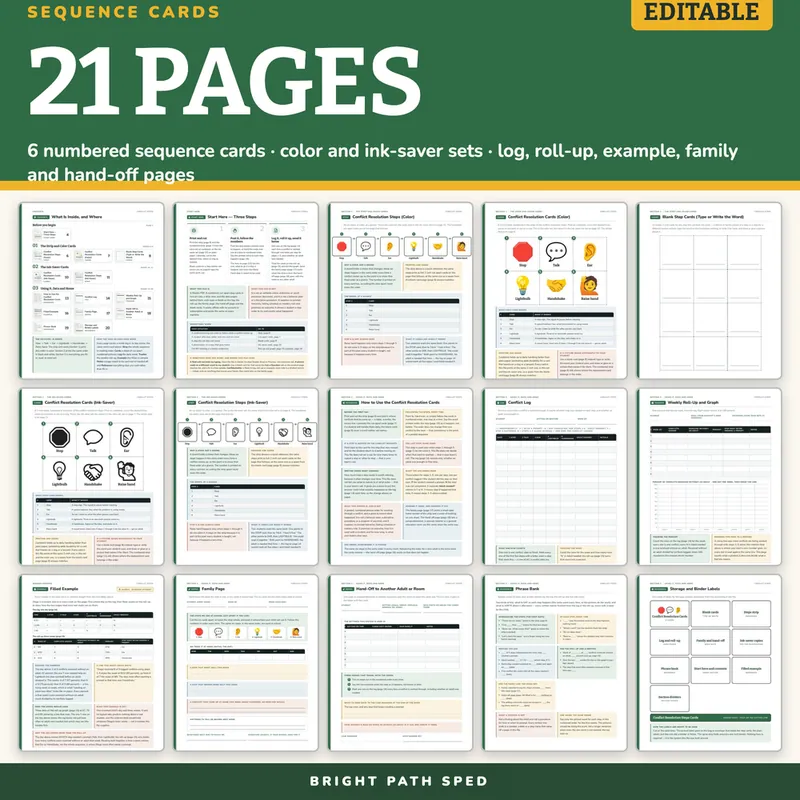
- 21 pages
- Not Grade Specific
$3.50
DownloadOr get it with All-Access: pick any 20 resources a month for $7.
New here? Your first month of All-Access is half off with code TEACHERTOK
Already bought this, or a member?
Instant download. One teacher's license: colleagues need their own copy. Each file carries a license number.
Also on Teachers Pay Teachers: see the Bright Path Sped store
About this resource
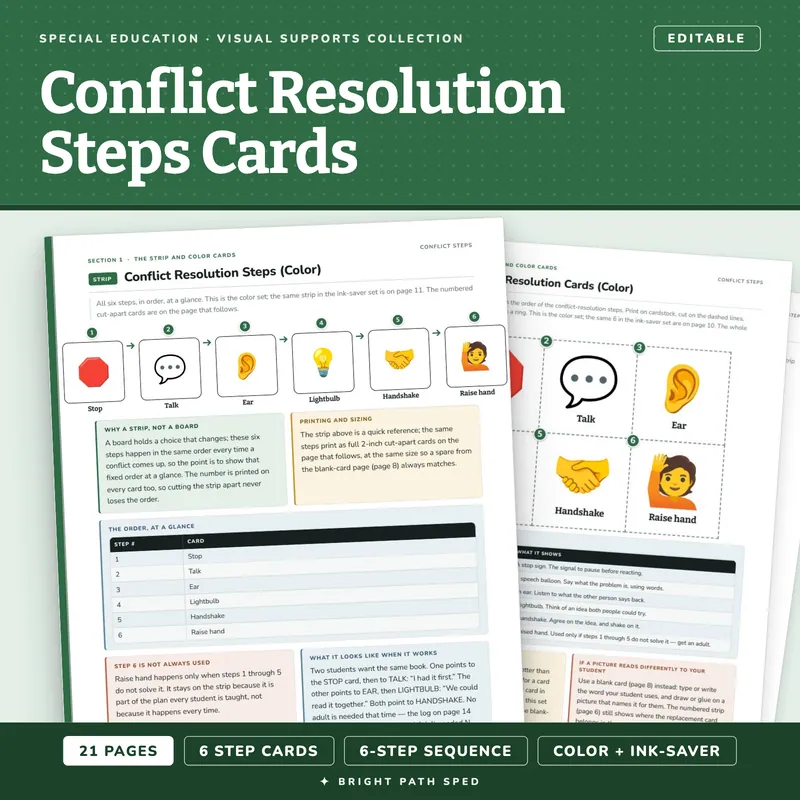
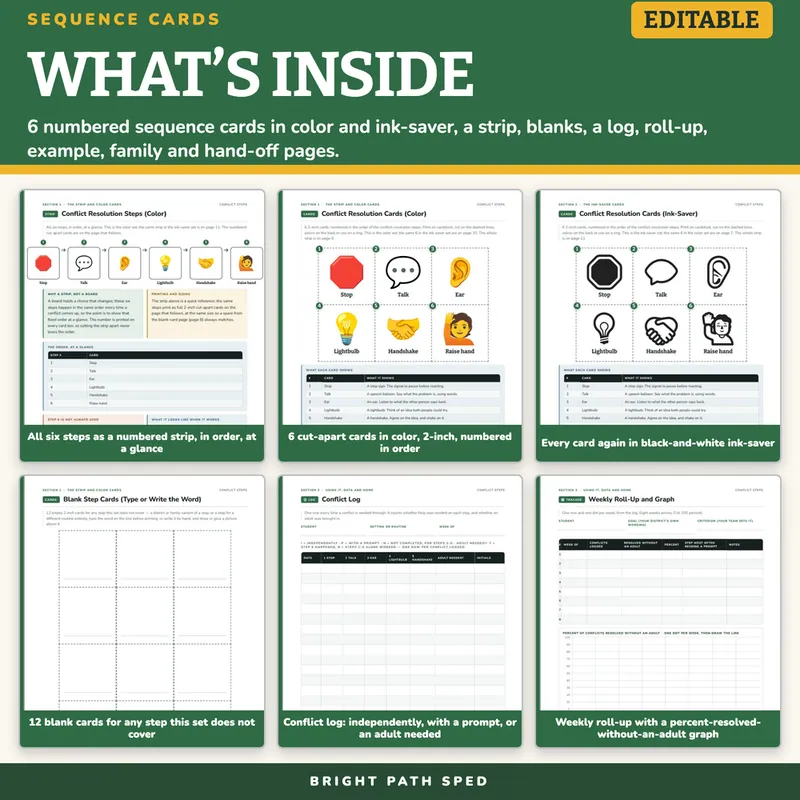
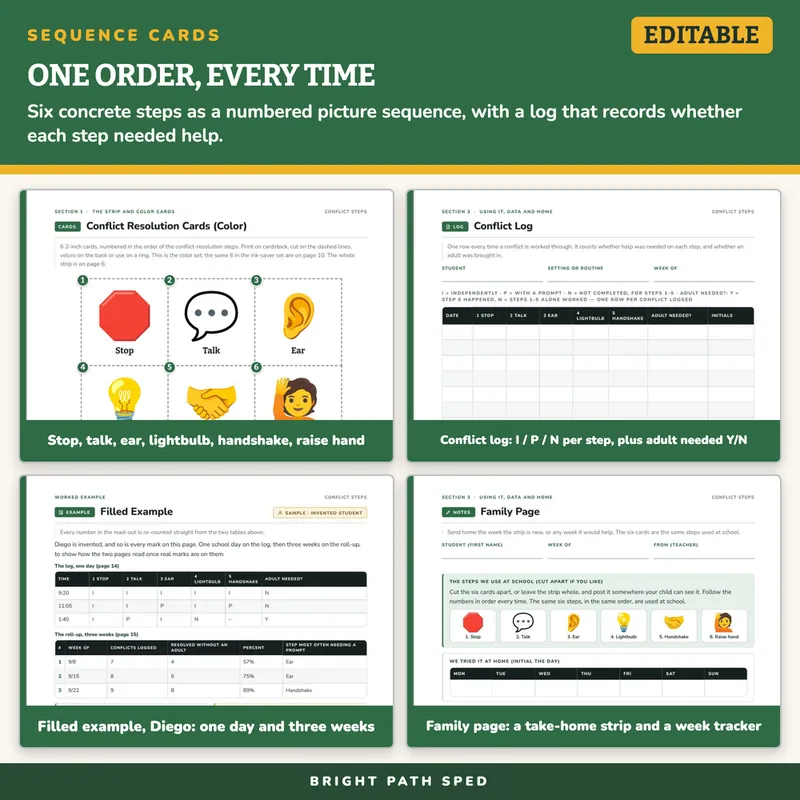
A picture-card sequence for working through a conflict, not a choice board: the six steps happen in the same order every time, so this set prints a strip and numbered cards instead of a bank of interchangeable choices. The log and roll-up turn "did it take an adult to sort it out" into a line on a page a case manager can bring to a meeting.
The Steps
1. Stop — a stop sign, the signal to pause before reacting
2. Talk — a speech balloon, say what the problem is, using words
3. Ear — listen to what the other person says back
4. Lightbulb — think of an idea both people could try
5. Handshake — agree on the idea, and shake on it
6. Raise Hand — used only if steps 1 through 5 do not solve it; get an adult
Every picture was chosen to be named in one word by a young child, cold, in color AND in the black-and-white ink-saver set. The card is labeled for what a child actually sees (Ear, Lightbulb, Handshake), not for the idea it stands for, the same rule this collection uses everywhere; what each step means for a conflict is written on the how-to page and the cards page's own reference table, never claimed by the card itself. Raise Hand reuses the same picture and word this collection already uses for that gesture (First-Then Board, Core Vocabulary Board, and others), so a buyer who owns another single already knows what the card means. No published conflict-resolution program's steps, name or characters are used anywhere in this file.
What This Is, And What It Is Not
It is a fillable PDF: type into the log, the roll-up, the family page, the hand-off page and the blank cards, or print and use a pen. The card and strip pages print on cardstock or plain paper and cut along dashed lines. It works offline with no account or subscription. It is NOT an editable online slideshow or word-processor document.
It is a posted, numbered picture order for working through a conflict, and a place to record what happened. It is not a behavior plan, a discipline procedure, or a program of any kind, and it supplies no prompt hierarchy, fading schedule or mastery rule. It promises no outcome; how it is used with a student, and for how long, is what your team's plan says. The goal line and the criterion field on the roll-up are blanks for your district's own wording and your team's own number. The log counts one thing per step (whether help was needed) and one thing per conflict (whether an adult was needed) — it does not decide when an adult should be brought in.
Who This Is For
Special education teachers and paraprofessionals working on conflict resolution with early, pre-reading or emerging-language students, case managers who need that work to show up as data, and the families who get the home page sent home.
More In The Collection
Part of the Visual Supports Collection alongside First-Then Board and Activity Picture Cards, Break Cards and Choice Board, and Calm-Down Choice Cards and Self-Regulation Board; more picture-card sets are being added to the collection regularly, all on the same cards-plus-data shape.
Pictures (color pages): Noto Emoji by Google, Apache License 2.0. Pictures (ink-saver pages): Fluent Emoji, Copyright (c) Microsoft Corporation, MIT License.