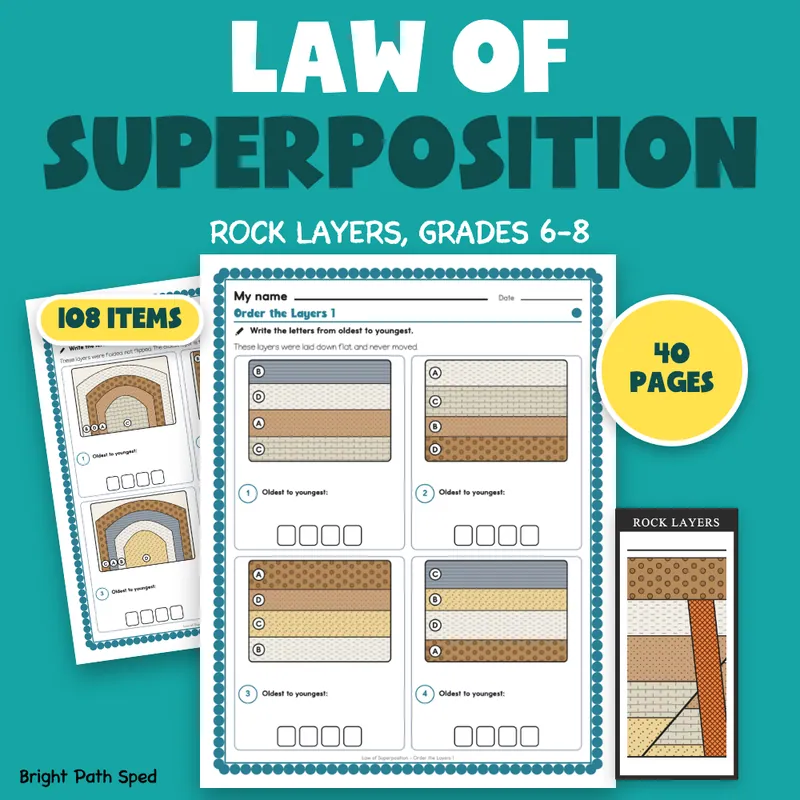
Law of Superposition Worksheets
- 40 pages
- 6th, 7th, 8th
$2.50 $5.00 on Teachers Pay Teachers
Half the Teachers Pay Teachers price. The same PDF, sold direct.
DownloadOr get it with All-Access: pick any 20 resources a month for $7.
New here? Your first month of All-Access is half off with code TEACHERTOK
Already bought this, or a member?
Instant download. One teacher's license: colleagues need their own copy. Each file carries a license number.
Also on Teachers Pay Teachers: see the Bright Path Sped store
About this resource
EVERYTHING INSIDE (40 pages)
- 22 student pages in 14 kinds of sheet, each with a name line and one short instruction
- 108 scored items on 20 sheets, with every picture's right order computed from the facts drawn in it
- 1 reference page: the law on a labeled stack, plus tilted or folded layers, a fault, a dike and a worn surface
- 1 rules file: 6 situations, each with a picture, what you see and what it tells you about age
- 1 key words page: 6 words to match (law of superposition, relative age, fault, intrusion, fold, unconformity)
- 1 worked example with a Your Turn (2 items)
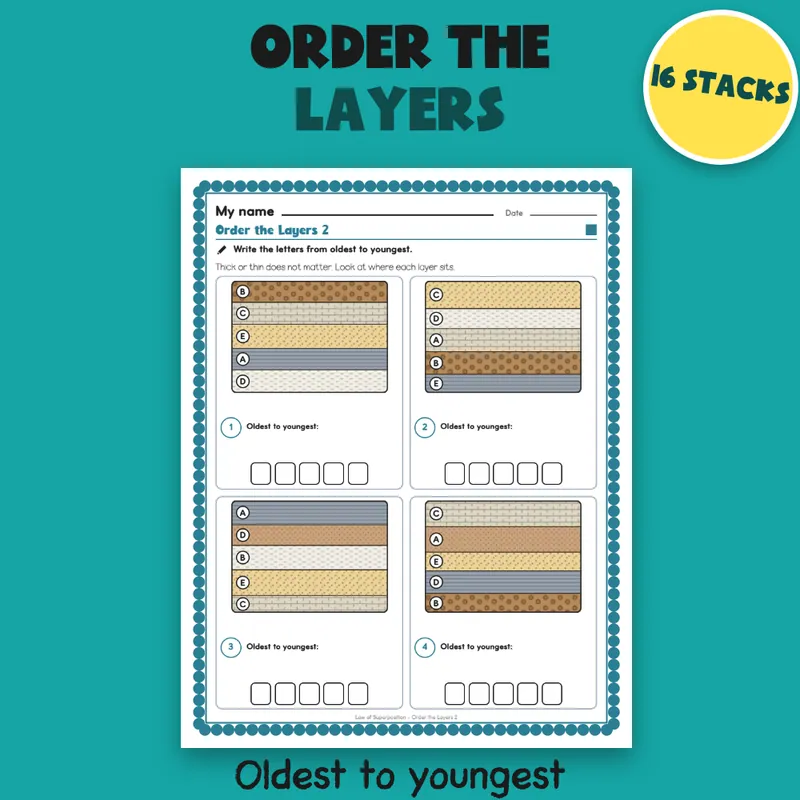
- 4 order-the-layers pages, 16 stacks in all (4 on each page): flat, five layers thick and thin, tilted, and folded into arches and bowls
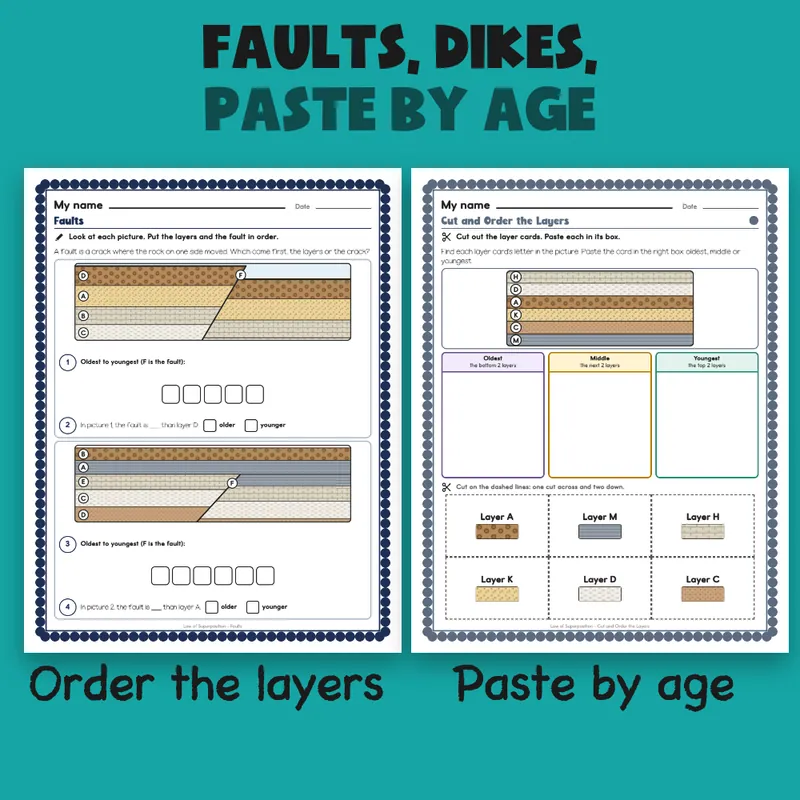
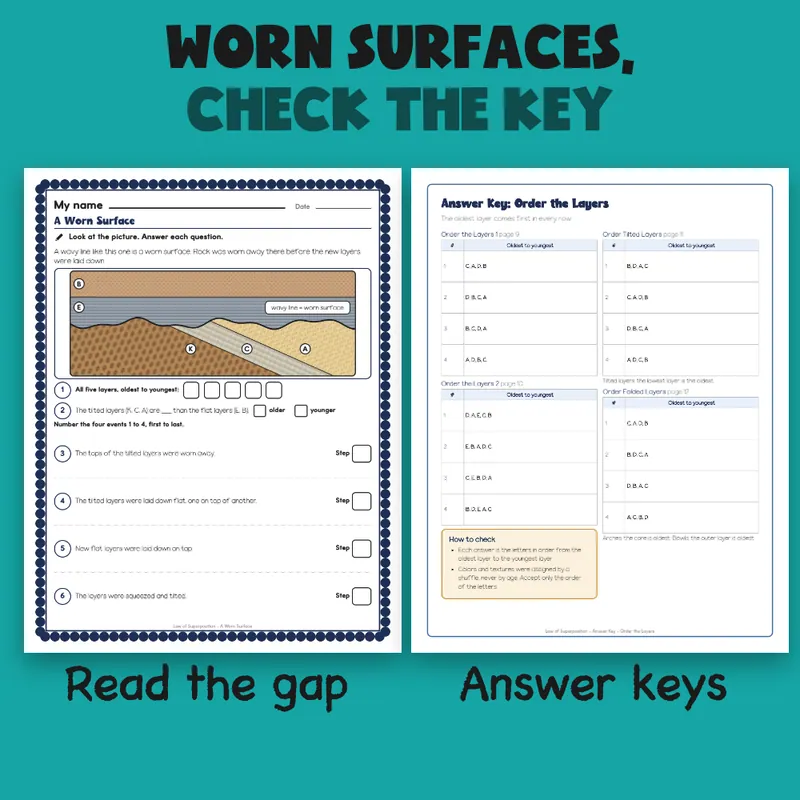
- 4 cutting-event pages, 18 items: faults (4), dikes (4), a worn surface (6), and all the events in one picture (4)
- 2 fix-it pages, 12 items (6 and 6): 6 statements to check and fix, 6 clues to mark as helping or not
- 4 claim, evidence, reasoning panels across two sheets, 12 items
- 10 quiz items and 5 short-answer questions with sample answers
- 27 cut-and-paste pieces on four pages: layer cards to paste by age (6), feature cards to sort into fault, dike or worn surface (6), 10 layer cards to paste into oldest, middle or youngest groups, and 5 steps of a history to paste in order
- 5 answer keys, one for every page that has an answer; 1 tracker, 1 class grid, 1 team note, 1 family page
- 1 filled example (an invented student), 1 phrase bank (17 starters in 6 groups), 1 binder cover and 6 divider tabs with a spine label to cut out
- Start Here and a Teacher Notes page
Built For The Student Holding The Page
A "My name" line, one short instruction with a small picture cue, and a plain scalloped border. Nothing on a student page is written for an adult: the keys and records are on separate teacher pages. Three steps are marked by a circle, a square and a triangle so students do not compare. Every layer carries its letter, so a black and white copy reads too.
Invented Examples
The student in the filled example is made up and says so, and so are the numbers on the claim pages. There are no photographs, lab procedure, safety advice, standard code, dates in years or invented data about real rocks anywhere in the file.
Type In, Or Print
The name line, every answer box, every check box and every ruled work box are type-in fields in any PDF reader: click one, type, then save. The cut-and-paste pages are for scissors and glue. This is a fillable PDF; it is not a Google Slides or PowerPoint file.
What This Is, And What It Is Not
A unit on telling which rock layer or event is older and which is younger from its place in the stack and from what cuts it, with the record-keeping around it. It does not cover dating by fossils, the geologic time scale, the rock cycle, or naming the three classes of rock; it gives no ages in years. It is not a timed test, a screener, a clinical tool, or a claim about any student's age or rate of progress. There is no IEP goal language or eligibility wording anywhere in the file.
If You Want More
Types of Rocks Worksheets; Weathering, Erosion and Deposition Worksheets; Rock Cycle Worksheets (the same three covers appear on the last page of the file).