Multiplication Using Arrays Worksheets
- 28 pages
- 2nd, 3rd
$1.50 $3.00 on Teachers Pay Teachers
Half the Teachers Pay Teachers price. The same PDF, sold direct.
DownloadOr get it with All-Access: pick any 20 resources a month for $7.
New here? Your first month of All-Access is half off with code TEACHERTOK
Already bought this, or a member?
Instant download. One teacher's license: colleagues need their own copy. Each file carries a license number.
Also on Teachers Pay Teachers: see the Bright Path Sped store
About this resource
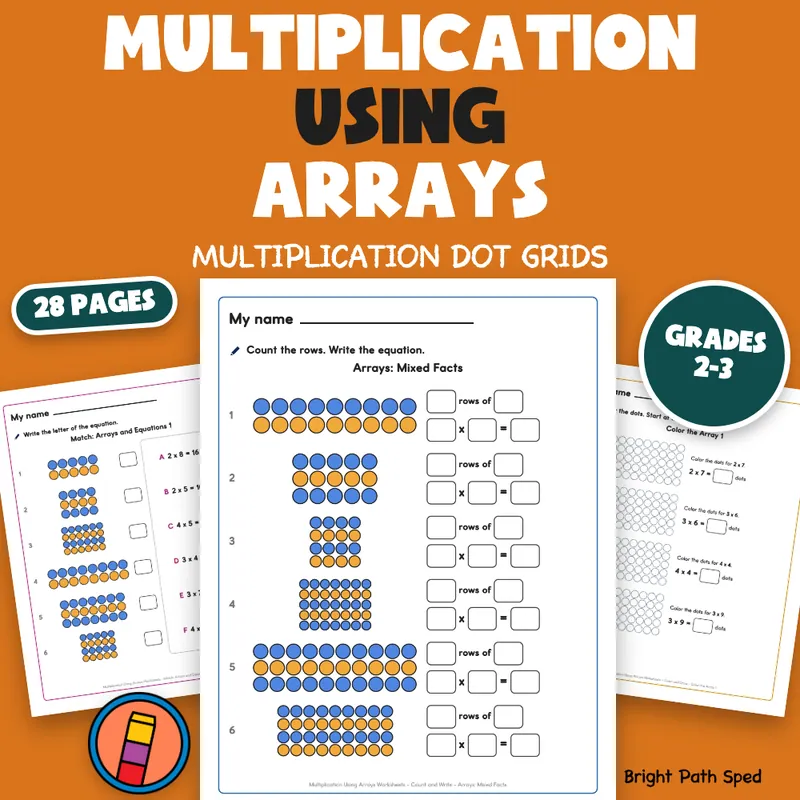
Need multiplication using arrays that a second or third grader can actually do? Every page is built on dot arrays: rows and columns of dots to count, to match, to color and to turn around. Students write how many rows, how many in each row, and the equation. The facts of 2, 3, 4, 5 and 10 each have their own page, so you can teach one fact at a time, then mix them. Dots take turns between two colors by row, so a child can see where one row ends. Big answer boxes, a big "My name" line, and an answer key for every page.
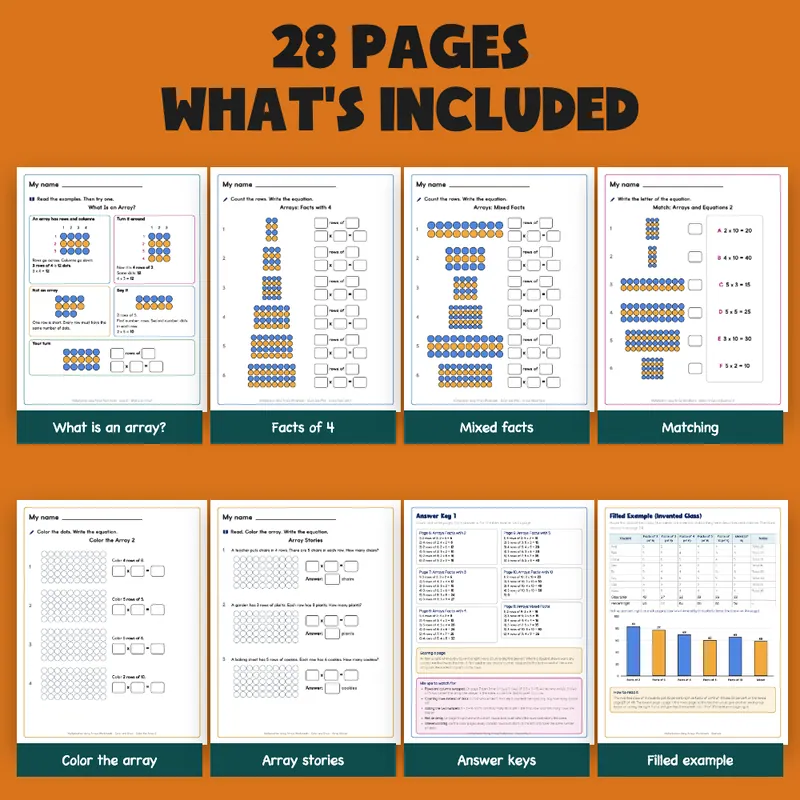
EVERYTHING INSIDE (28 pages)
- 1 learn-it page: what an array is, rows and columns labeled, turn it around, a picture that is not an array, and one to try
- 1 "Is it an array?" page: 6 pictures, write yes or no (3 are arrays, 3 have a short row)
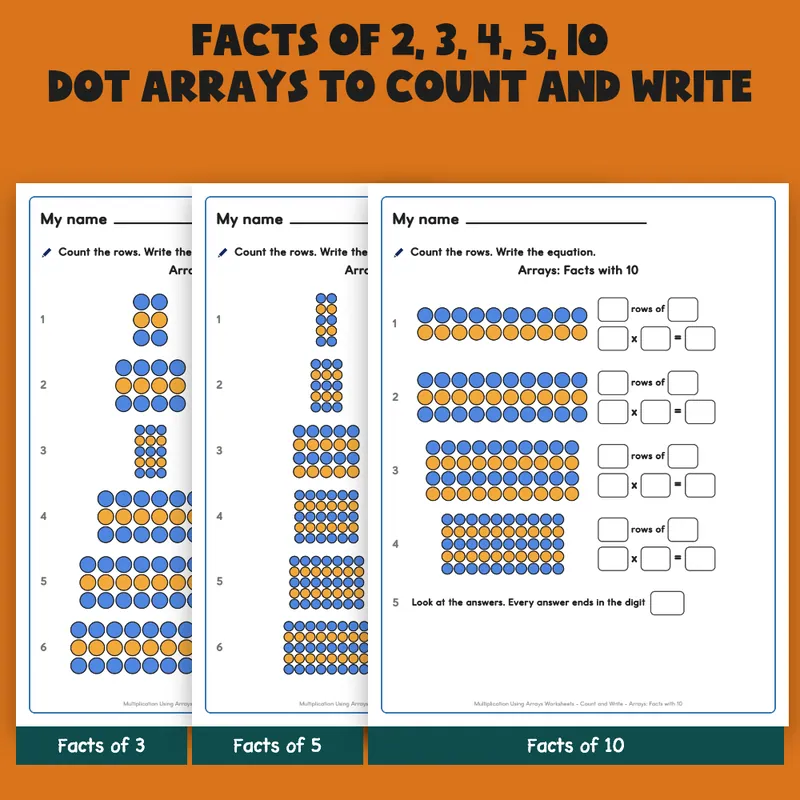
- 5 fact pages, one each for facts with 2, 3, 4, 5 and 10: dot arrays to count, with "rows of" boxes and a rows x columns = dots equation (6 arrays on each of the 2, 3, 4 and 5 sheets; 4 arrays and a pattern question on the 10 sheet)
- 1 mixed facts page: 6 arrays, facts from 2 to 10 mixed
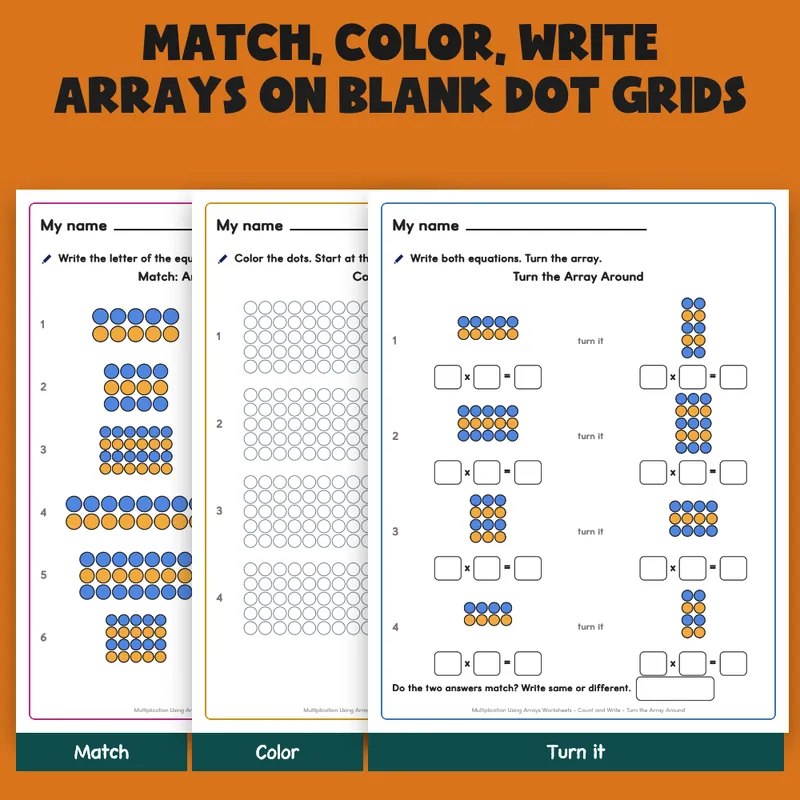
- 1 turn-the-array-around page: 4 arrays, each shown again turned, with both equations to write (8 equations)
- 2 matching pages: 6 arrays each, write the letter of the equation (12 items)
- 3 color-the-array pages on blank 5 by 10 dot grids: 4 given as an equation, 4 given in words, and 3 for the student to make and write (11 grids)
- 1 array stories page: 3 short stories, color the array, write the equation and the answer
- 1 challenge page: make 3 different arrays with 12 dots and 2 different arrays with 20 dots
- 2 wall posters (What is an array, Turn it around)
- 2 answer-key pages: every item on every student page, with mix-ups to watch for
- 1 class record (21 rows), 1 filled example (an invented class of 8 students, with a roll-up chart), 1 family page, a Start Here page, a terms page, a What's Next page and a credits page
How It Works
1. Teach with page 4 and the posters, then print the fact page you need.
2. Students count the rows, count the dots in each row, and write the equation. On the color pages they color the dots first.
3. Score with the key and write each score on the class record.
4. The roll-up in the example shows how to find the page to teach again.
Built For The Child Holding The Page
A big "My name" line, one short instruction with a picture on each page, large dots and boxes big enough for a child's handwriting. Nothing on a student page is written for an adult; the keys, record and example are on separate teacher pages. The dots are plain circles in rows and columns, easy to read and easy to photocopy: every dot has a dark outline, so a black and white copy still reads. All names and numbers in the example are made up. Every array was drawn from its own rows and columns and the dots drawn were counted back and matched, and every answer in the key comes from the same numbers as its page.
What This Is, And What It Is Not
It is a fillable PDF for printing: the name line and the answer boxes can be typed into, or you can print and write by hand. It covers multiplication as an array (rows of equal size) with whole numbers, facts of 2, 3, 4, 5 and 10, up to 5 rows and 10 columns. It is not a file you can resize or re-edit, and it is not a Google Slides, Docs or PowerPoint file. It does not test, place or label students, and it does not set a passing score.
Who This Is For
Names CCSS 3.OA.A.1 and 3.OA.A.3 in general; check your own pacing guide for how your district words them.
Second and third grade teachers, interventionists, special education teachers and families who want array practice with a key.