Non Standard Measurement Worksheets
- 37 pages
- Kindergarten, 1st, 2nd
$2.00 $4.00 on Teachers Pay Teachers
Half the Teachers Pay Teachers price. The same PDF, sold direct.
DownloadOr get it with All-Access: pick any 20 resources a month for $7.
New here? Your first month of All-Access is half off with code TEACHERTOK
Already bought this, or a member?
Instant download. One teacher's license: colleagues need their own copy. Each file carries a license number.
Also on Teachers Pay Teachers: see the Bright Path Sped store
About this resource
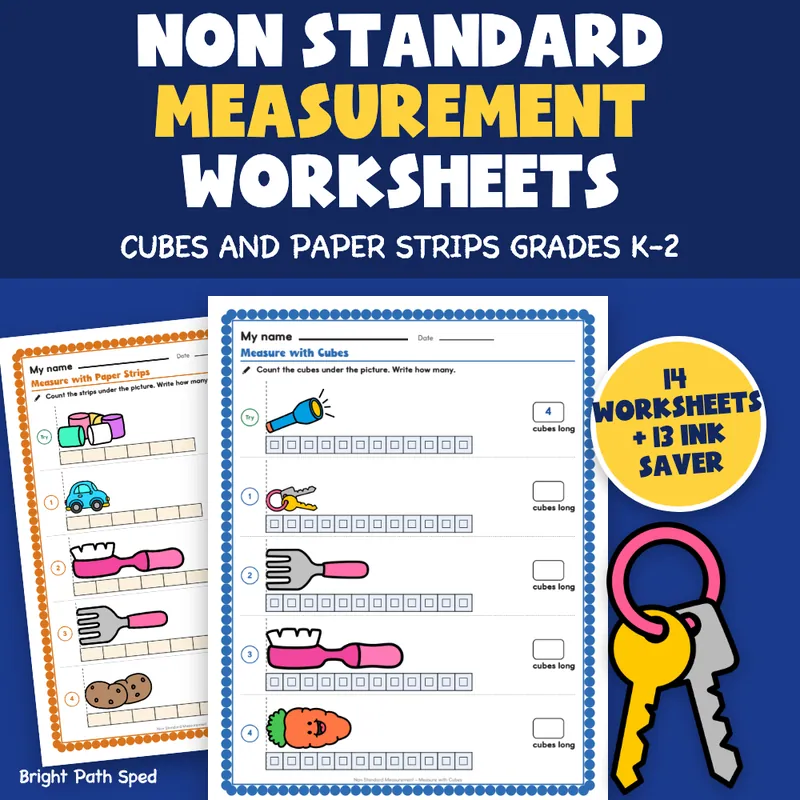
Print and go. Kindergarten, first and second graders measure real pictures (a key, a fork, a toothbrush, a carrot) and bars with printed linking cubes and paper strips, write how many units long each is, find the longest and shortest, compare two bars, find how many more, put bars in order by length and fix a measuring mistake. Every picture and bar starts on a dashed start line so children learn to line up the first unit, with no gaps. NO PREP: print the pages you want and hand them out.
What Is Included
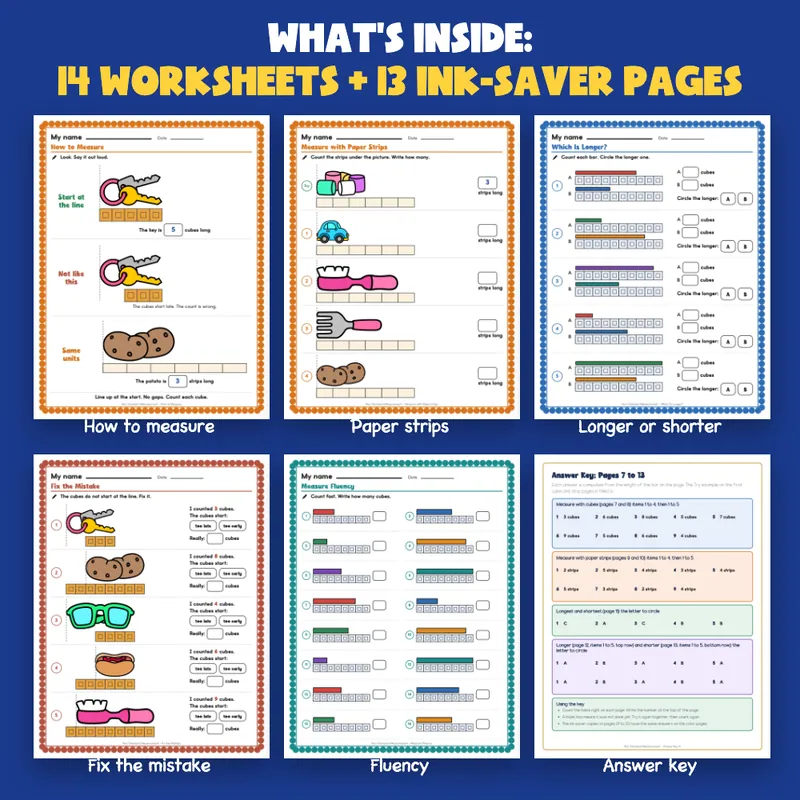
- 15 student pages: a how-to-measure poster, then 14 worksheets.
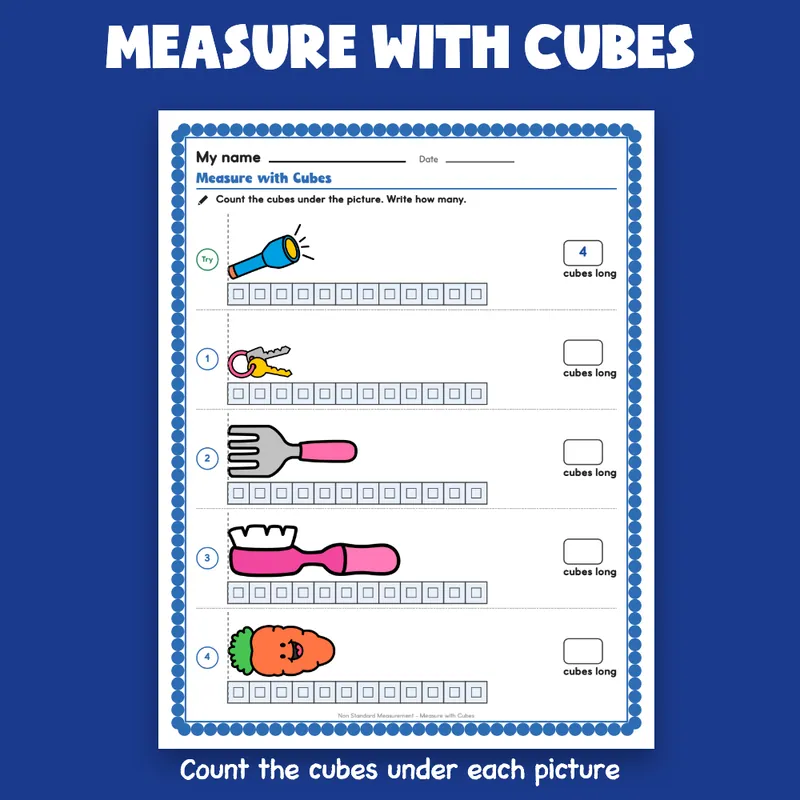
- Measure with Cubes (two pages): write how many cubes long each picture is, with a worked example at the top of the first page.
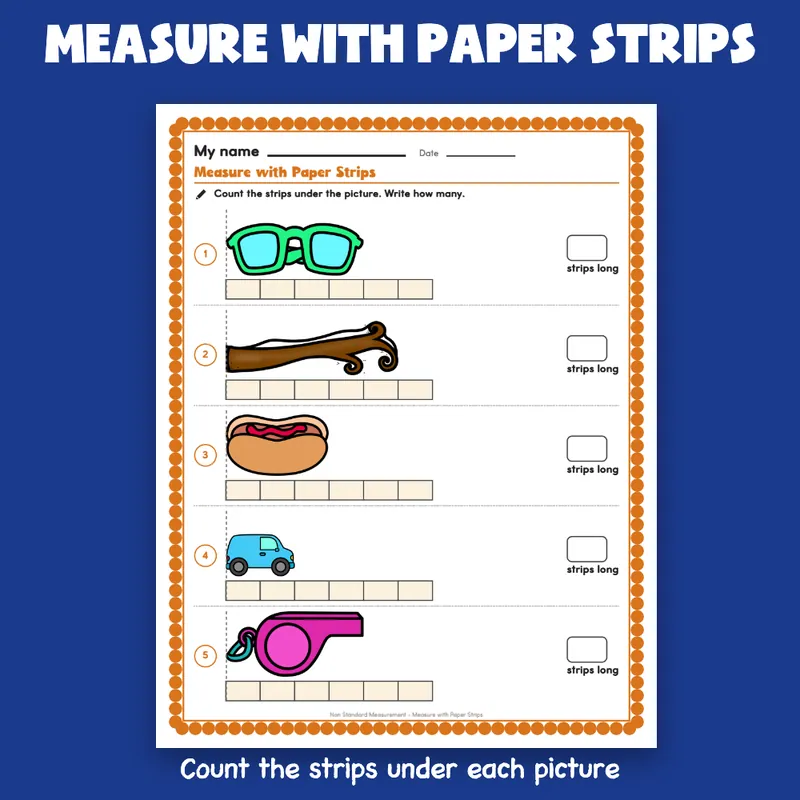
- Measure with Paper Strips (two pages): the same job with a longer unit, so children see that the number changes when the unit changes.
- Longest and Shortest: five groups of three bars; circle the longest or the shortest.
- Which Is Longer and Which Is Shorter (two pages): count two bars (Longer) or two pictured objects such as a key and a toothbrush (Shorter), then circle the longer or the shorter one.
- How Many More: count two bars and write how many more cubes the longer bar is.
- Fix the Mistake: five pictures where the cubes do not start at the start line; write the right length.
- Order by Length (two pages): six same-height bars in two strips of three to cut out, glued in order into six stacked rows from shortest to longest or longest to shortest.
- Create Your Own: color a number of cubes, then draw your own bars and write how long they are.
- Measure Fluency: 16 quick bars to count.
- Skill Check: 10 items, 5 to count cubes and 5 to find how many more.
- 13 ink-saver pages: black-and-white copies of every worksheet except the poster and Create Your Own.
- 2 answer keys, with the answer to every item.
- Start Here, a page for teaching how to measure, a how-to page, terms of use, credits and a What's Next page.
37 pages in all, fillable and printable.
Good To Know
- The cubes and strips are printed, so no manipulatives are needed. Real linking cubes or paper strips make a good first step, then the child counts the printed ones.
- Non standard units come before inches and centimeters. When your class is ready for rulers, see our Measuring Inches and Centimeters pages.
- Built for the skills in K.MD.A.2, 1.MD.A.1 and 1.MD.A.2.
What This Is, And What It Is Not
This is a fillable PDF. Type your answers into the name lines and answer boxes in any PDF reader, or print any page and write, color and cut by hand. It is not a Google Slides, Google Docs or PowerPoint file. It is a set of worksheets for one skill, non standard measurement of length, and it works alongside the lessons you already teach.
Who This Is For
Teachers, aides and tutors working with students in kindergarten, grade 1 and grade 2 on measurement, including special education and small-group settings, math centers and early finishers.