Snowman Glyph Worksheets
- 24 pages
- PreK, Kindergarten, 1st, 2nd
$2.00 $4.00 on Teachers Pay Teachers
Half the Teachers Pay Teachers price. The same PDF, sold direct.
DownloadOr get it with All-Access: pick any 20 resources a month for $7.
New here? Your first month of All-Access is half off with code TEACHERTOK
Already bought this, or a member?
Instant download. One teacher's license: colleagues need their own copy. Each file carries a license number.
Also on Teachers Pay Teachers: see the Bright Path Sped store
About this resource
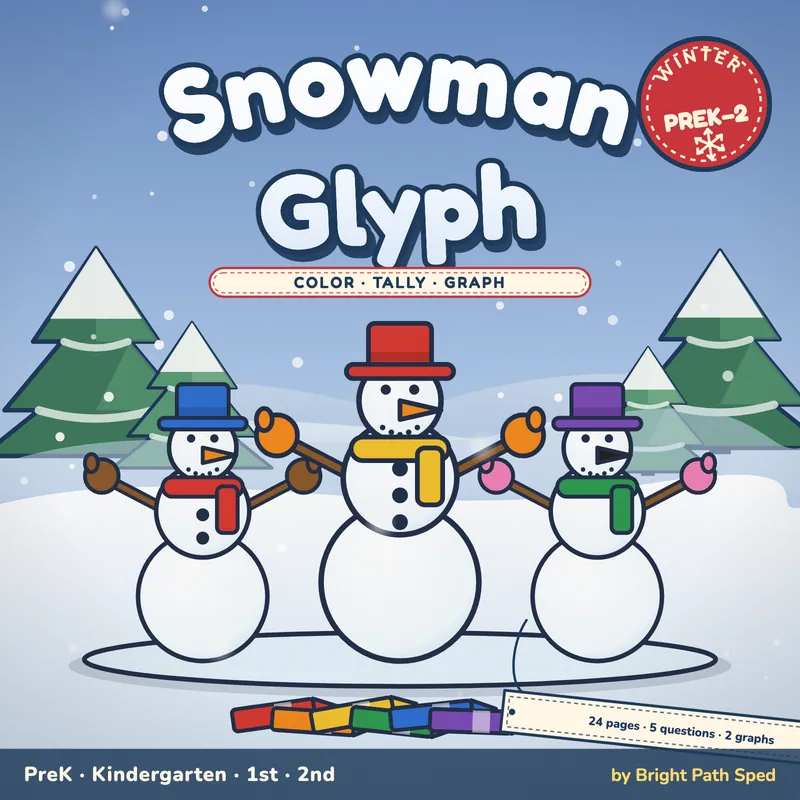
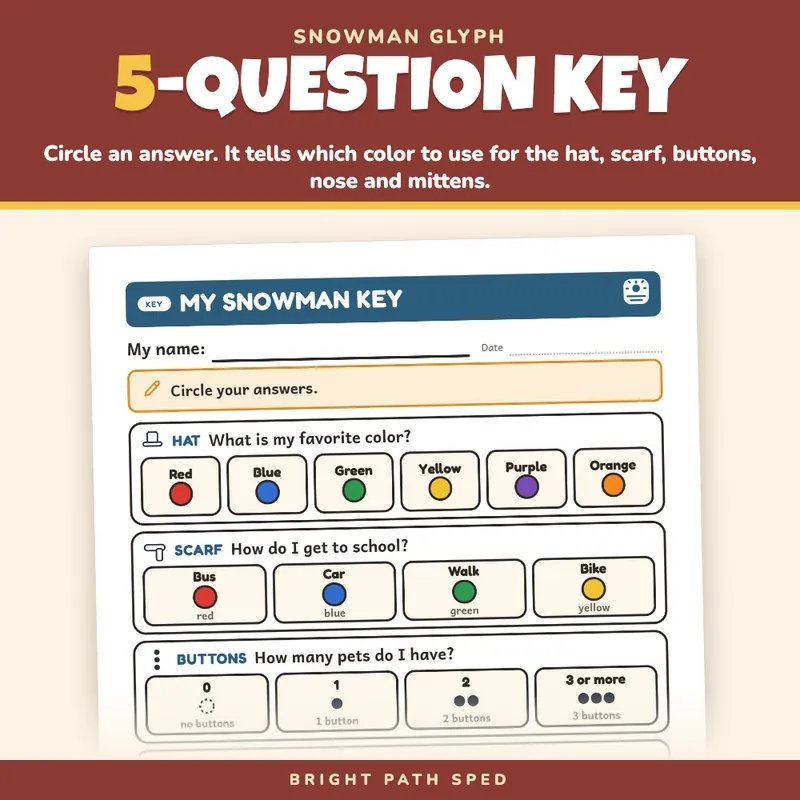
Snowman glyph worksheets where every part of the snowman is an answer. Each child answers five questions (favorite color, how I get to school, pets, playing in the snow, favorite winter food), reads the printed key, and colors a snowman: the hat shows a favorite color, the scarf shows how they get to school, the buttons show how many pets, the nose shows if they like snow and the mittens show a favorite winter food. Then the class counts the snowmen, graphs what it found and writes about it.
EVERYTHING INSIDE (24 pages)
- 13 student pages: 1 key, 4 snowman pages, 1 word page, 2 writing pages, 2 tally pages, 2 bar graphs and 1 read-the-graph page
- The key: 5 questions and 19 answer choices, each shown with a picture (a color dot, or the number of buttons) so a child can circle an answer without reading every word
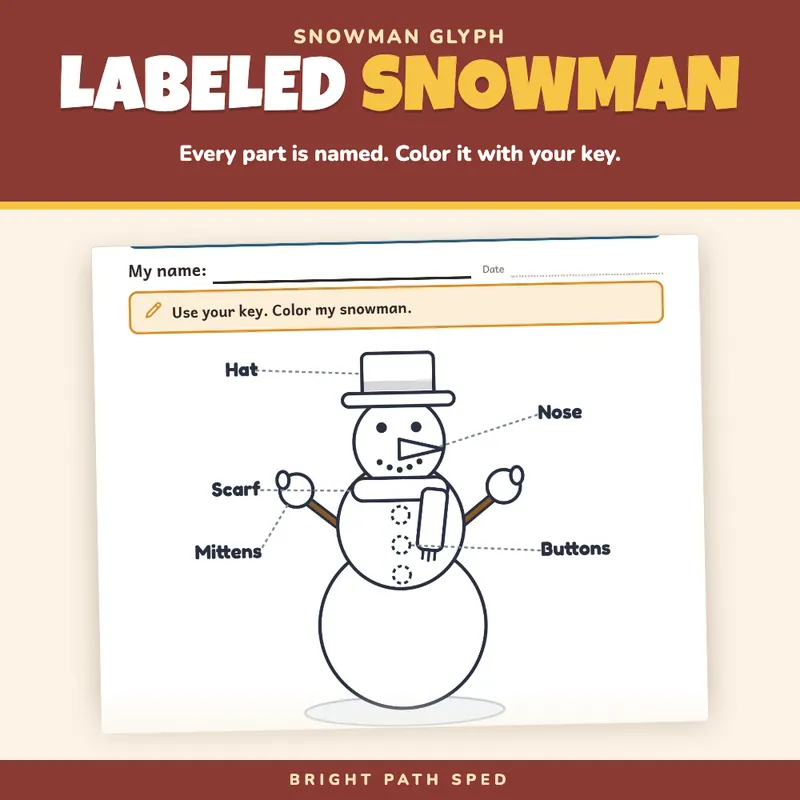
- 4 snowman pages: Label It (every part named), Snow Scene (one big snowman), Me and My Friend (two snowmen for a partner interview) and Draw It (the child draws the hat, scarf, nose, buttons and mittens)
- 2 writing pages with a picture box and 4 lines each, with starters printed (for example "My hat is" and "Most children have")
- 1 word page: 8 words, printed big (hat, scarf, nose, buttons, mittens, snow, winter, favorite) with lines for a sentence
- 2 class tally pages: a row for each of the 19 answers, a box for the marks and a box for the total
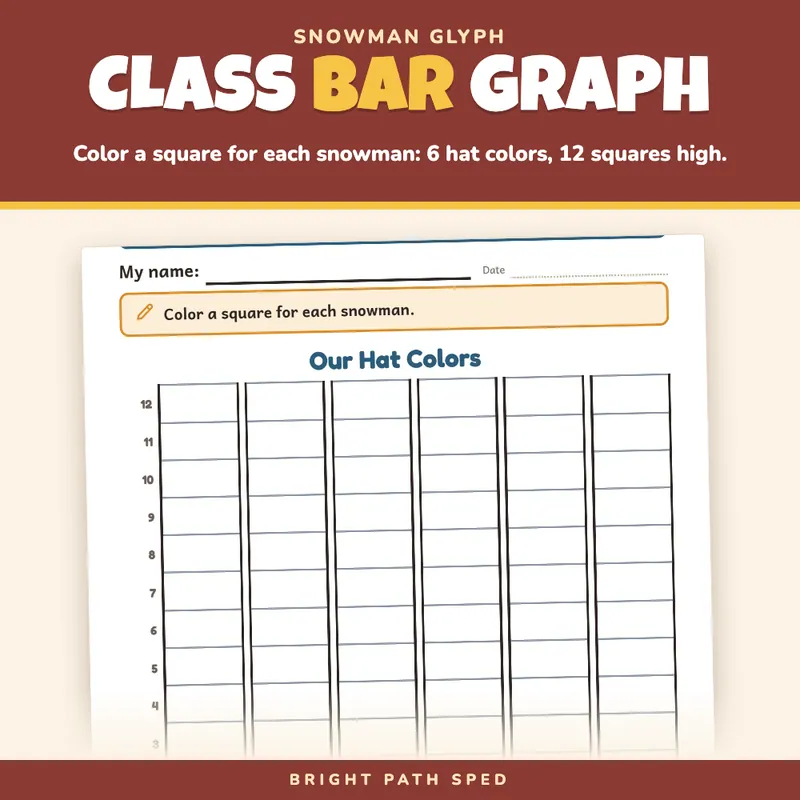
- 2 bar graphs: Our Hat Colors (6 colors, 12 squares high) and a blank graph where you type the names for any question
- 1 read-the-graph page: 5 sentence starters
- 1 blank key to type your own five questions and four answers each
- 1 teacher how-to page, 1 class record (15 rows), 1 filled example (an invented class of 10), 1 family note, 1 phrase bank of 16 observable-language starters
- 1 binder cover and 6 divider tabs with a spine label to cut out
- Terms of use
Built For The Child Holding The Page
A big "My name" line, one short instruction with a pencil icon, big pictures and room to color. The snowmen are drawn large, the answers have real boxes and ruled lines for primary handwriting, and nothing on a student page is written for an adult. There is no score. Only the divider tabs page needs scissors; every other page is pencil and crayon, so a child can start without a teacher cutting anything first.
Type In, Or Print
The name and date lines, the ruled lines, the blank key, the class record and the family note are type-in fields in any PDF reader, so you can type your own words before you print. The snowmen, picture boxes and graph squares are left for coloring. Every page prints clean in black and white, and the key labels every color by name. This is a fillable PDF; it is not a Google Slides or PowerPoint file.
How To Use It
Hand out the key, have each child circle an answer for each question, then color a snowman. Hang the finished snowmen in rows so the class can read them. Tally and graph the answers, read the graph together and write about it. The teacher how-to page says which page for which child.
Who This Is For
Teachers in PreK through 2nd grade, self-contained and resource rooms, small groups, winter bulletin boards, tutors and families. Pets, school travel and winter food are the printed questions; if one does not fit your children, the blank key lets you type a different one.
What This Is, And What It Is Not
Winter glyph, graphing and writing pages with the record-keeping around them. There is no scoring and no rubric, and it is not a timed test, a screener or a clinical tool. It makes no claim about any child's age or rate of progress, and there is no IEP goal language or eligibility wording anywhere in the file.