Area and Perimeter Project
- 29 pages
- 3rd, 4th, 5th
$2.00 $4.00 on Teachers Pay Teachers
Half the Teachers Pay Teachers price. The same PDF, sold direct.
DownloadOr get it with All-Access: pick any 20 resources a month for $7.
New here? Your first month of All-Access is half off with code TEACHERTOK
Already bought this, or a member?
Instant download. One teacher's license: colleagues need their own copy. Each file carries a license number.
Also on Teachers Pay Teachers: see the Bright Path Sped store
About this resource
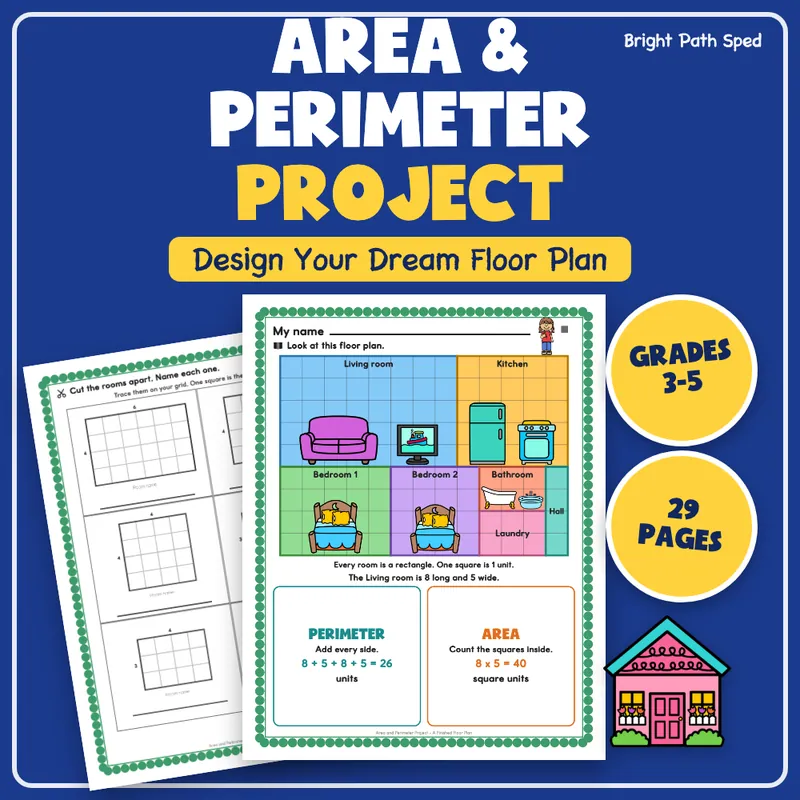
Your class can find the area and perimeter of a rectangle. Now give them a reason to do it again and again: design a floor plan. Each child plans rooms, draws them on grid paper, and fills a key table with the length, width, area and perimeter of every room. This Area and Perimeter Project has the planning page, the grids, the key table, a checklist, a partner check and a rubric, so you can hand it out and run it.
WHAT IS INCLUDED (29 pages)
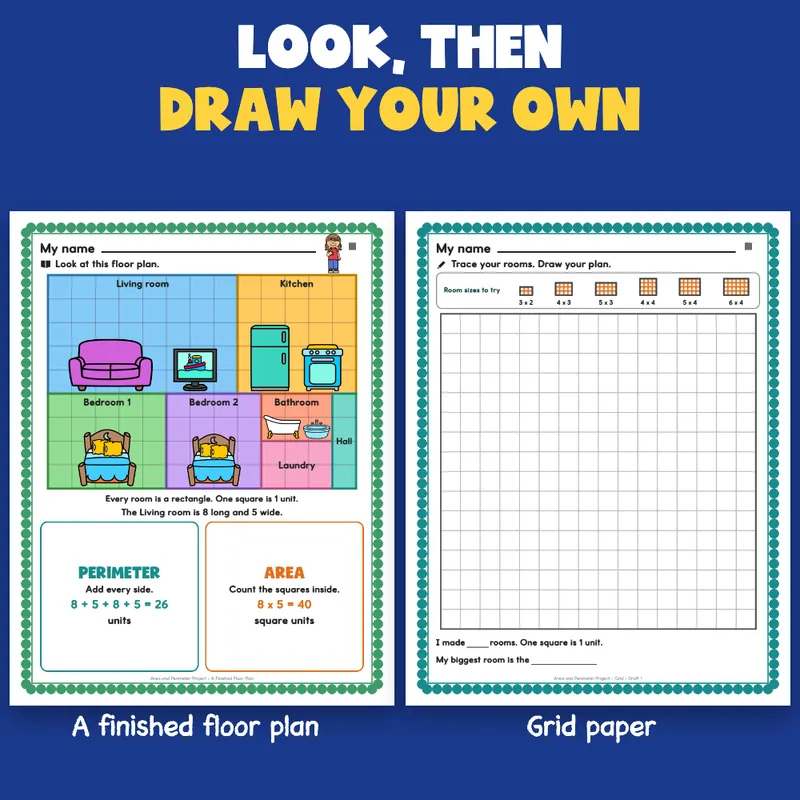
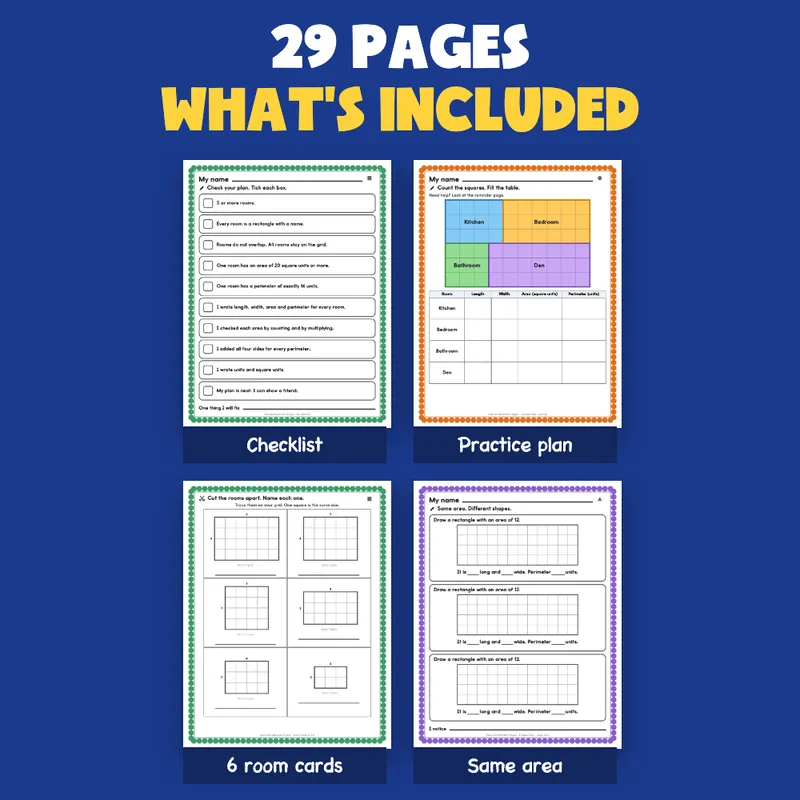
- 16 student pages, with a big "My name" line on the pages children write on, one short direction and room to work: The Steps, A Finished Floor Plan (7 rooms drawn on a 13 by 9 grid), an Area or Perimeter Reminder, Plan (pick rooms and area goals), a Practice Plan (4 rooms to count), Room Cards, 4 grid pages, a Key Table (8 rows), My Checklist (10 boxes), Partner Check, Reflection, and 2 Finished Early pages (same area, same perimeter).
- 6 room cards to cut on 1 cut sheet, set edge to edge so every cut is one straight line. One grid square is the same size on the cards and on all 4 grid pages, so the rooms trace right onto the grid.
- 4 grid pages: Draft 1, Draft 2, Draft 3 and a Final Copy, each 16 squares by 16 squares. The drafts carry a Room Sizes to Try strip.
- Five project rules in kid words (5 or more rooms, every room a named rectangle, no overlap, one room with an area of 20 or more, one room with a perimeter of exactly 16).
- Teacher pages: Start Here with a which-page-when table, how to run it in 5 sessions, a rubric (5 skills, 4 levels in plain words), a sample plan with its answer check, a filled example (an invented child; every answer invented), a key, a note home, a phrase bank of 20 starters in 5 groups, a class roll-up for 10 children, and a binder cover with spine and tabs.
- Terms of use and a thank-you page.
How To Use It
Show the finished floor plan and find the perimeter and area of one room together. Children try the practice plan, pick their rooms, cut and name the room cards and trace them on a grid. Then they fill the key table, check their plan with the checklist and a partner, and make a final copy. Early finishers try Same Area and Same Perimeter. Score with the rubric and use the class roll-up to plan small groups.
Built For The Child Holding The Page
The pages children write on have a big "My name" line and one short direction, and the grids have big squares to draw on. The key table has tall rows for a child's handwriting. The pages are plain grids and colored rectangles, with no clutter. A few Whimsy Clips pictures (a kid and furniture on the finished plan) appear on some pages; the grid pages stay plain. Every page reads in black and white too.
Type In, Or Print
The name lines, the key table, the checklist boxes, the partner check, the reflection, the note home and the class roll-up are type-in fields in any PDF reader. The grid pages are for pencil and crayons. You can also print any page and write by hand. Print at 100 percent with fit-to-page turned off so the squares stay the same size. This is a fillable PDF for printing and typing; it is not a slide or word processor file.
Concepts Covered
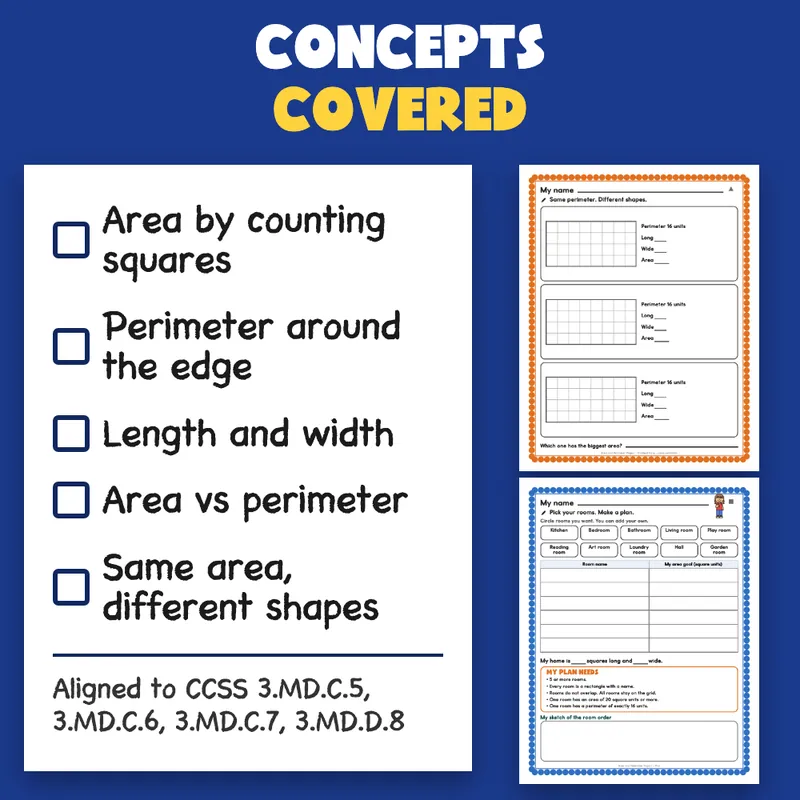
Area by counting squares, perimeter around the edge, length and width, area vs perimeter, and critical thinking (plan, check, fix). Aligned to CCSS 3.MD.C.5, 3.MD.C.6, 3.MD.C.7 and 3.MD.D.8.
Who This Is For
Teachers of grades 3, 4 and 5, resource rooms and self-contained classrooms who want an area and perimeter project that every child can finish. Rectangles with whole-number sides.
What This Is, And What It Is Not
Working paper for a math project on area, perimeter, length and width. It is not a full math curriculum, an assessment or a therapy program, and it makes no health claims. Your school decides what a child should be able to do and when.