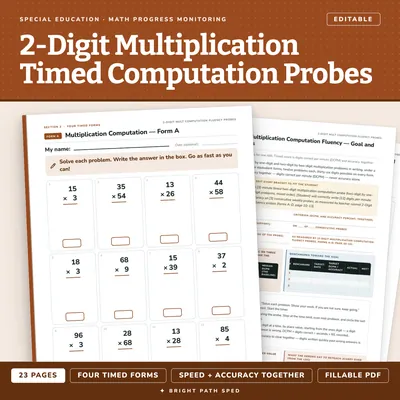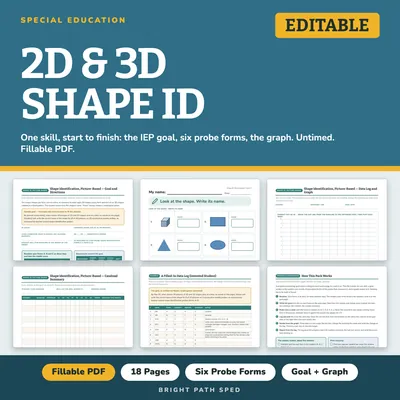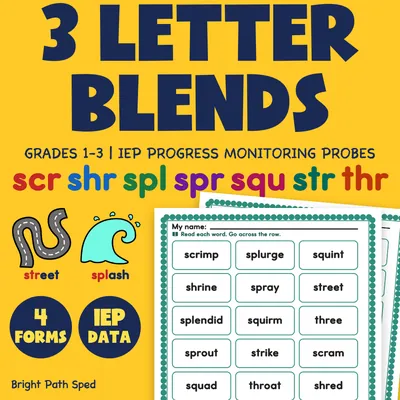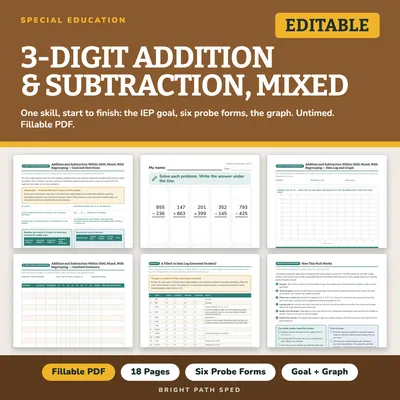
Beginning Multiplication Probes
- 20 pages
- 2nd, 3rd
$1.75 $3.50 on Teachers Pay Teachers
Half the Teachers Pay Teachers price. The same PDF, sold direct.
DownloadOr get it with All-Access: pick any 20 resources a month for $7.
New here? Your first month of All-Access is half off with code TEACHERTOK
Already bought this, or a member?
Instant download. One teacher's license: colleagues need their own copy. Each file carries a license number.
Also on Teachers Pay Teachers: see the Bright Path Sped store
About this resource
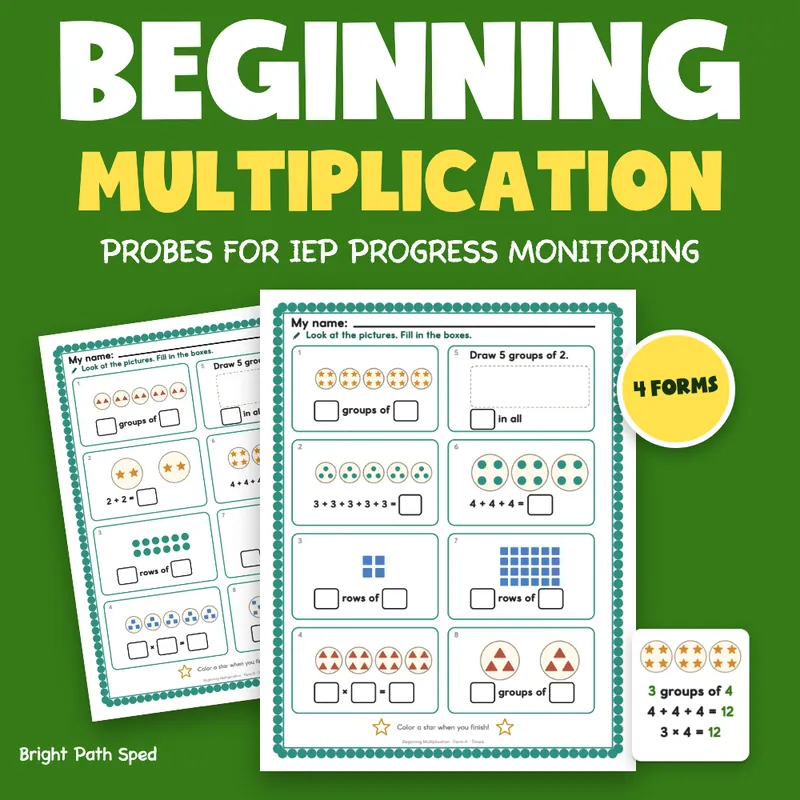
Beginning multiplication starts with seeing equal groups and arrays and saying them three ways: groups of, repeated addition, and a multiplication sentence. This pack measures that skill every week against an IEP goal you write. Four timed probe forms with drawn picture groups and write-in blanks, an answer key, and an IEP data sheet with a graph and a timed record, ready for Monday.
WHAT IS INCLUDED - 20 pages, four timed probe forms (A, B, C, D) of 8 items each (32 items), 2 student teaching pages (equal groups, arrays), a two-page answer key, a goal page with a sample goal and a blank for your district's goal text, a teacher notes page, a binder cover and divider tabs, a filled-in example, and a family update page
The Probe Forms
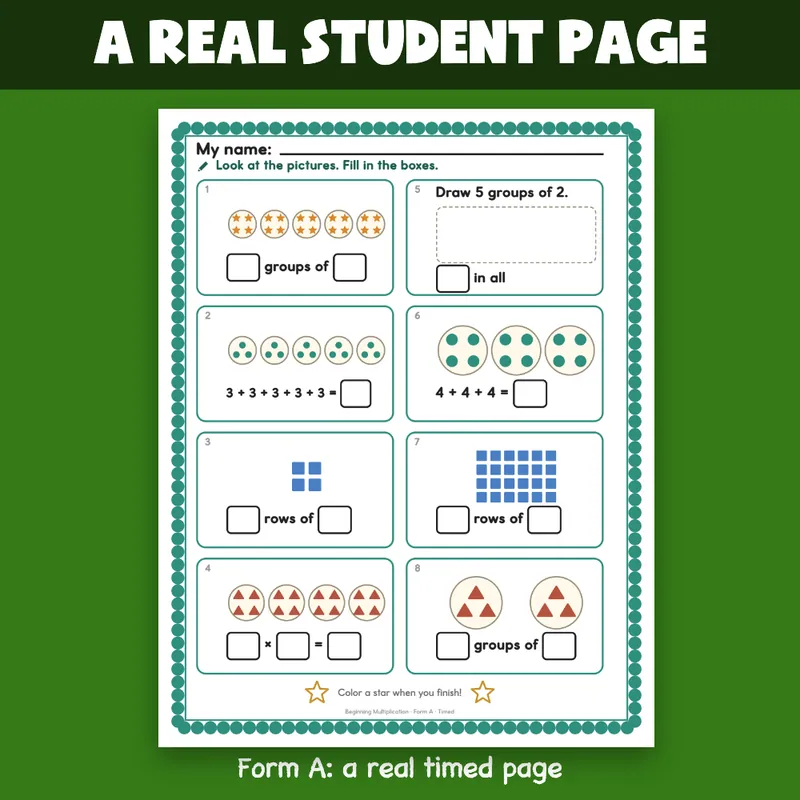
- Every form has 8 items on one page: 2 "__ groups of __" items, 2 repeated addition items, 2 array "__ rows of __" items, 1 multiplication sentence item and 1 draw-it item, in the same places on every form, so the score means the same on Form A and Form D
- Pictures are plain drawn shapes (stars, circles, squares, triangles) in groups and arrays, with write-in boxes. Factors 2 through 5; arrays up to 5 rows of 6
- A big My name line, one short instruction with a picture, and big answer boxes. No answers, goal text or scoring strip on a student sheet
- Every answer is computed, checked a second way against the drawn picture, and printed on the key. The four forms add up to nearly the same number of objects, so no form is much harder than another
Goal, Standards And Directions
- A goal page with a sample goal (every bracket meant to be edited), the goal frame as type-in fields, a baseline table, benchmarks, and a line for the time limit your team sets
- A skill reference line (2.OA.C.4 and 3.OA.A.1; your state's wording may differ) and a blank for your state standard
- A blank for the district's own goal text, copied exactly as written
- Directions to say, how to score, and what to note about each miss
Teaching Pages
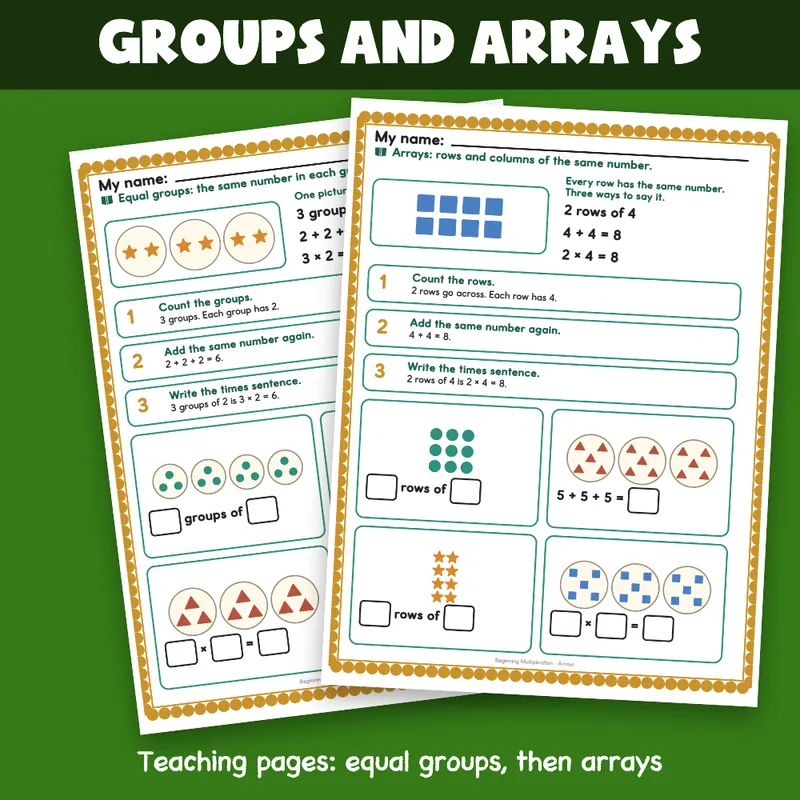
- Two student pages, one for equal groups and one for arrays: one drawn picture said three ways, three steps, and four try-it items
Iep Data Sheet
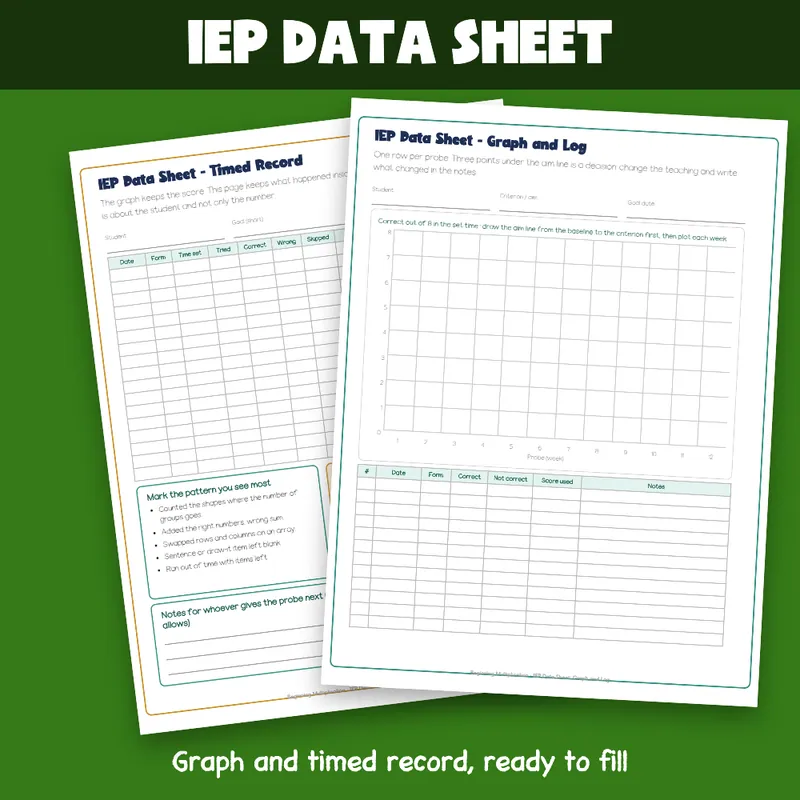
- A graph scaled 0 to 8 with twelve probe columns and a twelve-row log
- A timed record: date, form, time set, tried, correct, wrong, skipped and what the misses looked like, with a pattern checklist and a place to write what changed in the teaching
- A caseload summary grid, a family update and team handoff page, and a filled-in example (Noor, invented)
What This Is, And What It Is Not
It is a fillable PDF. The goal page, data sheet, caseload page, family update page and the mark boxes on the answer key are type-in fields: open the file in a PDF reader, click a line or a cell, type, and Save As once per student. The probe forms print: the student writes on paper.
It is a timed probe, but the time limit is a blank for your team to fill in and keep the same every week. It is not a norm-referenced assessment and it carries no benchmark score or expected rate. The criteria in the sample goal are in brackets because your team sets them from the baseline and the student's IEP. The multiplication sentence is written groups first (3 groups of 4 is 3 x 4 = 12); your team decides whether to accept either order. Your district's own rules for goals and scoring go on the blank lines provided.
Who This Is For
Second and third grade special education teachers and case managers writing beginning multiplication goals, intervention teachers, and the paraprofessionals who give the weekly probe.