Body Feelings Map
- 40 pages
- Kindergarten, 1st, 2nd, 3rd
$2.00 $4.00 on Teachers Pay Teachers
Half the Teachers Pay Teachers price. The same PDF, sold direct.
DownloadOr get it with All-Access: pick any 20 resources a month for $7.
New here? Your first month of All-Access is half off with code TEACHERTOK
Already bought this, or a member?
Instant download. One teacher's license: colleagues need their own copy. Each file carries a license number.
Also on Teachers Pay Teachers: see the Bright Path Sped store
About this resource
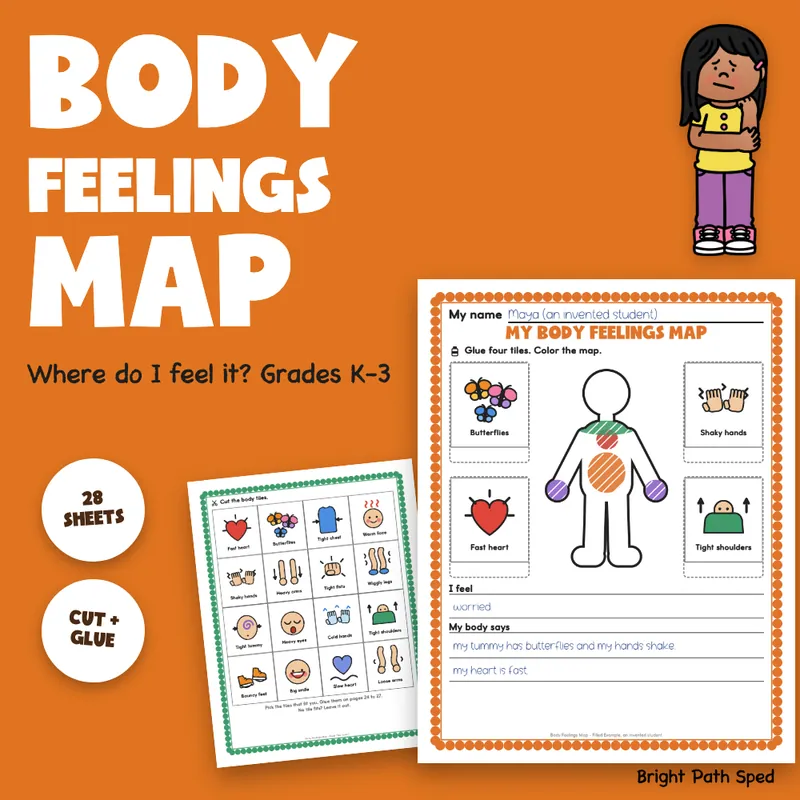
Where do you feel it? Children point to the place on a body where a feeling sits, color it, and glue on a tile that says what their body says: fast heart, butterflies, shaky hands. This is a print-and-go set of body feelings map sheets for kindergarten to grade 3, with eight feelings, a drawn body to color, and cut-and-glue sensation tiles. It is a classroom talking and coloring activity: the child decides what is true for them.
What Is Included
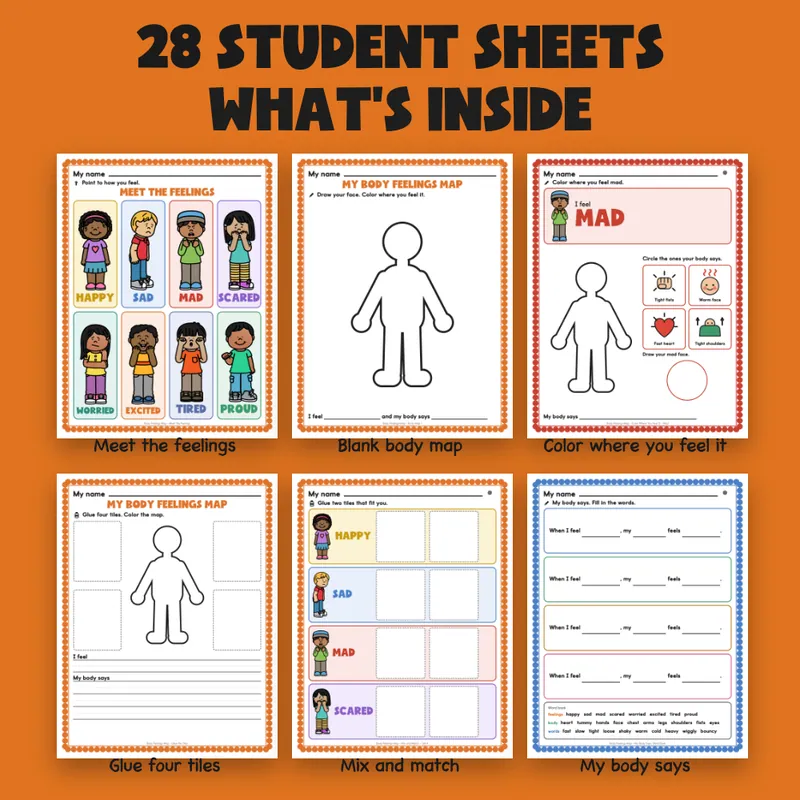
- 8 feelings, each with its own kid picture: happy, sad, mad, scared, worried, excited, tired and proud. A "Meet the Feelings" sheet, 8 feeling cards to cut apart (in color and in ink-saver), and a "Write the Word" sheet with a word bank.
- 4 blank body maps: one big map, a before-and-after pair, four small maps on one sheet, and a map with a face to draw and lines to write on.
- 8 color-where-you-feel-it sheets, one for each feeling: a big body to color, four sensation pictures to circle (choices, never answers), a face to draw and a line to write.
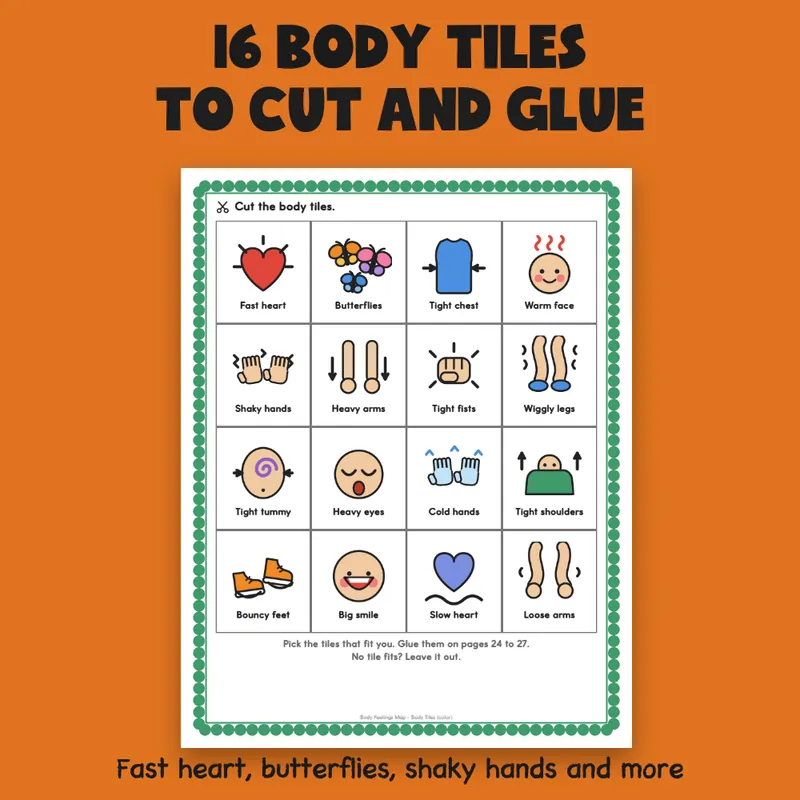
- 16 body tiles to cut apart, each a word and a picture: fast heart, butterflies, tight chest, warm face, shaky hands, heavy arms, tight fists, wiggly legs, tight tummy, heavy eyes, cold hands, tight shoulders, bouncy feet, big smile, slow heart and loose arms. One color sheet and one ink-saver sheet, plus a Body Words reading sheet. 48 cut pieces in all with the feeling cards.
- 4 glue sheets with boxes sized to the tiles: glue four tiles on a map, glue a feeling card and color your body for today, and two mix-and-match sheets (two tiles beside each of four feelings).
- 2 "My body says" sentence frames: one with a word bank and one to write in your own words, with a drawing box.
- A face-and-color page, a weekly check-in (circle how you felt each day and write what your body said) and a feelings graph.
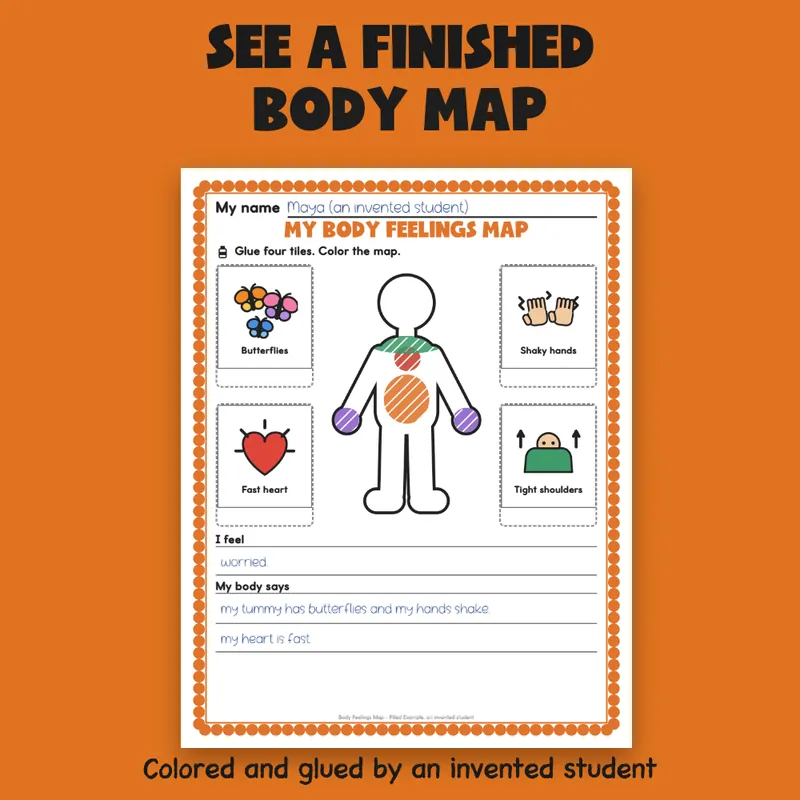
- Teacher pages: Start Here with a which-page-when table, three short routines, a finished example by an invented student, an invented week with a filled graph, an answer key for the one sheet with right answers, a class check-in tally, a family note, a phrase bank of 20 starters, a What's Next page, terms of use and a thank-you page.
How To Use It
1. Start with the faces and the body words. Children say them, point and try them.
2. Hand over a color sheet for one feeling. Ask where they feel it, and let them color anywhere or nowhere.
3. Cut the tiles and glue the ones that fit onto a map, then read the sentence back to the child.
4. Use the weekly check-in and the graph for a few minutes a day. The class tally shows what the group picked.
Built For The Child Holding The Page
Every student sheet has a big "My name" line, one short direction with a picture, and room to color and write. The body is large and clear with an even outline. The cutting sheets put the pieces edge to edge so each cut is one straight line, with 8 or 16 pieces a sheet. Every sheet reads in black and white too.
Print, Or Type In
Print and go. The name lines and writing lines are also type-in fields in any PDF reader. Print at 100 percent with fit-to-page turned off. This is a PDF for printing; it is not a slide or word processor file.
Who This Is For
Kindergarten to grade 3 classrooms, resource rooms and self-contained classrooms, and paraprofessionals, subs and families who want one set of pages to talk about feelings in the same words.
What This Is, And What It Is Not
Working paper for naming feelings and body words. It is not a test, a screening or a therapy program, it teaches no coping steps, and it makes no health claims. The sensation pictures are choices, not answers, and the example child is invented. Your school decides what a child should do and when.
More For Your Feelings Shelf
Pair it with Calm Body Visuals (cue posters, cards and desk strips) and Feelings Color Zones (cut-and-paste feelings sorts) from Bright Path Sped.