Break Apart Multiplication Word Problems
- 28 pages
- 3rd, 4th
$2.00 $4.00 on Teachers Pay Teachers
Half the Teachers Pay Teachers price. The same PDF, sold direct.
DownloadOr get it with All-Access: pick any 20 resources a month for $7.
New here? Your first month of All-Access is half off with code TEACHERTOK
Already bought this, or a member?
Instant download. One teacher's license: colleagues need their own copy. Each file carries a license number.
Also on Teachers Pay Teachers: see the Bright Path Sped store
About this resource
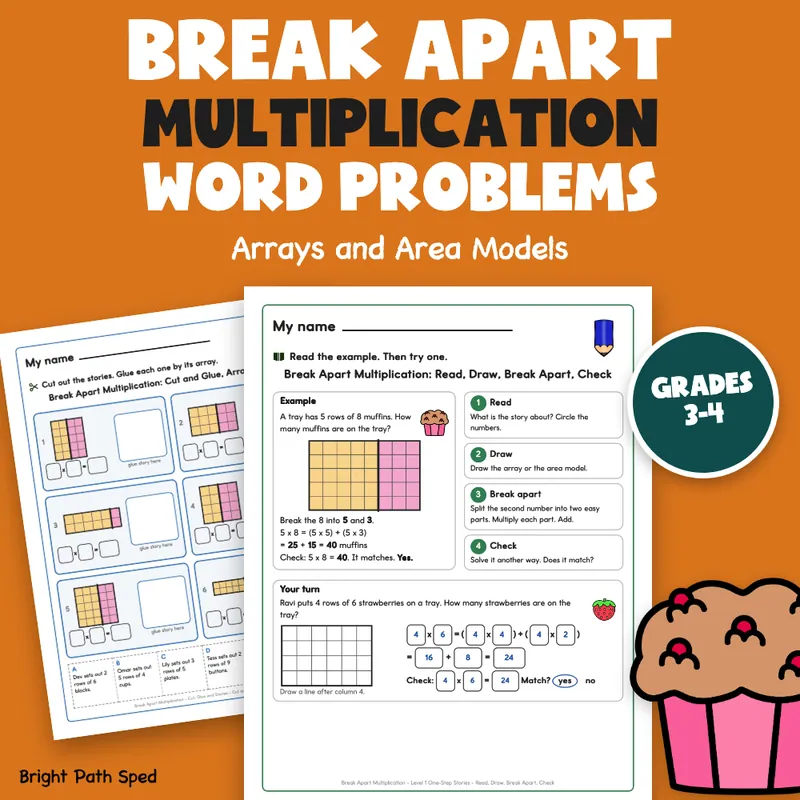
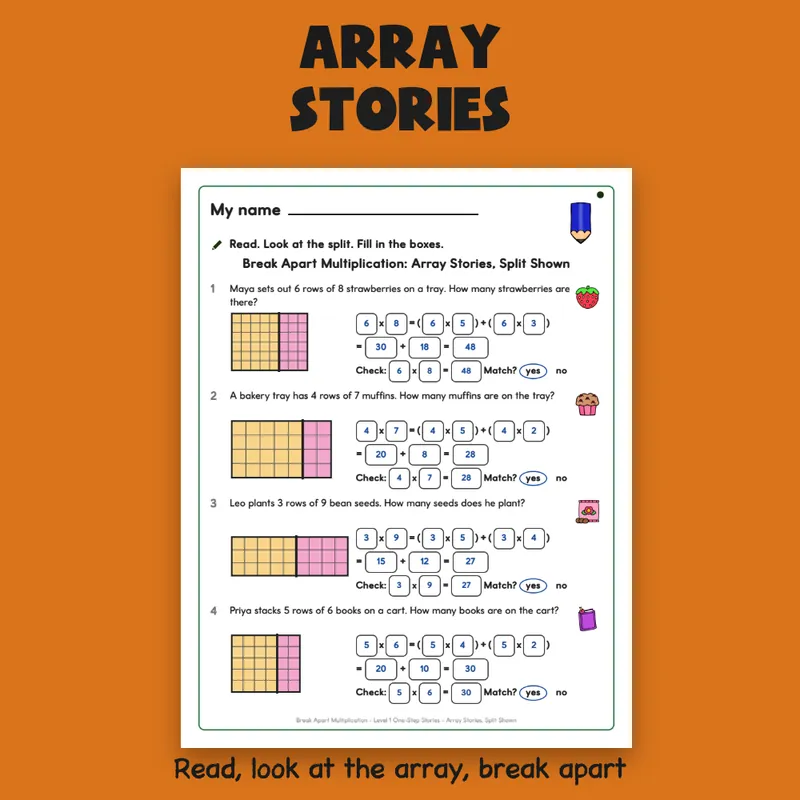
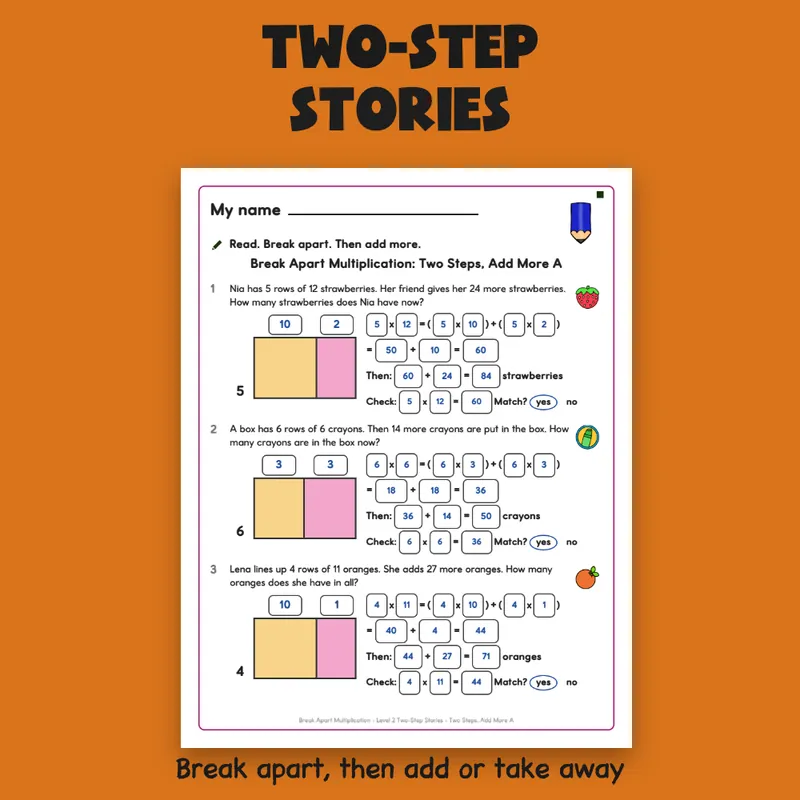
Looking for break apart multiplication word problems your third and fourth graders can draw on and fill in? This set has 17 student sheets and 52 story problems built on one idea: split the second number into two easy parts, multiply each part, then add. Every story comes with a space to draw the picture (an array, or a two-rectangle area model) and the same frame to fill in, so students learn the move once and use it on every page: a x b = (a x part) + (a x other part), then add the two products, then a check line: solve it another way, does it match, circle yes or no. Every page has a big "My name" line, one short instruction with a small picture, a small picture of the thing in each story (muffins, strawberries, pencils, books, grapes and more), big arrays and big boxes to write in. Print and go: students draw and color with a pencil or crayon, and the number boxes can be typed into on screen.
EVERYTHING INSIDE (28 pages)
- 1 how-to page: Read, Draw, Break Apart, Check, with one worked story and one to try
- 4 one-step story sheets, 4 stories each (16 stories): an array within 10 by 10 with the split already shown (2 sheets), draw the line after a given column, and choose where to draw the line
- 4 two-step story sheets, 3 stories each (12 stories): break apart with an area model, then add more (2 sheets) or take away (2 sheets); every final answer stays within 100
- 4 tens-and-ones story sheets, 3 stories each (12 stories): a two-digit number times a one-digit number in an area model with the tens and ones split
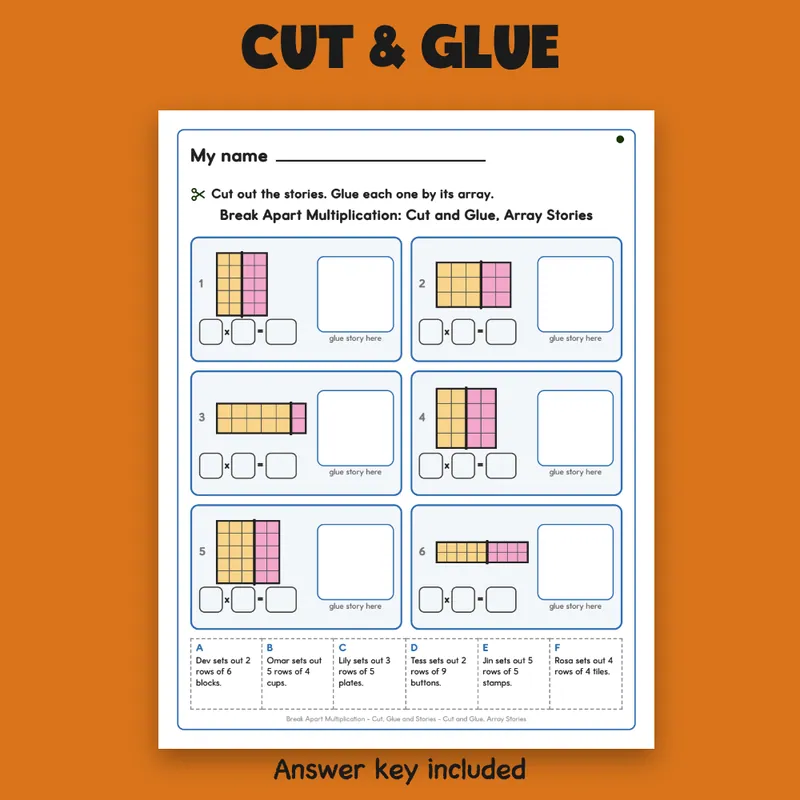
- 2 cut-and-glue sheets with 6 story pieces each (12 cut pieces): glue each story under its matching array, then under its matching area model
- 2 write-your-own sheets: write a story, draw it on a blank 10 by 10 array or in an area model, break it apart, and trade with a partner for the check
- 3 answer-key pages, a tracker with a roll-up graph (14 scored sheets, 52 problems), a filled example (an invented student), a family page, a Start Here page, a terms page, a What's Next page and a credits page
Three Levels
A small shape in the top corner of 14 student sheets tells you the level: a circle (5 sheets) is starting, one-step stories on an array; a square (5 sheets) is building, two-step stories with an area model and a cut-and-glue match to models; a triangle (4 sheets) is ready for more, tens and ones. The how-to page and the two write-your-own sheets carry no level shape.
How It Works
1. Pick a level: one-step stories, two-step stories or tens and ones.
2. Print a page and hand it over. One short instruction, one job. Students read, draw the line, then write in the boxes.
3. Check with the key, write the date and score on the tracker, and color the roll-up column.
Built For The Child Holding The Page
A big "My name" line, big print, arrays with squares big enough to count and draw on, and room to write. Nothing on a student page is written for an adult; the keys, tracker and notes are on separate teacher pages. All names and numbers in the stories are made up. Every array is drawn by code and its two colored parts are counted back out of the drawing and checked against the numbers, every equation is worked out two ways (the whole product and the sum of the parts), every second step is worked out and kept within 100, and every answer in the key comes from the same numbers as its page.
What This Is, And What It Is Not
Who This Is For
Third and fourth grade teachers, interventionists, special education teachers and families who want break apart multiplication practice that lives in word problems, from an array to tens and ones in an area model.