Budget Simulation Game
- 63 pages
- 6th, 7th, 8th, 9th, 10th, 11th, 12th
$2.50 $5.00 on Teachers Pay Teachers
Half the Teachers Pay Teachers price. The same PDF, sold direct.
DownloadOr get it with All-Access: pick any 20 resources a month for $7.
New here? Your first month of All-Access is half off with code TEACHERTOK
Already bought this, or a member?
Instant download. One teacher's license: colleagues need their own copy. Each file carries a license number.
Also on Teachers Pay Teachers: see the Bright Path Sped store
About this resource
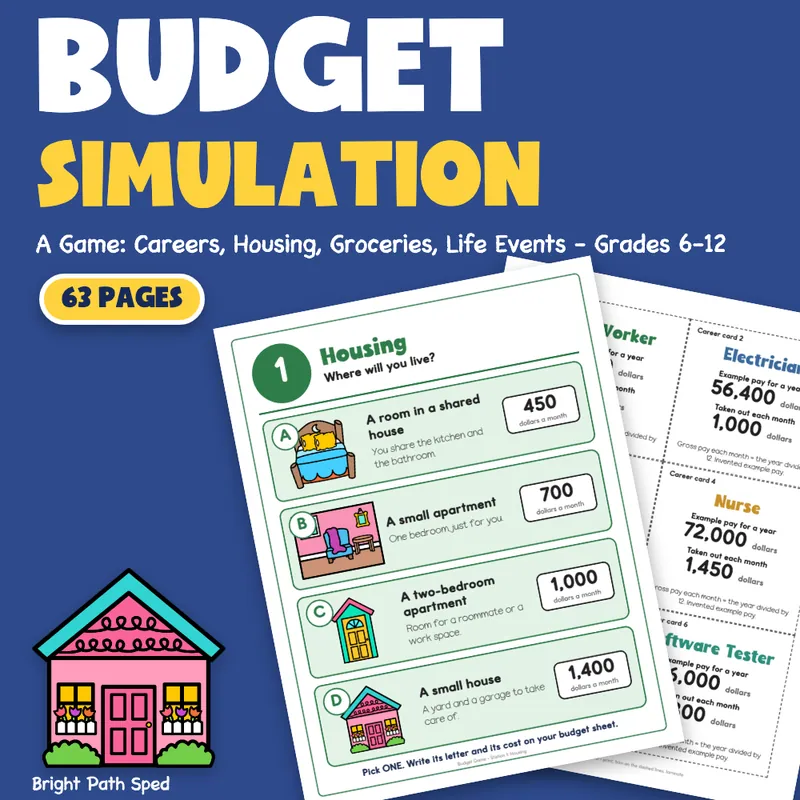
Looking for a budget simulation game that really plays like a game? Every student draws a career card, works out take-home pay, then plans a whole month at 14 stations: housing, transportation, groceries, utilities, screens and gadgets, health care, clothing, eating out, entertainment, pets, education and training, saving, giving and gifts, and a Life Events station where surprise costs and surprise money turn up. Pick A, B, C or D at each stop, write the cost, and find out what is left. All careers, pay and prices are made up for practice, and there is an answer key.
EVERYTHING INSIDE (63 pages)
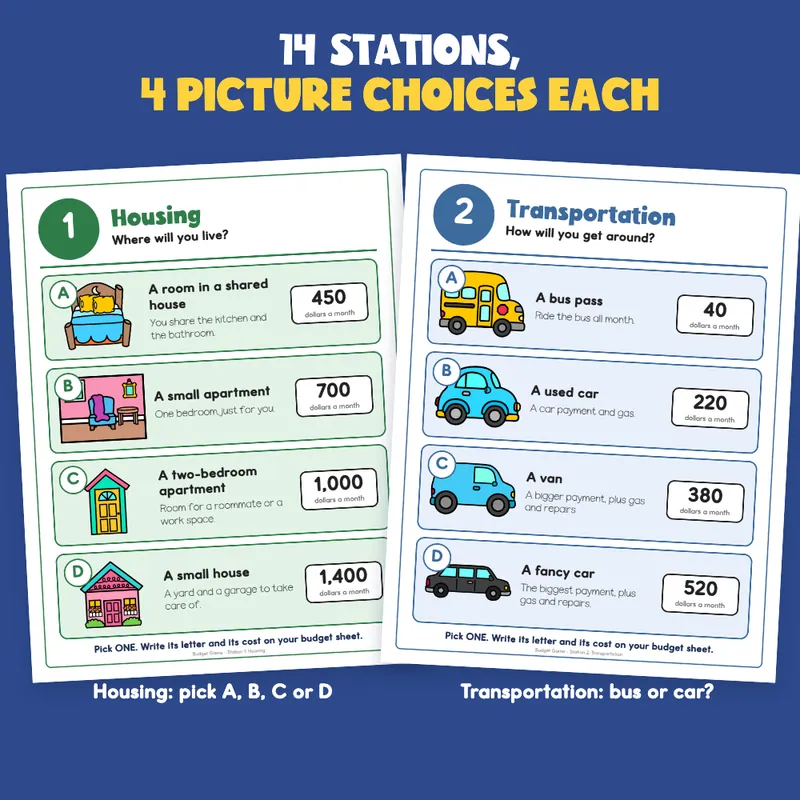
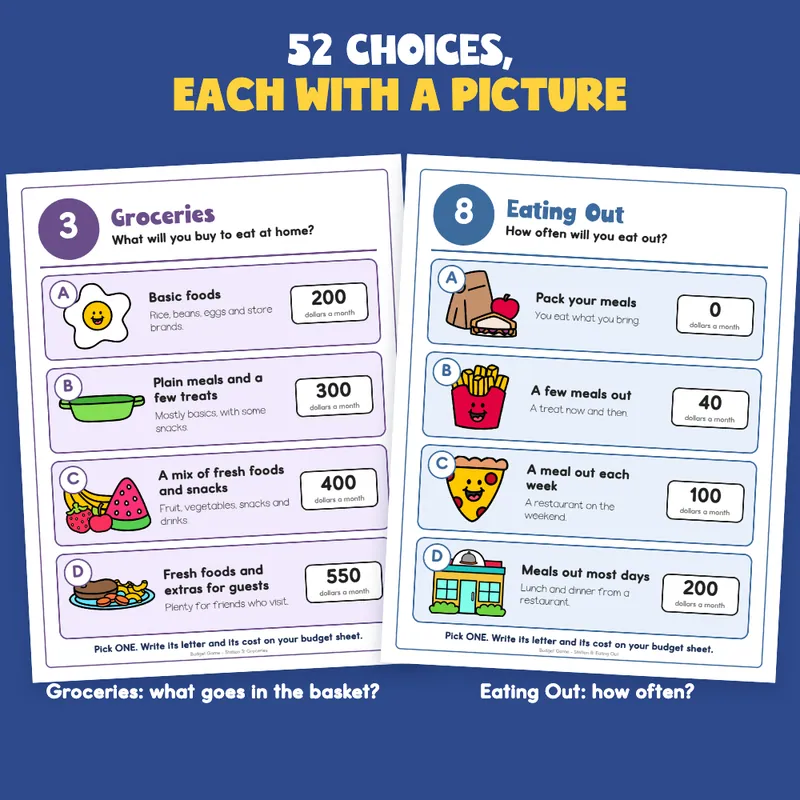
- 14 large station posters, one per page: 13 choice stations with 4 priced options each (52 choices, every cost in dollars a month) and a Life Events station that tells students how to draw and add up their cards
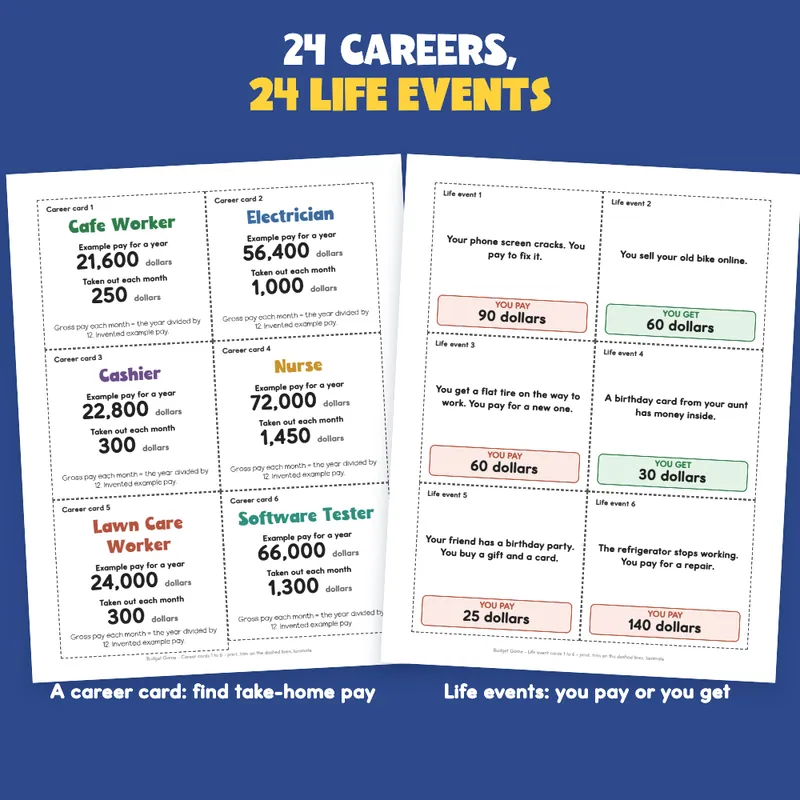
- 24 career cards, 6 to a page, each with a career, example pay for a year and the amount taken out each month; students find gross pay each month (the year divided by 12) and take-home pay
- 24 life event cards, 6 to a page: 16 that cost money and 8 that bring money in
- 23 student pages, each with a name line and one short instruction: How To Play, My Career, My Budget Sheet (13 stations plus totals), Round 2: Fix My Budget, My Life Events, Needs, Wants and Saving, My Spending Graph, Compare With a Partner, a packet with one page per station, and a Reflection page
- A packet for the desk version: one page per station, each with a short reading, the station's choices, and 5 questions (true or false, cheapest choice, the difference between D and A, money left, and a written answer)
- A teacher set-up page with a station map, a rules and ways-to-run-it page and a one-page table of every station price
- 4 answer keys (packet stations 1 to 7, packet stations 8 to 14, the 24 career cards, and the other student pages)
- 2 filled-example pages for an invented student, a class results grid (16 rows), a family page, a phrase bank (16 starters in 4 groups)
- A binder cover with type-in teacher and class fields, and a page of 5 divider tabs with a spine label
- Start Here and a thank-you page with what to try next
How To Use It
1. Print the stations (pages 7 to 20) and hang them in a loop. Print the career and life event cards, trim them on the dashed lines and laminate. Page 4 shows the room.
2. Give each student a career card and the student pages. How To Play is page 29.
3. Students find take-home pay, visit the stations in order, write each pick and cost, draw life event cards and add it all up. Round 2, the graph, a partner page and the reflection come after.
4. No room for stations? Hand out the packet and students work at their desks. Check with the answer keys.
Built For The Student Holding The Page
A big "My name" line, one short instruction with a small picture cue, a plain border and big boxes to write in. A small circle, square or triangle by the page title marks how many steps the page takes (a shape, never a number). Nothing on a student page is written for an adult: the keys and records are on separate teacher pages. Every poster choice has its own big picture, and the type is large enough to read from a few steps away. A die adds some luck at the Life Events station.
Made-Up Careers, Pay And Prices
Every career, pay amount, price and life event is invented for practice. Real jobs and real prices differ, and nothing in the file says what any job pays. The amount taken out each month is a number printed on the card, so students practice gross pay minus a number. No currency symbol is typed in any text: amounts are written as a number with the word "dollars". The one student in the file is an invented example, and it says so.
Type In, Or Print
The name line, every answer box, every check box, every table cell and every ruled work box on the student pages are type-in fields in any PDF reader: click one, type, then save. The pages also print, and the check boxes can be marked by hand. This is a fillable PDF; it is not a Google Slides or PowerPoint file. The posters and cards are for printing.
What This Is, And What It Is Not
A classroom game for practicing how to plan a month of money, with the records around it. It is not financial advice, a statement of what any job pays, a timed test, a screener or a clinical tool, and it makes no claim of alignment to any standard. There is no IEP goal language or eligibility wording anywhere in the file.
Who This Is For
Teachers of life-skills and special education classes, transition and career-readiness programs, middle and high school math and family and consumer classes, and families who want money practice that does not look made for little kids.
If You Want More Money Practice
Budgeting Worksheets (paychecks, needs and wants, a monthly budget and bills) and Checkbook Register Worksheets are in the same collection.