Emotional Regulation Coping Skills Data Sheets Editable
- 19 pages
- Not Grade Specific
- PDF, fillable
$4.00
DownloadOr get it with All-Access: pick any 20 resources a month for $7.
New here? Your first month of All-Access is half off with code TEACHERTOK
Already bought this, or a member?
Instant download. One teacher's license: colleagues need their own copy. Each file carries a license number.
Also on Teachers Pay Teachers: see the Bright Path Sped store
About this resource
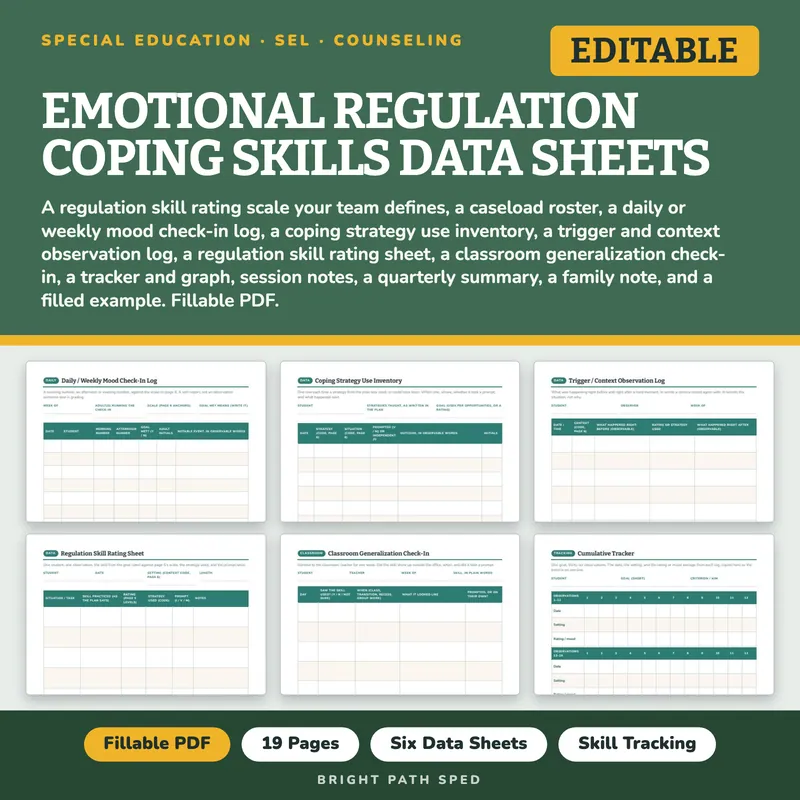
The skill-growth tracker for a student working on emotional regulation or coping skills. Not the check-in/check-out points program, not the ABC incident log, not the general counselor session sheet — this one measures skill rating against a rubric, self-report mood, and how often a taught strategy is used.
This is the clipboard for a school counselor, teacher or related-services provider tracking one regulation or coping-skills goal, as a fillable PDF. Type the roster, the rating scale, the strategy key, and the context codes once, Save As per student, and pen the marks and observations during the day. Every line, box and cell is a type-in field; on a tablet the whole thing can be typed.
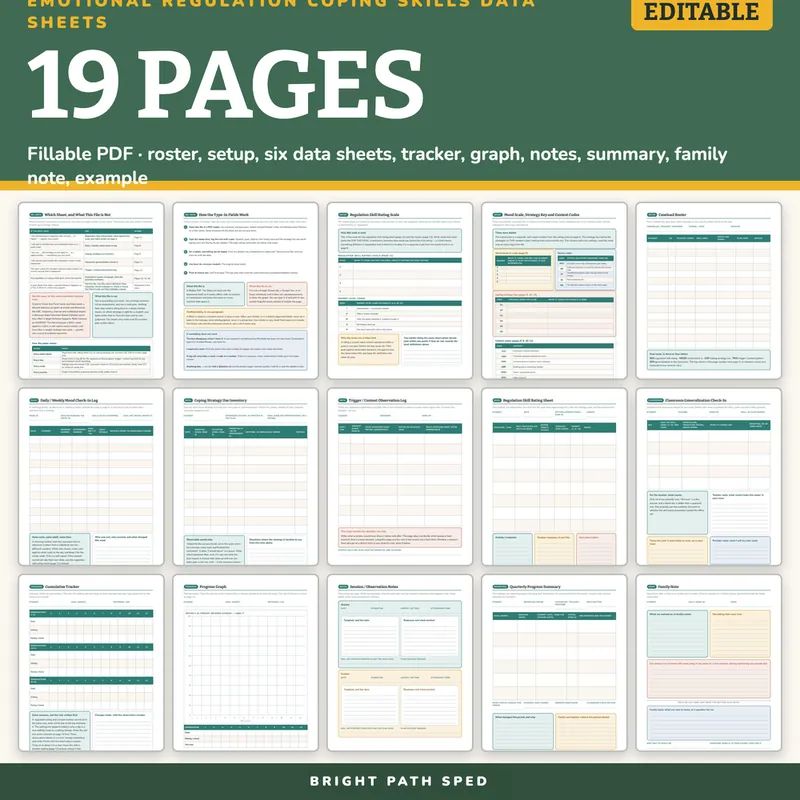
WHAT IS INCLUDED — 19 pages, fillable, 753 fields
SETUP (5 pages)
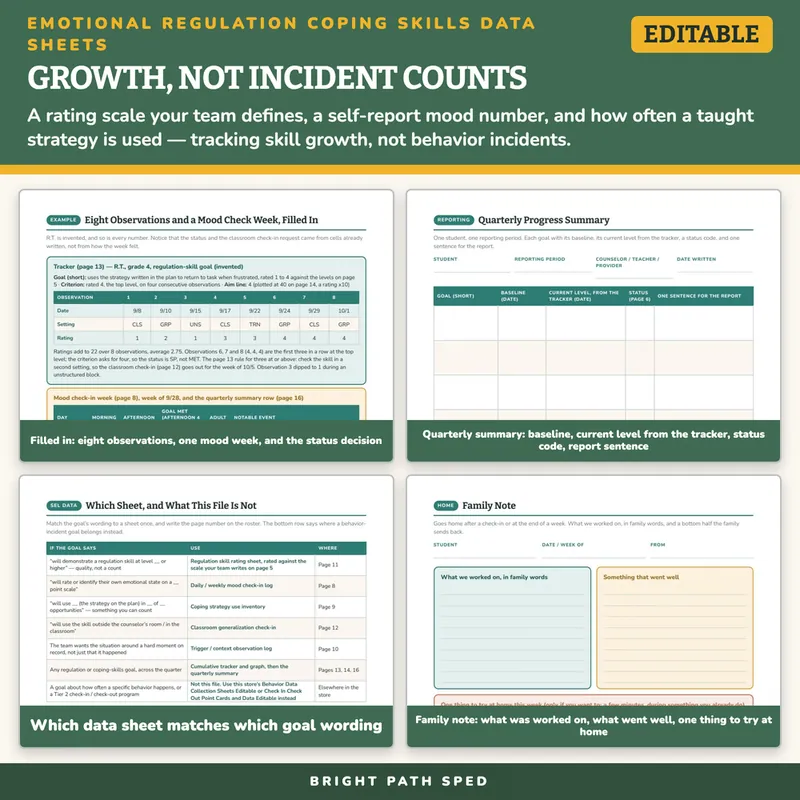
- Which Sheet for Which Goal — match the goal's wording to a sheet once; the bottom row tells you which goal belongs elsewhere.
- How the Type-In Fields Work — ninety seconds of reading on what to type and what to pen.
- Regulation Skill Rating Scale — four levels the team defines for THIS goal, in observable behavior, not feeling.
- Mood Scale, Strategy Key, and Context Codes — a five-point self-report mood scale, six teaching strategies from the plan, and six setting codes.
- Caseload Roster — every student, goal area, which log page, and the dates.
DAILY AND WEEKLY LOGS (3 pages)
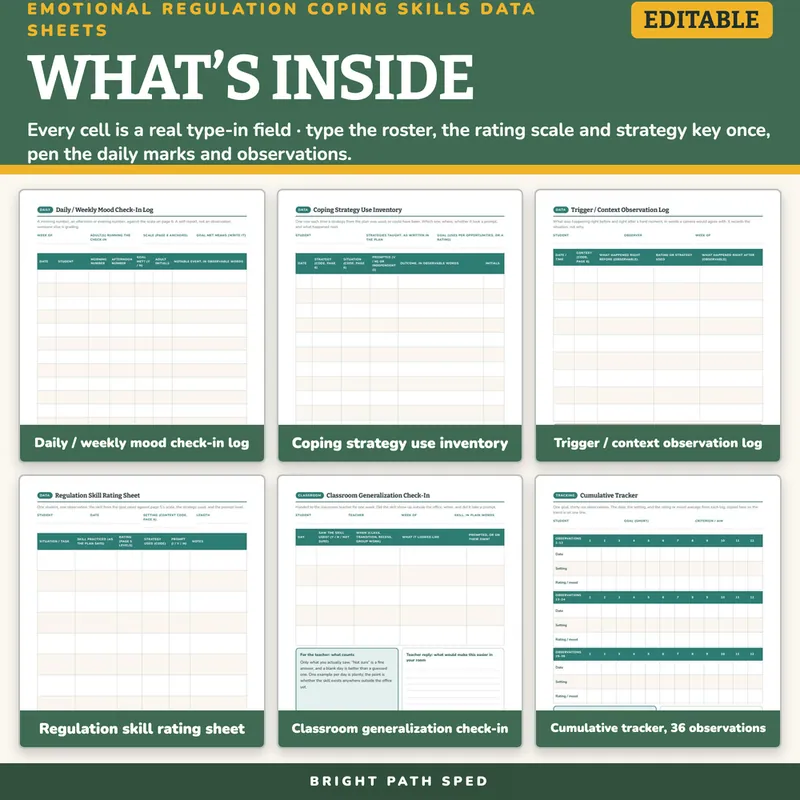
- Daily / Weekly Mood Check-In Log — twelve rows, morning and afternoon self-report numbers, whether the goal was met each day, and notes.
- Coping Strategy Use Inventory — eleven rows for every time a strategy from the plan was used (or could have been), what situation, prompted or independent, and outcome.
- Trigger / Context Observation Log — nine rows for what happened right before and right after a hard moment, in observable words, not the reason why.
INDIVIDUAL OBSERVATION AND CLASSROOM CHECK (2 pages)
- Regulation Skill Rating Sheet — one student, one observation; the skill rated against the scale, strategy used, prompt level, and room for materials and student response.
- Classroom Generalization Check-In — a week with the teacher; did the skill show up outside the office, when, and did it take a prompt. Teacher reply on the bottom half.
TRACKING AND REPORTING (4 pages)
- Cumulative Tracker — one goal, thirty-six observations across three blocks. The date, setting and rating/mood from each log, copied so the trend is on one line.
- Progress Graph — hand-plotted, aim line first. A rating is plotted at ten times its value.
- Session / Observation Notes — two entries per page. What was targeted, data, how the student responded, what happens next.
- Quarterly Progress Summary — one student, reporting period; each goal with its baseline, current level from the tracker, a status code, and one sentence for the report.
HOME (1 page)
- Family Note — what was worked on in family words, something that went well, one thing to try at home, and a bottom half for family reply.
EXAMPLE (1 page)
- Eight observations and a mood-check week for an invented fourth grader (R.T.), filled in. The example shows the status and check-in request coming from cells already written, not from how the week felt.
What This Is, And What It Is Not
It is a fillable PDF. Open it in a PDF reader, click a line, a box or a cell, type, press Tab to move on, and Save As once per student. It works offline with no account or subscription. It is NOT a Google Sheets file, a Google Doc, or an Excel workbook; it does not calculate or draw the graph. Prefer paper? Print it blank and pen the whole thing.
It is NOT a counseling curriculum, not a therapy protocol, not a crisis plan, and not an assessment or diagnostic tool. Nothing here says what a rating level or a mood number means, or which coping strategy is right for a student; your team writes that in, from the plan and its own judgment. The sheets only make sure the number gets written down.
It is NOT the Check In Check Out Point Cards program (arrival/dismissal check-in, discrete behavior points). It is NOT the ABC / frequency / interval line (behavior-incident counting). Both are named on the chooser page and the back page so a buyer does not mistake one for another.
Who This Is For
School counselors, social workers, special education teachers, behavior specialists, school psychologists, and related-services providers tracking emotional regulation or coping-skills goals for individual students or small groups.