IEP Binder Cover
- 32 pages
- Not Grade Specific
- PDF, fillable
$2.00 $4.00 on Teachers Pay Teachers
Half the Teachers Pay Teachers price. The same PDF, sold direct.
DownloadOr get it with All-Access: pick any 20 resources a month for $7.
New here? Your first month of All-Access is half off with code TEACHERTOK
Already bought this, or a member?
Instant download. One teacher's license: colleagues need their own copy. Each file carries a license number.
Also on Teachers Pay Teachers: see the Bright Path Sped store
About this resource
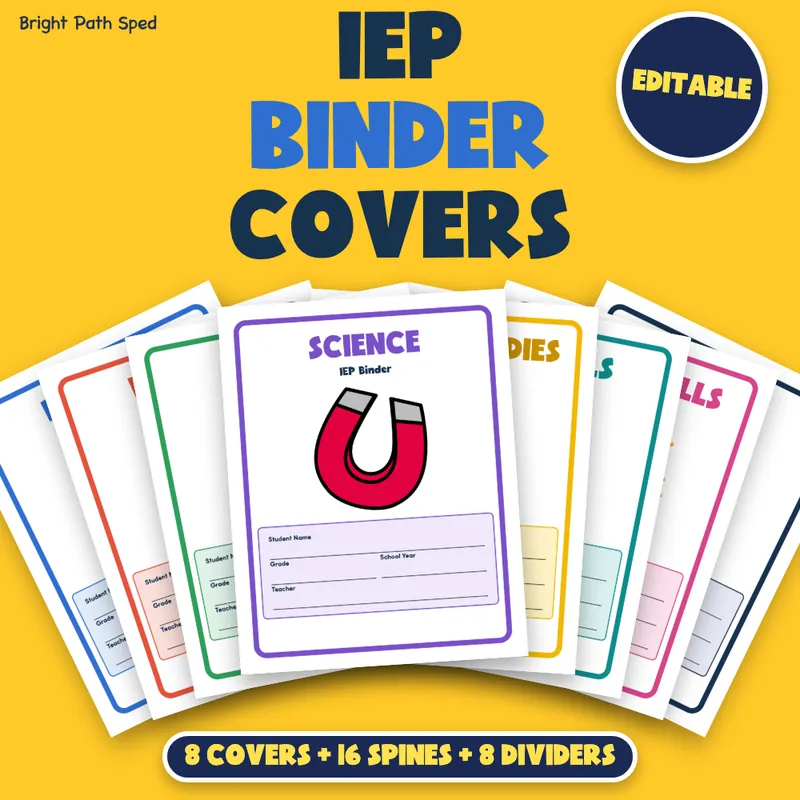
A neat binder is easier to find, easier to hand off and easier to bring to a meeting. This editable PDF gives you a color-coded cover for each subject area, matching spines in two widths, divider sheets, trim-and-tape tabs and a contents sheet, so a student's binder goes together in one sitting.
EVERYTHING INSIDE (32 pages)
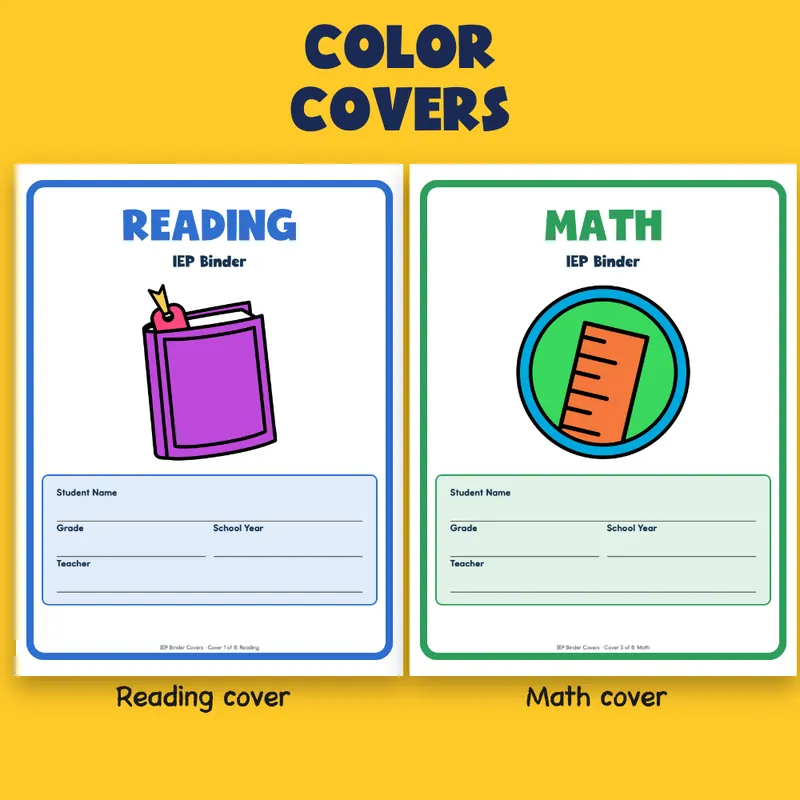
- 8 full-page student covers, one color for each subject area (Reading, Writing, Math, Science, Social Studies, Life Skills, Social Skills and My IEP). Each cover has 4 type-in fields: Student Name, Grade, Teacher and School Year.
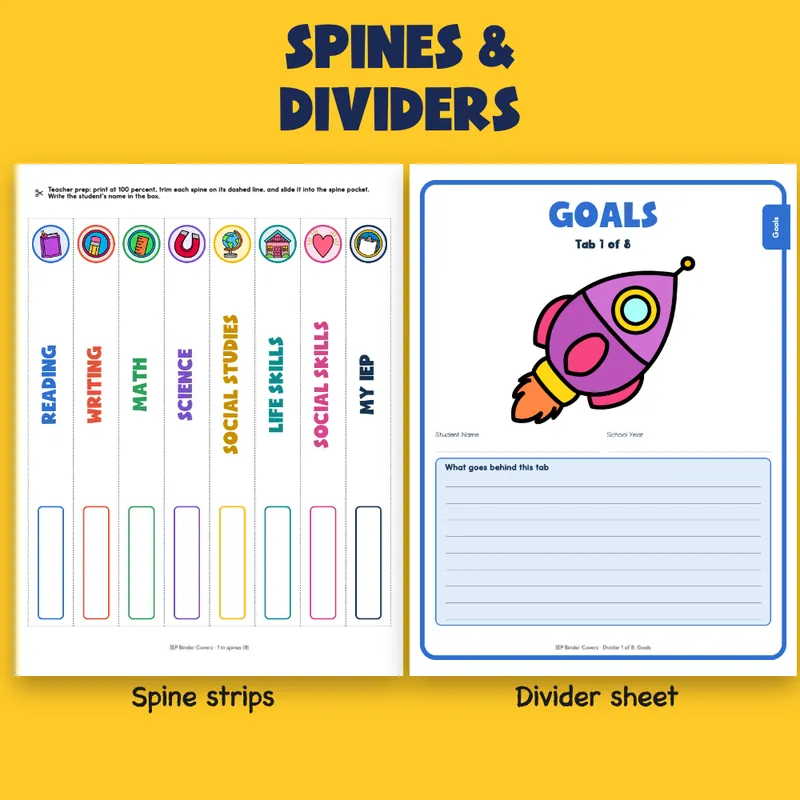
- 16 matching spines: 8 that are 1 in wide (all 8 on one page) and 8 that are 2 in wide (four on each of the two spine sheets). Each spine is 9 in tall and prints the subject name with a box to write the student's name by hand.
- 8 divider sheets, one for each tab (Goals, Levels, Data, Samples, Meetings, Family, Services, Notes), each with a color edge tab, type-in name and school year lines, and 9 lines for what goes behind the tab.
- A sheet of 8 trim-and-tape tabs in the same colors, for sheet protectors or folders.
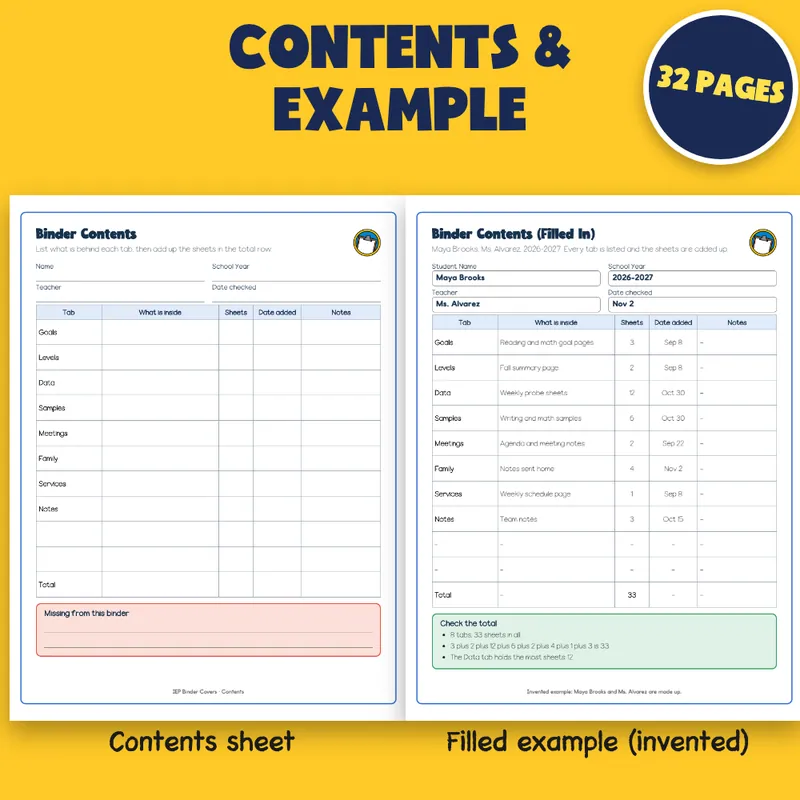
- A binder contents sheet: the 8 tabs, 2 blank rows, a total line for the sheets, and a box for what is missing.
- A filled-in example cover and a filled-in contents sheet for an invented student, with the total added up (33 sheets).
- A caseload binder check for 14 students: cover, spine, tabs and contents boxes, with a roll-up at the bottom.
- A binder sign-out sheet with 14 lines, for the team members who borrow the binder.
- A family note about the binder, with a 4-row table and a signature line.
- A phrase bank of 8 sentence starters in 4 groups (sharing the binder, asking for a look, passing it along, thank you), each ending in a blank, plus 7 lines for your own starters.
- Start Here, a how-to page with a color key and a line for your school's own rule, the terms of use, and a thank-you page with credits.
How To Edit
Open the PDF in Adobe Acrobat Reader, Preview or your browser. Click a line or a box and type. Save As to keep a clean blank copy for the next student. This is a fillable PDF, not an online tool: nothing to log into and nothing to unlock. The covers, dividers and sheets are type-in. The spines print the subject name, and you write the student's name on the spine by hand, because a PDF text field cannot run sideways.
Print Tips
Print on letter paper at 100 percent, or on cardstock for a sturdier cover. The spines are drawn at their real width (1 in and 2 in) only when the page prints at full size. Slide the cover and spine into the clear pockets of a binder. Hole-punch the dividers, or tape the tabs to sheet protectors.
Student Names Stay Private
Not A School Or District Form
This is a set of covers and forms for your own binder. It does not say what must go in a student's binder or who may see it. The how-to page has a blank line for your school's own rule.
Who This Is For
Special education teachers, resource teachers and case managers who keep a binder for each student on a caseload, and the aides and team members who help keep it up to date.
What This Is, And What It Is Not
A set of fillable covers, spines, dividers and forms. The example student and teacher are invented, and each example page says so in a footnote. It is a fillable PDF; it is not a Google Slides, Docs or PowerPoint file, and it is not an online tool.