Jelly Bean Graphing
- 27 pages
- Kindergarten, 1st, 2nd
$2.00 $4.00 on Teachers Pay Teachers
Half the Teachers Pay Teachers price. The same PDF, sold direct.
DownloadOr get it with All-Access: pick any 20 resources a month for $7.
New here? Your first month of All-Access is half off with code TEACHERTOK
Already bought this, or a member?
Instant download. One teacher's license: colleagues need their own copy. Each file carries a license number.
Also on Teachers Pay Teachers: see the Bright Path Sped store
About this resource
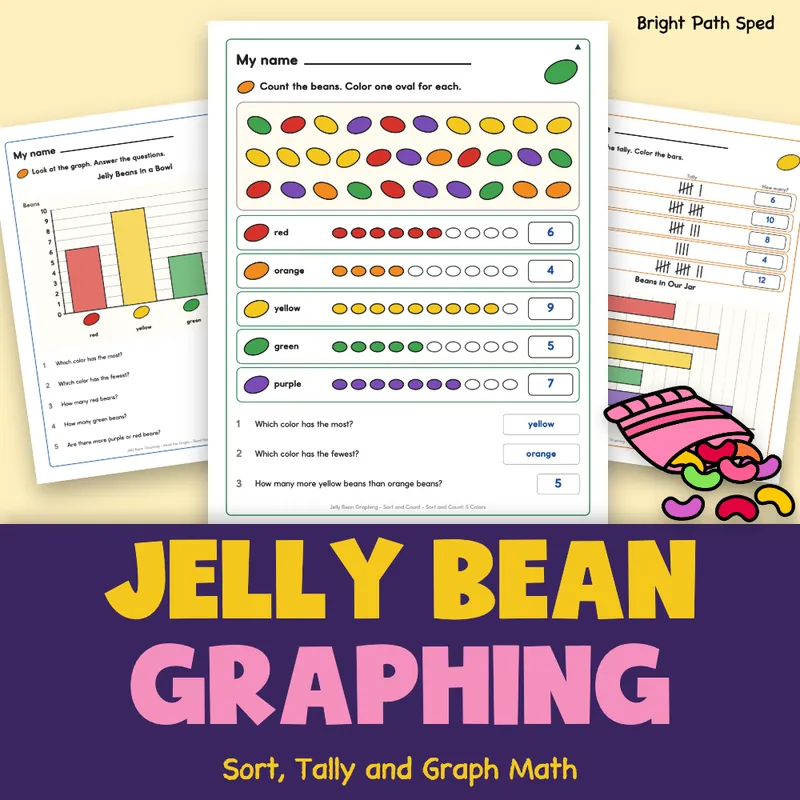
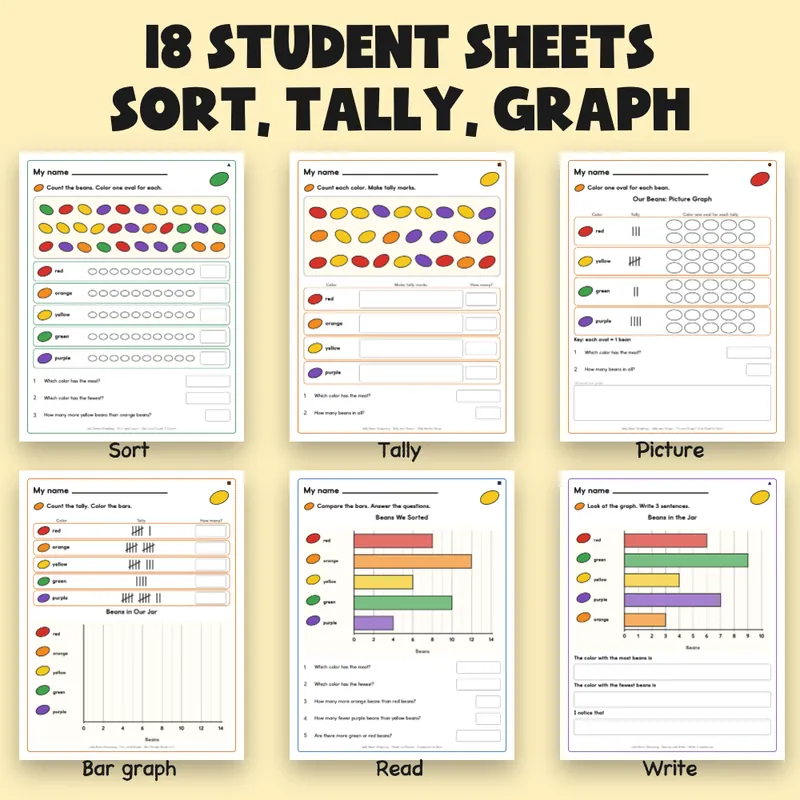
Looking for jelly bean graphing pages your kindergarten, first and second graders can really use? This set has 18 student sheets that walk a child through the whole job: sort the beans by color, make tally marks, color a picture graph and a bar graph, then read the graph and answer most, fewest and how-many-more questions. Every page has a big "My name" line, one short instruction with a small picture, big colored ovals, and big boxes to write in. Print and go, or type into the PDF.
EVERYTHING INSIDE (27 pages)
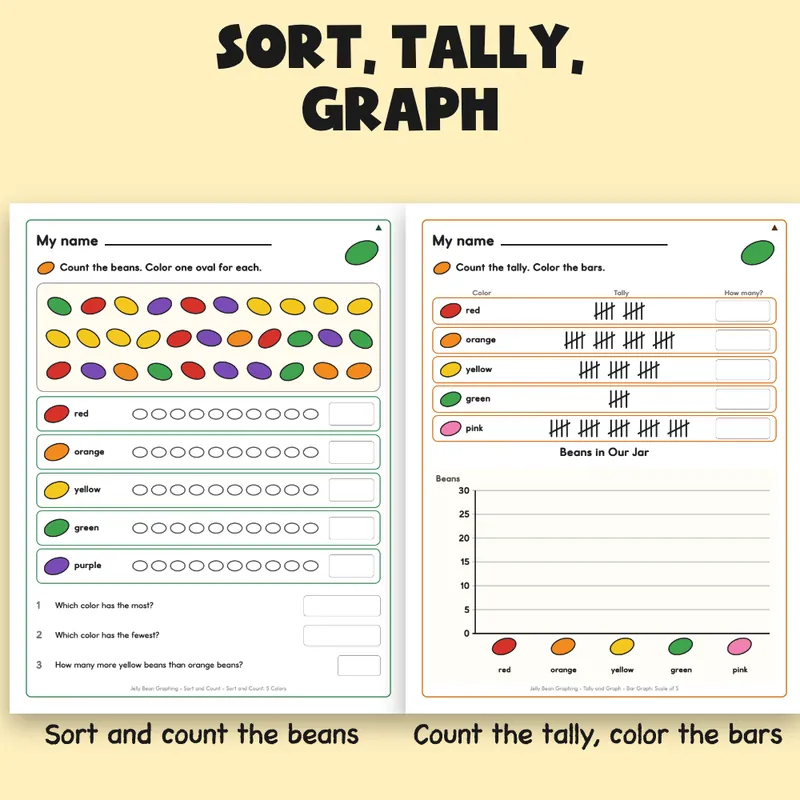
- 3 sort-and-count pages with the color words: 3, 4 and 5 colors. Each prints a pile of colored ovals, a row for each color with an oval to color for each bean, a count box and questions. On the first page the first row is done for you
- 1 bean mat for real beans, counters or paper ovals: four big circles with a color word box and a count box for each
- 3 tally pages: trace the tally marks, make your own tally marks, and make tally marks from a number
- 2 picture graphs: color one oval for each tally, then each oval stands for 2 beans
- 3 bar graph sheets with the tally printed for the child to count and the bars to color: a scale of 1, 2 and 5 (one vertical, one horizontal, one vertical)
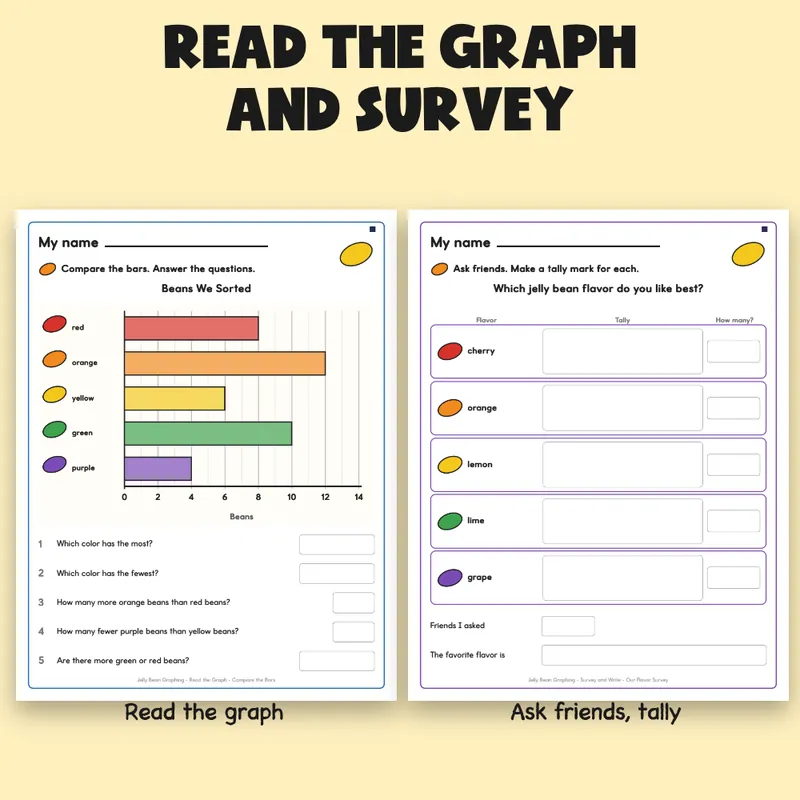
- 3 read-the-graph pages with 15 questions in all: read the graph (most, fewest, how many), compare the bars (how many more, how many fewer, which is more) and add and subtract with equations to fill in
- 3 more student pages: a class flavor survey with a tally box for each flavor, a blank graph to make with your own labels, and a write-3-sentences page
- 2 answer-key pages for every sheet that has one, a teacher note with three ways to run the pages, a family page with a graph to make at home, a Start Here page and a What's Next page
Three Levels
A small shape in the top corner of each student sheet tells you the level: a circle (5 sheets) is starting, with three or four colors and small numbers; a square (5 sheets) is building; a triangle (7 sheets) is ready for more, with bigger numbers, a scale of 5 and equations. The bean mat carries no level shape.
How It Works
1. Pick a page: sort and count, tally, graph or read.
2. Print it and hand it over. One short instruction, one job.
3. Check with the key. Use real beans or counters on the mat page if you like, or just the ovals printed on the page.
Built For The Child Holding The Page
A big "My name" line, big print, a border and room to write. Nothing on a student page is written for an adult; the keys and notes are on separate teacher pages. Every pile of ovals is counted from the same data as its answer key, every bar is drawn to its exact number, and every answer in the key is worked out from the page's own data.
What This Is, And What It Is Not
Who This Is For
Kindergarten, first and second grade teachers, interventionists, special education teachers and families who want a sort, tally and graph set that goes from counting a pile to reading a graph.