Occupational Therapy Physical Therapy Data Sheets Editable
- 23 pages
- Not Grade Specific
- PDF, fillable
$5.00
DownloadOr get it with All-Access: pick any 20 resources a month for $7.
New here? Your first month of All-Access is half off with code TEACHERTOK
Already bought this, or a member?
Instant download. One teacher's license: colleagues need their own copy. Each file carries a license number.
Also on Teachers Pay Teachers: see the Bright Path Sped store
About this resource
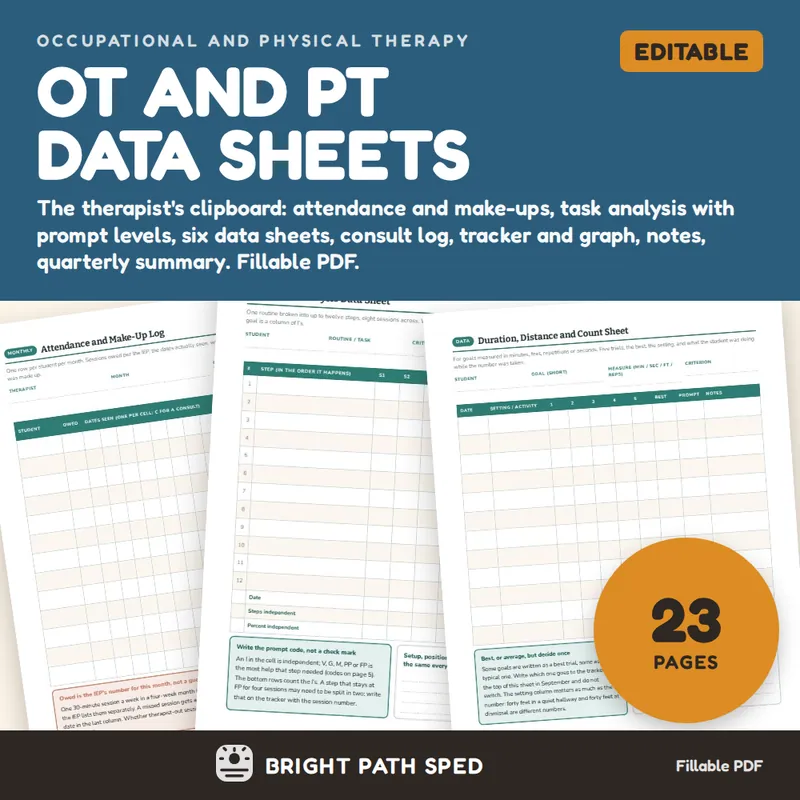
The prompt code, not a check mark. That is the whole job of this file: the criterion at the top of every sheet, the most help each step needed in every cell, the number onto the tracker the same day, and the missed session logged the day it was missed.
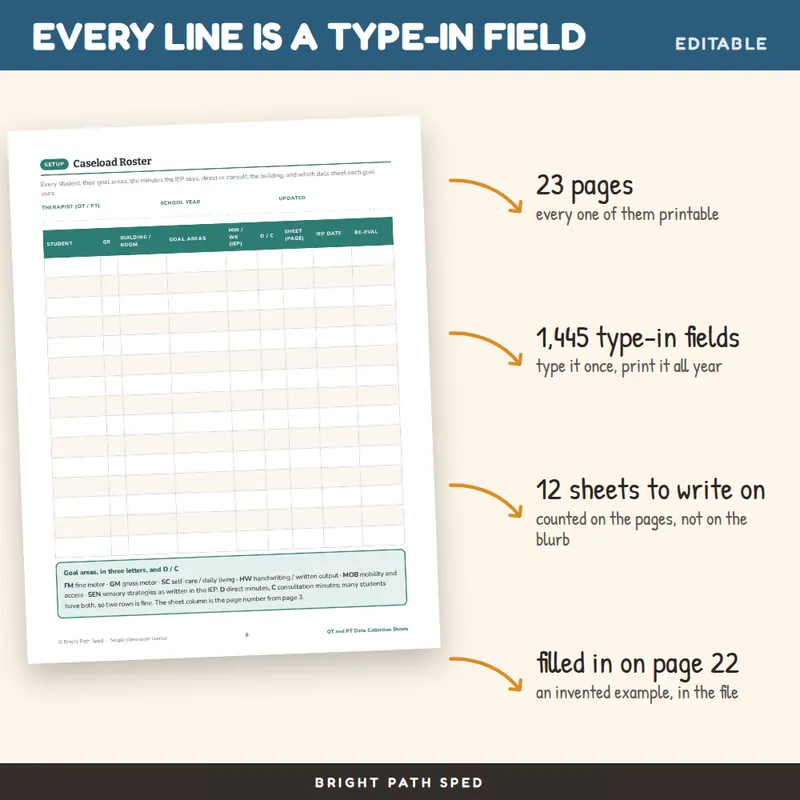
This is the clipboard for a school occupational or physical therapist, as a fillable PDF. Type the roster, the schedule and the sheet headers once, Save As per student, and pen the marks during the session. Every line, box and cell is a type-in field; on a tablet the whole thing can be typed.
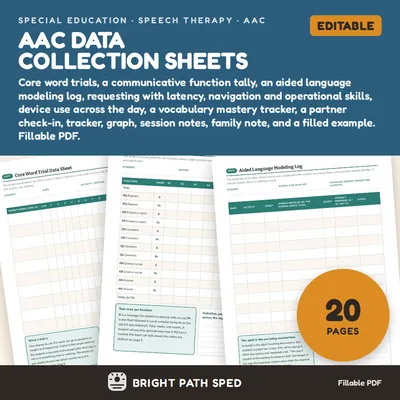
WHAT IS INCLUDED - 23 pages, fillable, 1,400+ fields
Setup
- Which Sheet for Which Goal - match the goal's wording to a sheet once, in September.
- Code Key and Prompt Levels - trial marks, a six-level prompt hierarchy (I, V, G, M, PP, FP) with a line to define each for the student, five status codes, and the four rating levels.
- Caseload Roster - goal areas, minutes per week per the IEP, direct or consult, building, sheet, IEP and re-evaluation dates.
- Weekly Schedule with Travel - blocks by days, buildings and travel as blocks of their own.
- Equipment and Environment Check - what exists, where it lives, when it was checked, what was done about a problem and who was told.
Attendance
- Attendance and Make-Up Log - one row per student per month: sessions owed per the IEP, eight date cells (C for a consult), what was missed and why, when it was made up.
Six Data Sheets
- Session Data Sheet (seven goals, prompt, ten trials, count, percent, notes)
- Task Analysis Data Sheet (up to twelve steps by eight sessions, the prompt code in every cell, steps and percent independent at the bottom)
- Skill Rating Data Sheet (define the four levels first, then rate seven skills across eight sessions)
- Duration, Distance and Count Sheet (five trials, best, prompt, setting)
- Work Sample Log (task and tool, what was observed in observable words, whether the sample was kept)
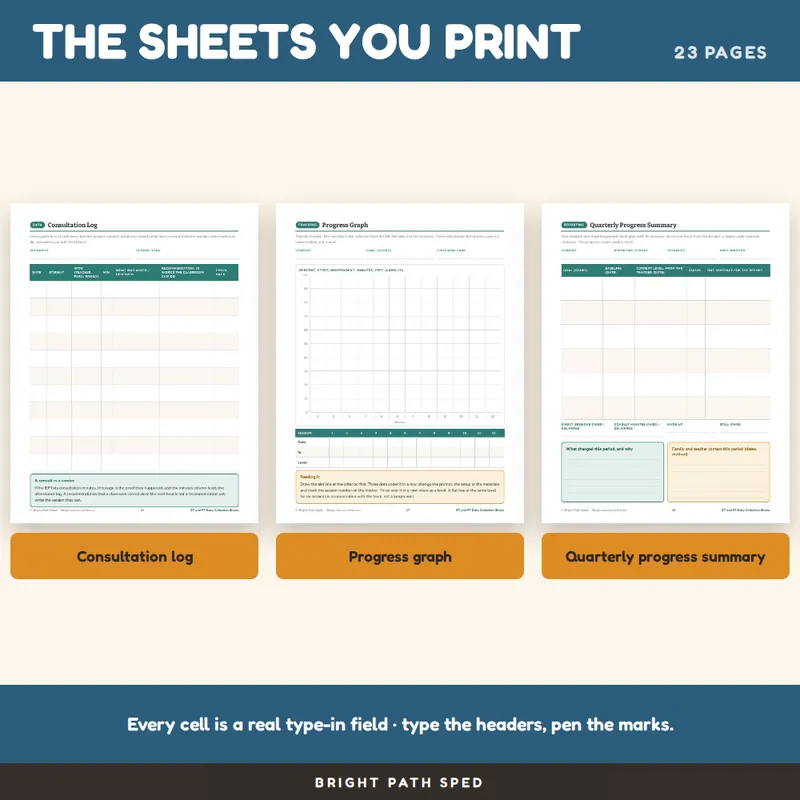
- Consultation Log (with whom, minutes, what was asked, the recommendation in words a classroom can do, check-back date)
Tracking And Reporting
- Cumulative Tracker - 36 sessions per goal with the level or prompt under every date.
- Progress Graph - hand-plotted, aim line first.
- Session Notes - two per page.
- Quarterly Progress Summary - each goal with baseline, current level from the tracker, status code, one sentence; plus direct and consult minutes owed, delivered, made up and still owed.
Home And Classroom
- Home Program and Family Note - in family words, one thing to try at home, a half the family sends back, a tried-it-this-week row.
- Classroom Carryover Check-In - a week with the classroom teacher: saw the skill, where, what it looked like, prompted or not.
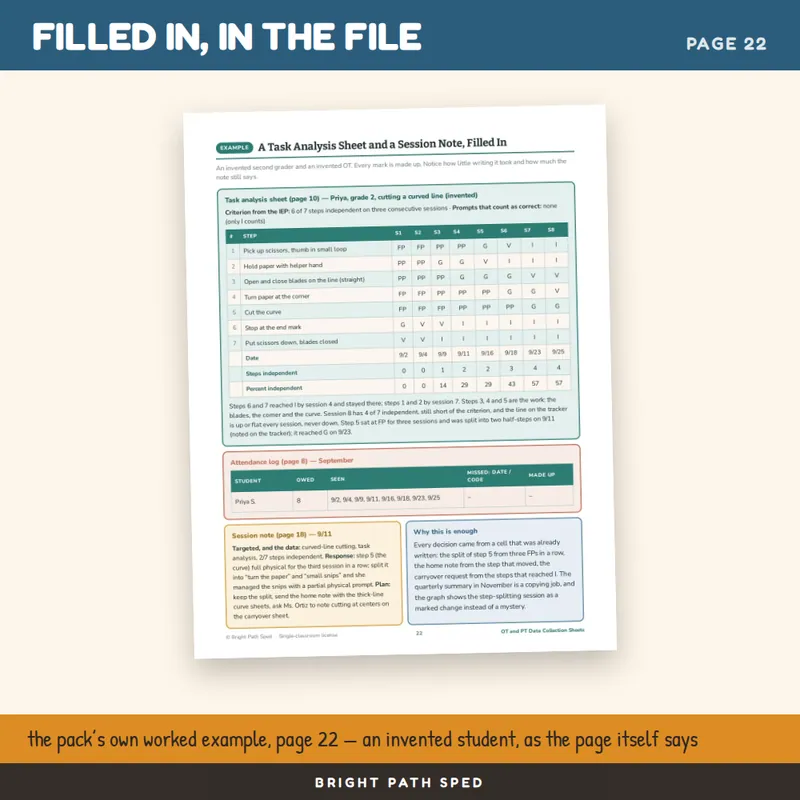
Plus an invented second grader's task analysis sheet for cutting a curved line (eight sessions, every prompt code, the step that was split and why), her September attendance row and a session note, filled in.
What This Is, And What It Is Not
It is a fillable PDF. Open it in a PDF reader, click a line, a box or a cell, type, press Tab to move on, and Save As once per student. It works offline with no account or subscription. It is NOT a Google Sheets file, a Google Doc, or an Excel workbook; it does not calculate or draw the graph. Prefer paper? Print it blank.
It is not a therapy program, not an exercise list, not goals, and not an evaluation. Nothing in it says which prompt to use, when to fade it, what equipment a student should have, or how to handle a student; you write those in from the IEP and your own judgment. The equipment page is a record, not a recommendation.
Who This Is For
School-based occupational and physical therapists, OTAs and PTAs, and the special education teachers and paraprofessionals who collect motor and daily-living data between sessions.