Phonological Process Progress Monitoring Editable
- 20 pages
- Not Grade Specific
- PDF, fillable
$4.00
DownloadOr get it with All-Access: pick any 20 resources a month for $7.
New here? Your first month of All-Access is half off with code TEACHERTOK
Already bought this, or a member?
Instant download. One teacher's license: colleagues need their own copy. Each file carries a license number.
Also on Teachers Pay Teachers: see the Bright Path Sped store
About this resource
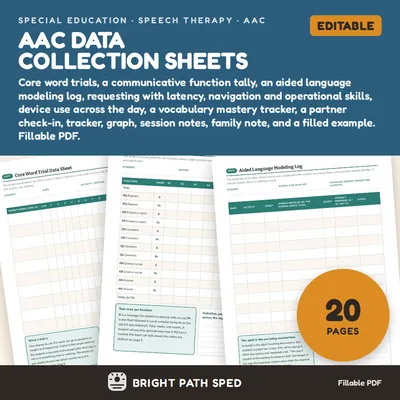
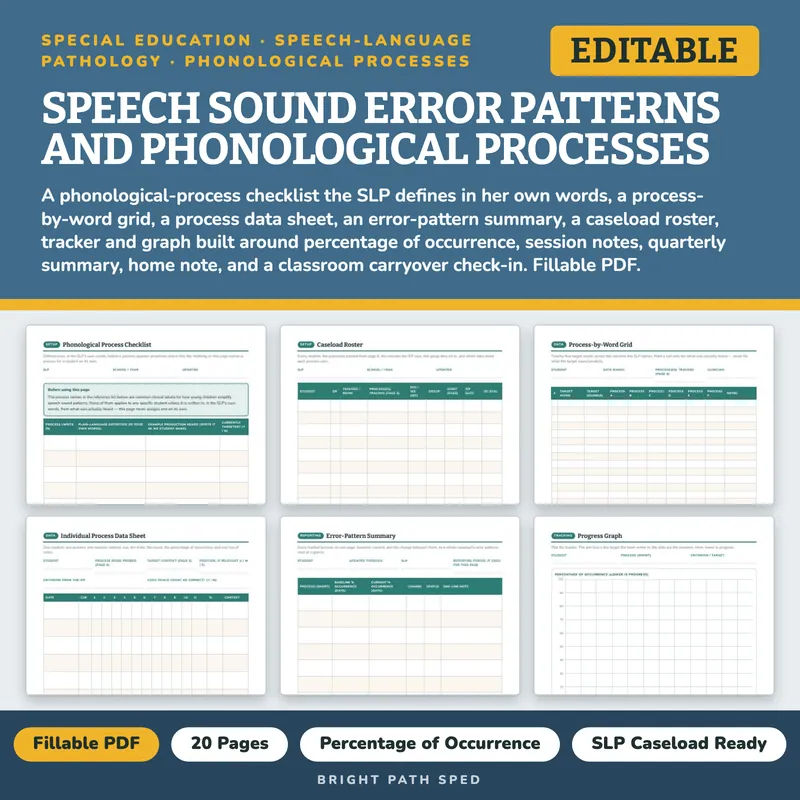
The store's speech data sheets track one sound at a time. This file tracks a PATTERN: a phonological process — a class of sounds a child simplifies the same way, like leaving off final consonants or fronting a whole set of back sounds — recorded as percentage of occurrence, not percent correct, because for a process a lower number is the progress. A checklist page holds every process in the SLP's own words before it appears anywhere else in the file; nothing here names a process for a student on its own. A process-by-word grid, an individual process data sheet, and an error-pattern summary that lines up every tracked process at a glance carry the caseload through a quarter, backed by the store's usual roster, schedule, attendance log, cumulative tracker, graph, session notes, quarterly summary, speech home note and classroom carryover check-in.
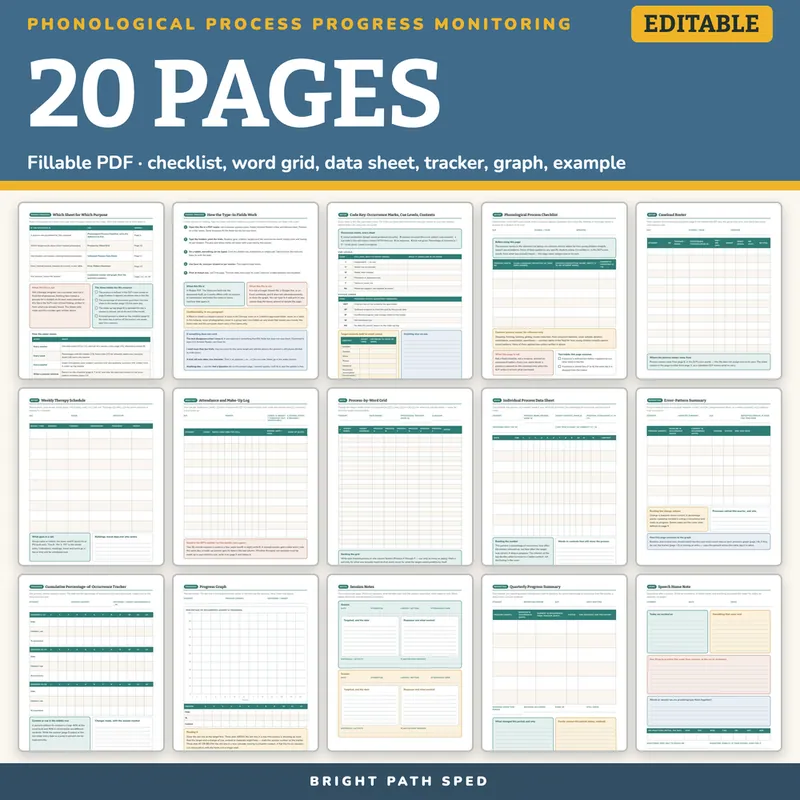
WHAT IS INCLUDED — 20 pages, 1,175 type-in fields
Setup
- Which Sheet for Which Purpose — a chooser table matching five common situations to the sheet that answers them, plus a "How the Paper Moves" table covering the session, week, quarter and process-resolved workflow
- How the Type-In Fields Work — one page, so nobody emails you
- Code Key — occurrence marks (C, O, cue codes, 0, X), six cue levels (I, V, M, P, T, Mx), a write-in target-context table (isolation through conversation/carryover), and five progress-status codes
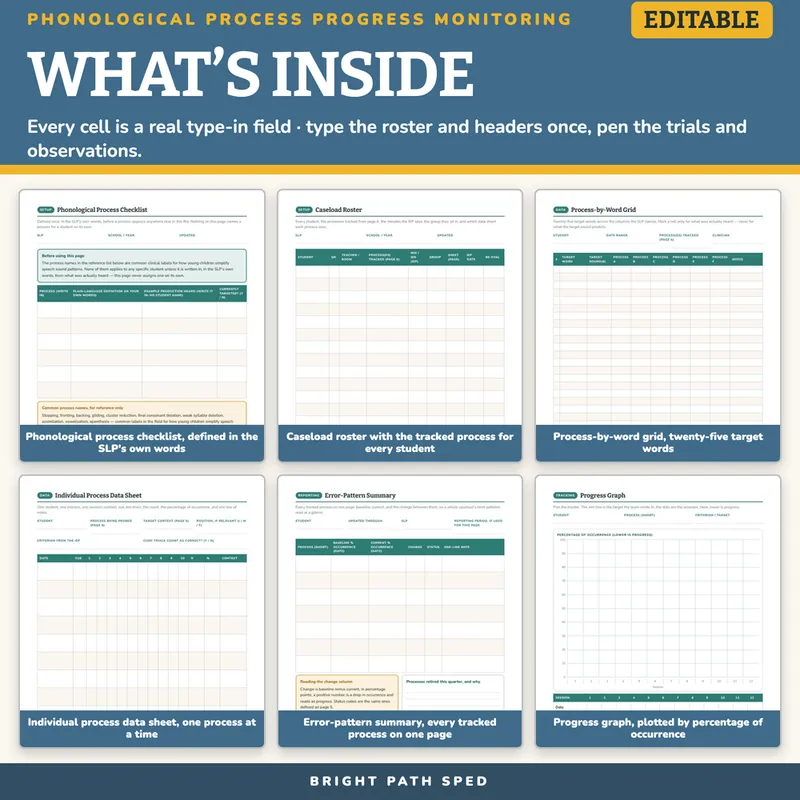
- Phonological Process Checklist — 6 write-in rows (process, plain-language definition, an example production heard, currently targeted Y/N), plus a reference list of common process names that apply to no student until written in above
- Caseload Roster — 14 students: teacher/room, the process(es) tracked from the checklist, minutes per week per the IEP, group, sheet page, IEP and re-evaluation dates
Attendance And Data
- Weekly Therapy Schedule — 10 time blocks across five days, push-in or pull-out
- Attendance and Make-Up Log — 13 rows, 8 date-seen cells each, missed date/code and made-up date
- Process-by-Word Grid — 25 target words across six write-in process columns, marked only for what was actually heard
- Individual Process Data Sheet — 9 dated rows of 10 trial cells each, with a cue column, an occurrence count, a percentage-of-occurrence column, and a context column
- Error-Pattern Summary — 7 rows: every tracked process with its baseline and current percentage of occurrence, the change in percentage points, a status code and a one-line note
Tracking, Reporting And Home
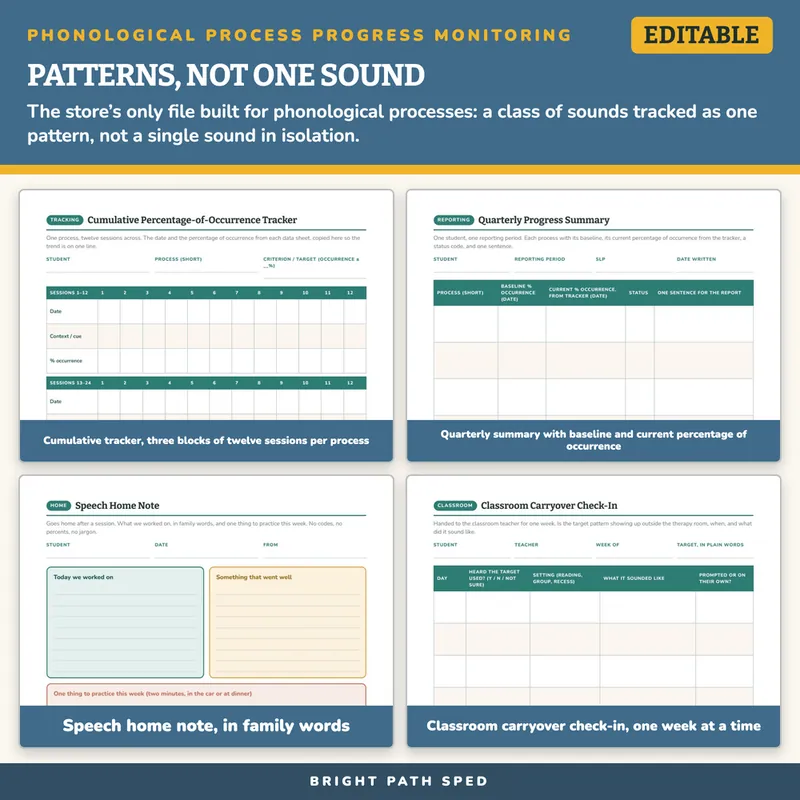
- Cumulative Percentage-of-Occurrence Tracker — one process, 36 sessions across three 12-session blocks, with a context/cue row under every date
- Progress Graph — plot the tracker against an aim line; here, lower is progress
- Session Notes — two sessions per page, data in every one
- Quarterly Progress Summary — 6 process rows: baseline, current percentage of occurrence from the tracker, status code, one sentence, plus sessions owed/delivered/made up/still owed
- Speech Home Note — what we worked on, something that went well, one practice idea, a 7-day practice tracker
- Classroom Carryover Check-In — a 5-day table for the classroom teacher: heard the target pattern, where, what it sounded like, prompted or not
- Filled-in example for an invented kindergartener (Owen) showing an individual process data sheet moving from 50% to 0% occurrence at the word level, an error-pattern summary row, a quarterly summary row and a session note, all cross-checked
What This Is, And What It Is Not
It is a fillable PDF. Open it in a PDF reader, click a field, type, press Tab to move on, Save As once per student. It works offline with no account or subscription. It is NOT a Google Sheets file, a Google Doc or a PowerPoint presentation.
It is not a therapy program, not a screener, and not a fixed list of processes. A phonological process on any page of this file is a pattern the SLP herself judges is present, from what was actually heard — the checklist page never assigns one on its own, and nothing here decides what counts as resolved or which cue to use; those stay blank lines for your own practice or your district's rule. No age, eligibility, disorder or IDEA-timeline claim anywhere; no health data is pre-filled, and the example student (Owen) is invented and named as such on page 19.
Who This Is For
School-based SLPs and SLPAs tracking a phonological process across a whole word class rather than one sound in isolation, and the special education teachers or paraprofessionals who see the target pattern show up (or not) outside the therapy room.
If You Want More
Speech Therapy Data Collection Sheets Editable is the 22-page general caseload version of this file: six data sheets, tracker, graph, home note. Bilingual Speech Therapy Data Sheets Editable is the 20-page bilingual sibling: English and first-language tracking, dominance and code-switching observation logs.