Progress Monitoring Tracking Sheet
- 24 pages
- PDF, fillable
$2.50 $5.00 on Teachers Pay Teachers
Half the Teachers Pay Teachers price. The same PDF, sold direct.
DownloadOr get it with All-Access: pick any 20 resources a month for $7.
New here? Your first month of All-Access is half off with code TEACHERTOK
Already bought this, or a member?
Instant download. One teacher's license: colleagues need their own copy. Each file carries a license number.
Also on Teachers Pay Teachers: see the Bright Path Sped store
About this resource
Data that gets collected and never looked at is the most common way goal tracking fails. This file is built so every number has somewhere to go each week, and so the quarterly progress report writes itself from what is already on the page.
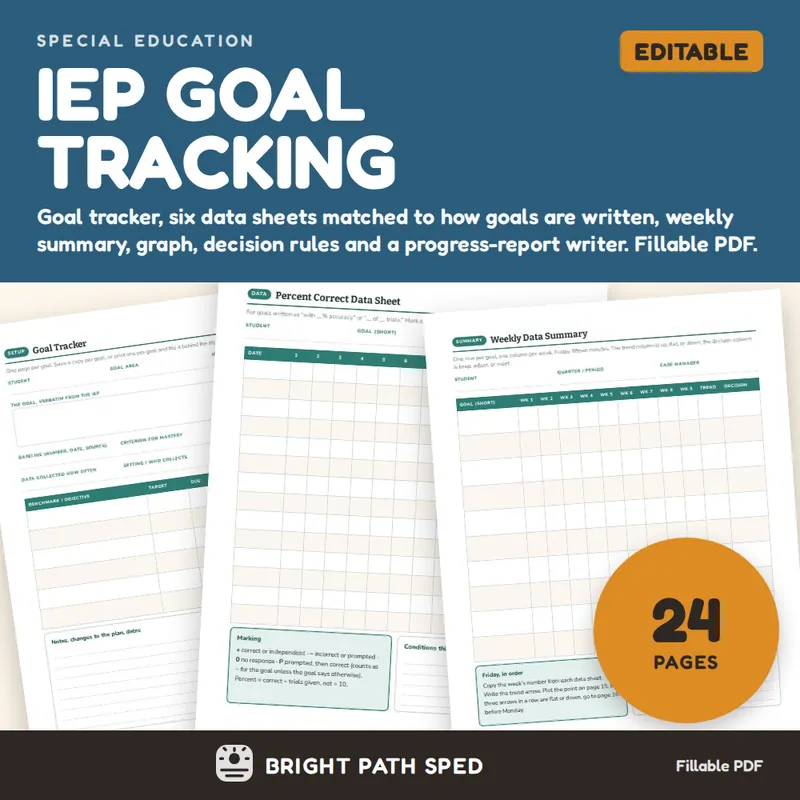
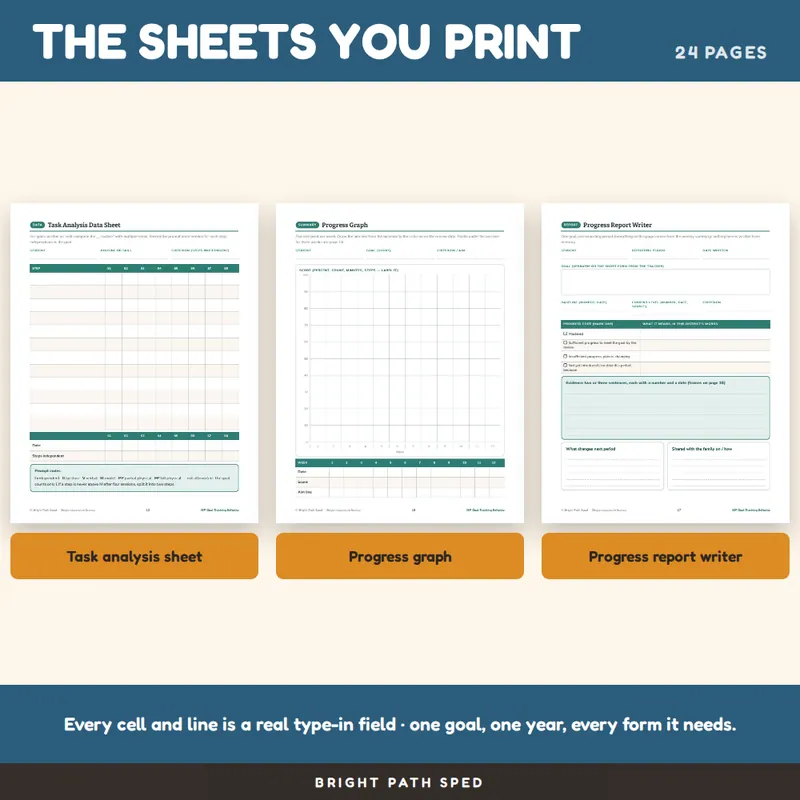
One goal, one year, every form it needs, as a fillable PDF. Set the goal up, pick the data sheet that matches how the goal is written, collect, summarize on Friday, plot, apply the decision rules, report, log mastery, review at the annual. Type it once and Save As per student.
WHAT IS INCLUDED - 24 pages, fillable
Set Up
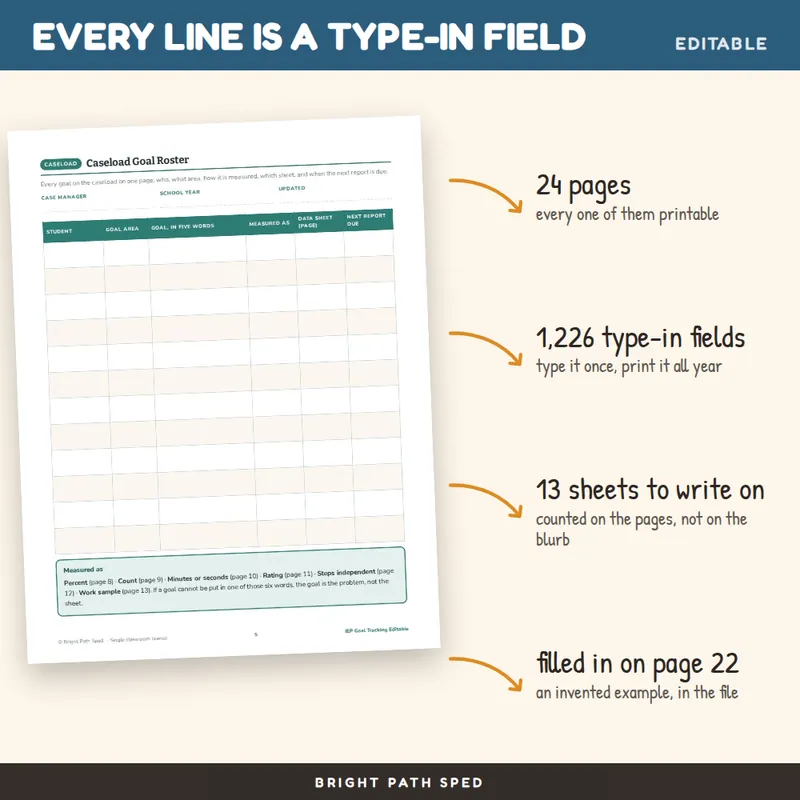
- Caseload Goal Roster - every goal on the caseload on one page, with how it is measured and when the next report is due.
- Which Data Sheet Matches the Goal - the wording of the goal ("with 80% accuracy", "will decrease to", "for 10 minutes", "will complete the routine") tells you which sheet to use. Seven rows, with a column for your own goals.
- Goal Tracker - the goal verbatim, baseline, criterion, how it is measured, who collects, the reporting schedule from the IEP, and six benchmark rows.
Six Data Sheets
- Percent Correct (14 rows of 10 trials, with correct and percent columns)
- Frequency Count in a fixed window, with a rate column
- Duration and Latency
- Rubric and Rating Scale, with the levels defined before you rate
- Task Analysis with prompt-level codes, 12 steps by 8 sessions
- Work Sample and Permanent Product Log
Summarize And Decide
- Weekly Data Summary - ten goals by nine weeks, with trend and decision columns.
- Progress Graph - hand-plotted, 0 to 100 by twelve weeks, with a type-in row for dates, scores and the aim line.
- Data Decision Rules - six situations the graph can show, what common practice says, and a column to write your team's own rule in August so the decision is made by the rule and not by how the week felt.
Report
- Progress Report Writer - one goal, one period, four progress codes, evidence lines, what changes next.
- Progress Report Sentence Frames - two frames for each progress code. Every sentence carries a number, a date and a source.
- Progress Note for the Family - plain language, one page, one thing to try at home.
Track And Review
- Mastery and Generalization Log, Caseload Data Collection Calendar, Year-End Goal Review with four verdicts and a column for the sentence that goes in the new present levels.
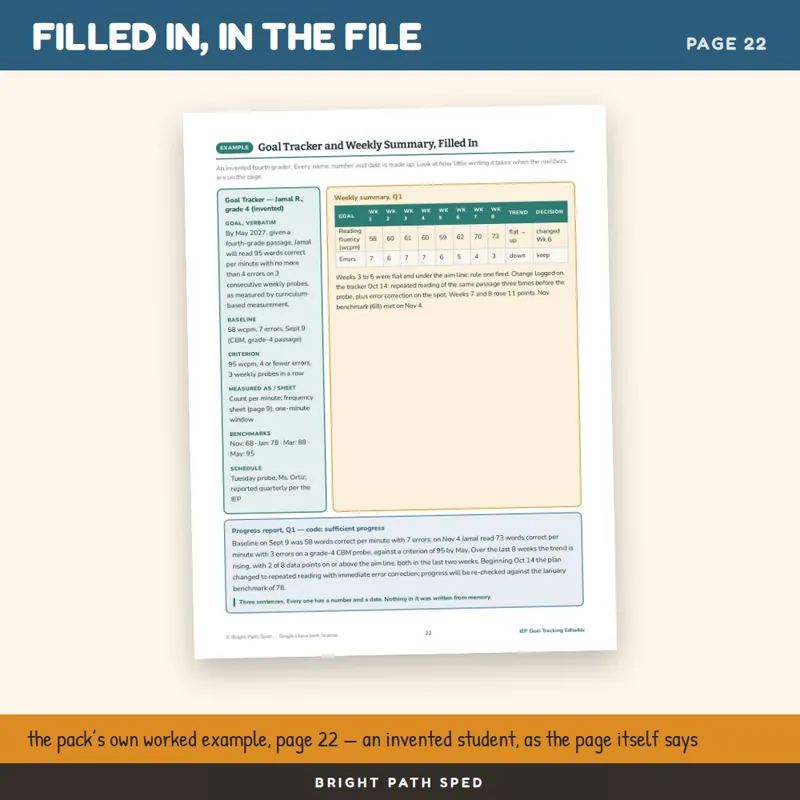
Plus the goal tracker, weekly summary and a Q1 progress report FILLED IN for an invented student, so you can see how little writing it takes when the numbers are on the page.
What This Is, And What It Is Not
It is a fillable PDF. Open it in a PDF reader, click a cell or a line, type, press Tab to move on, and Save As once per student. It works offline with no account or subscription. It does NOT calculate - you type the percent - and it is NOT a Google Sheets file, a Google Doc, or an Excel workbook. The graph is plotted by hand or with your PDF reader's draw tool. Prefer paper? Print it blank.
It is not your district's progress report form and it does not say how often your state requires progress to be reported; the reporting schedule on the student's IEP decides that. The decision-rule defaults are common practice, not law, and the page says so.
How It Differs From My Print Binder
The IEP Goal Tracking and Data Collection Sheets binder (43 pages) is print-only and organized by binder section. This file is organized around one goal across a year, every page is type-in, and the decision rules, report writer, sentence frames, parent note, data calendar and year-end review are only here.
Who This Is For
Case managers, special education teachers, intervention specialists, and the paraprofessionals who collect most of the data - pages 8 to 12 can be handed to a para after being shown twice.