Quantitative Concepts Speech Therapy
- 37 pages
- Not Grade Specific
$2.25 $4.50 on Teachers Pay Teachers
Half the Teachers Pay Teachers price. The same PDF, sold direct.
DownloadOr get it with All-Access: pick any 20 resources a month for $7.
New here? Your first month of All-Access is half off with code TEACHERTOK
Already bought this, or a member?
Instant download. One teacher's license: colleagues need their own copy. Each file carries a license number.
Also on Teachers Pay Teachers: see the Bright Path Sped store
About this resource
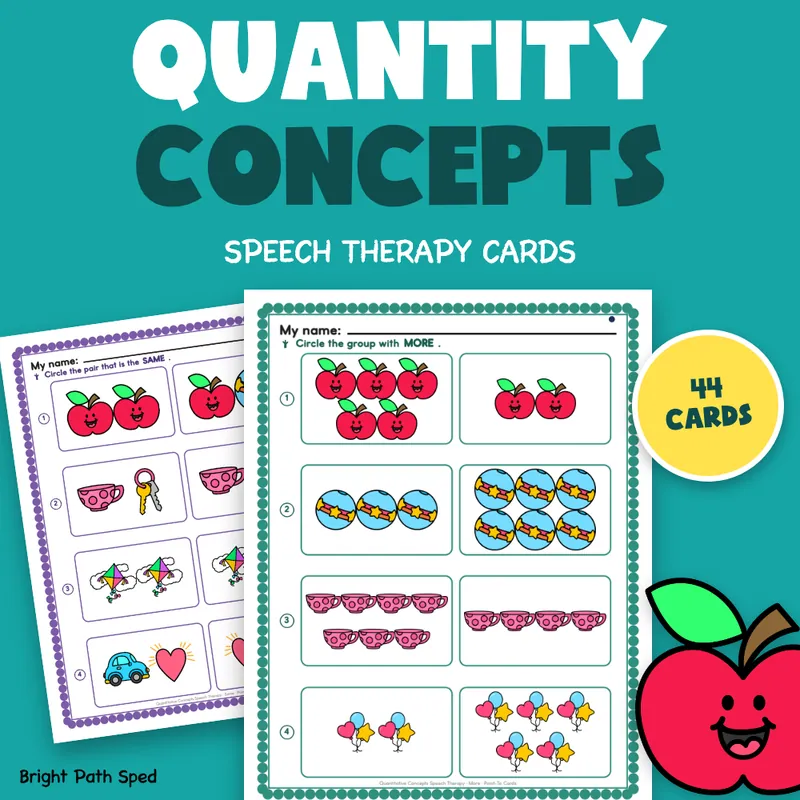
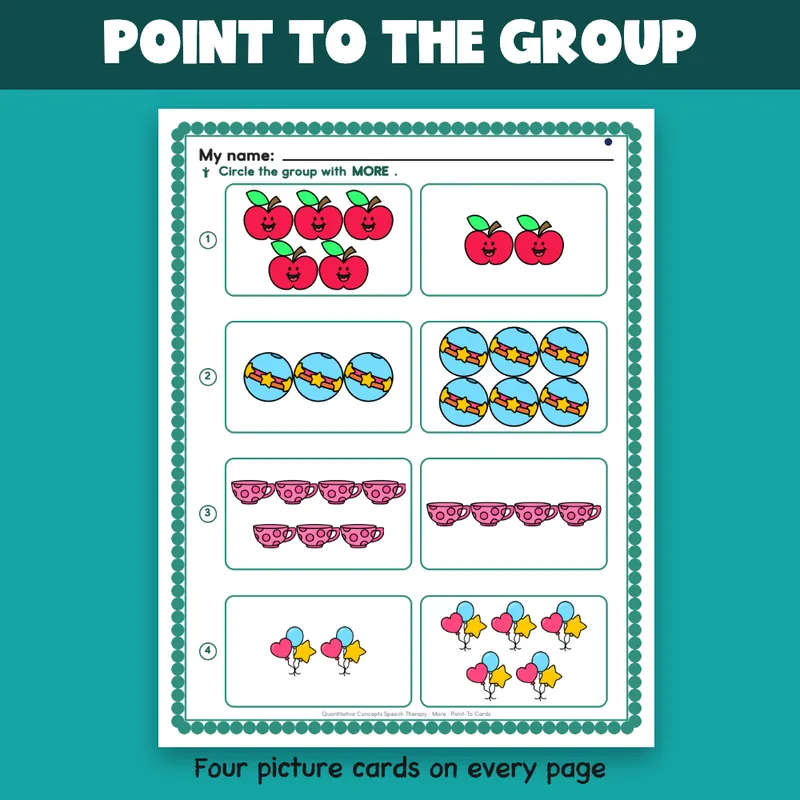
Quantitative concepts, ready to point to, say, cut and score. Eleven concepts in one pack: more, fewer, most, least, many, few, all, some, none, same and different. Every concept has its own point-to page of four picture question cards, so you can ask "Which group has more?" and the student points to or circles the answer.
Every picture is a real object (apples, balls, cups, balloons, flowers, keys) repeated in rounded groups. There are no characters, and every group in a row is the same picture, so the student compares the amounts and not the pictures. Your data sheet has a box for every card, a plus or a minus, and a blank line where you write the goal.
WHAT IS INCLUDED - 37 pages: 44 picture question cards, 11 point-to pages, 5 say-it pages, 5 cut and glue pages, 2 data sheets, a roll-up with a graph, 2 answer key pages, a goal page with a blank goal line, a question script, a filled-in example, a family update and a page of progress note starters
Student Pages (21)
- 11 point-to pages, one per concept, with 4 numbered picture cards each (44 cards in all): the student points to or circles the group
- 3-group cards for most, least, all, some and none; 2-group cards for the others; pairs of pictures for same and different
- 5 say-it pages with 15 sentence strips: the student looks, says the sentence and writes the concept word from a small word bank
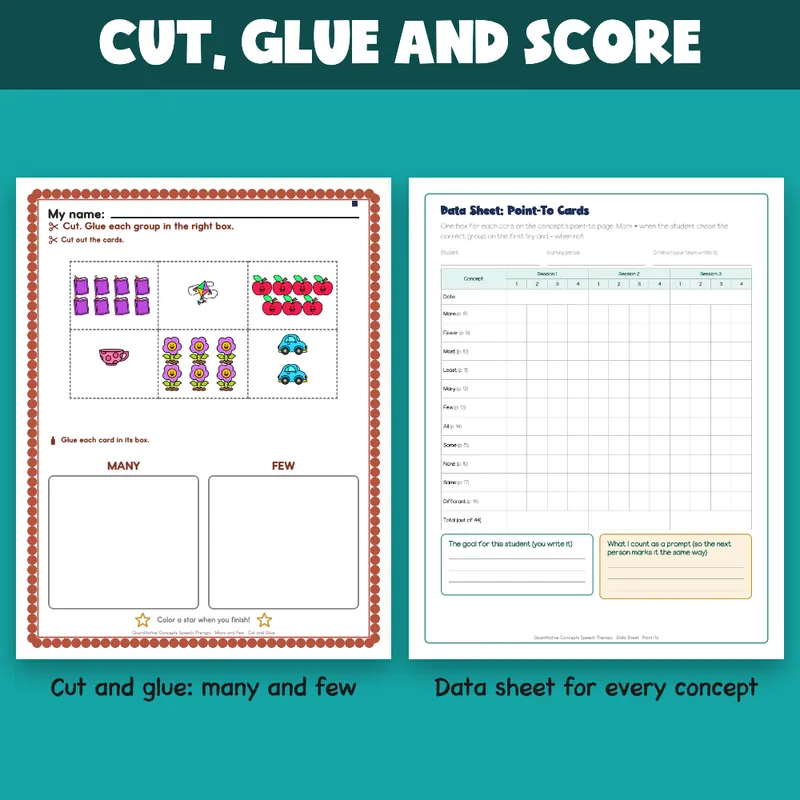
- 5 cut and glue pages with 32 pieces in all: put groups in order from least to most, sort many and few, sort all, some and none, sort same and different pairs, and glue MORE or FEWER beside each group
- Every student page has a big My name line and one short instruction with a picture
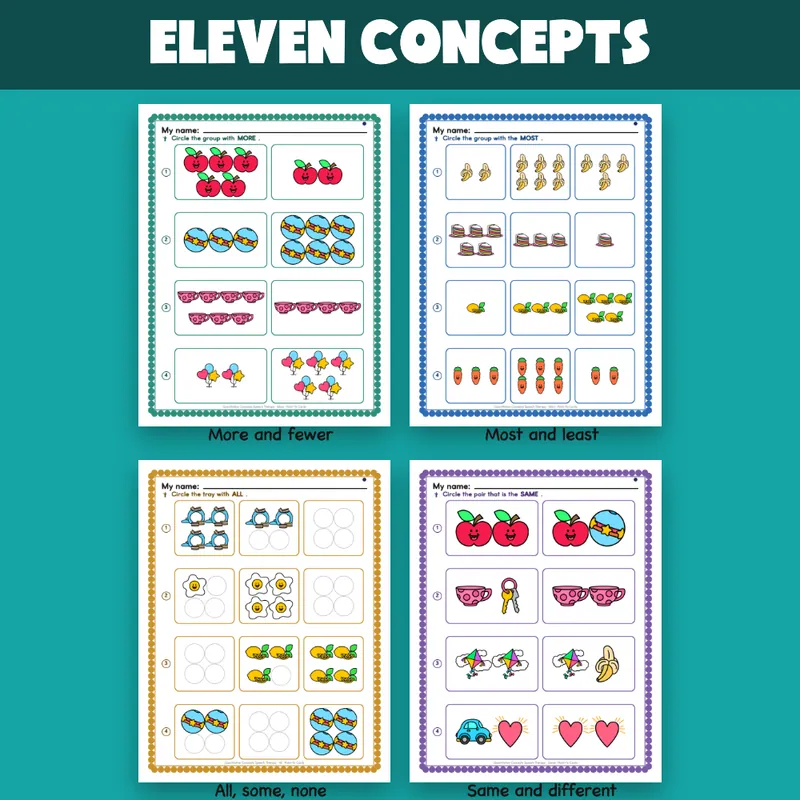
The 11 Concepts
- More and fewer
- Most and least
- Many and few
- All, some and none (trays of 4 spots)
- Same and different (pairs of pictures)
Teacher Pages
- Start Here: six steps and a page map for every concept
- A goal page with a sample goal (every bracket meant to be edited), a blank goal line you write, baseline and benchmark tables, and lines for your district's own rules and the supports the IEP allows
- Directions and a question script: the words to say with each page
- A binder cover and 5 section tabs
- Point-to data sheet: a row for each of the 11 concepts, 4 boxes for each of 3 sessions (one box for each card), a total out of 44, and lines for the goal and what you count as a prompt
- Say-it data sheet: a row for each of the 15 strips, with a Correct and a Prompted column for each of 3 sessions
- A roll-up page: a summary table and a graph for all 11 concepts
- 2 answer key pages: all 44 cards, all 15 say-it strips and all 5 cut and glue pages
- A filled-in data sheet for an invented student, Leo, with every total checked against its boxes
- A family update, home practice ideas with things you already have, and a team handoff page
- 20 progress note starters that end in blanks
What This Is, And What It Is Not
It is a fillable PDF. The goal page, data sheets, roll-up, family update and note starters are type-in fields: open the file in a PDF reader, click a line or a cell, type, and Save As once per student. The picture card pages print: the student points, circles, cuts and glues on paper.
It is not a norm-referenced assessment and it sets no mastery score, no prompting method and no rule for which students get which concept. The goal, the criterion, the definition of a prompt and your district's rules all go on blank lines for you to fill in. The example student is invented.
Who This Is For
Speech-language pathologists, special education teachers and case managers who need quantity concept practice with a data sheet that goes with it, and paraprofessionals who run the cards.