Receptive and Expressive Language Imbalance Tracking
- 27 pages
- Not Grade Specific
- PDF, fillable
$4.00
DownloadOr get it with All-Access: pick any 20 resources a month for $7.
New here? Your first month of All-Access is half off with code TEACHERTOK
Already bought this, or a member?
Instant download. One teacher's license: colleagues need their own copy. Each file carries a license number.
Also on Teachers Pay Teachers: see the Bright Path Sped store
About this resource
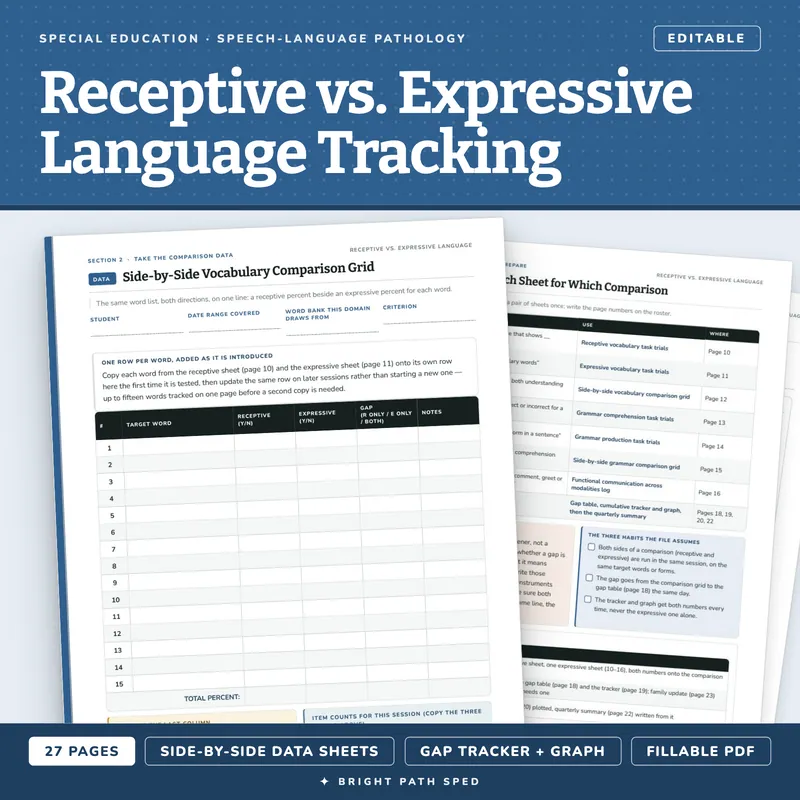
A gap between what a student UNDERSTANDS and what a student SAYS is easy to describe and hard to prove without both numbers on the same page. This fillable PDF puts a receptive sheet, an expressive sheet, and a side-by-side comparison grid together for vocabulary and for grammar, adds a functional communication log that compares understanding to use across settings and modalities, and turns every comparison into a gap table, a tracker, and a two-line graph.
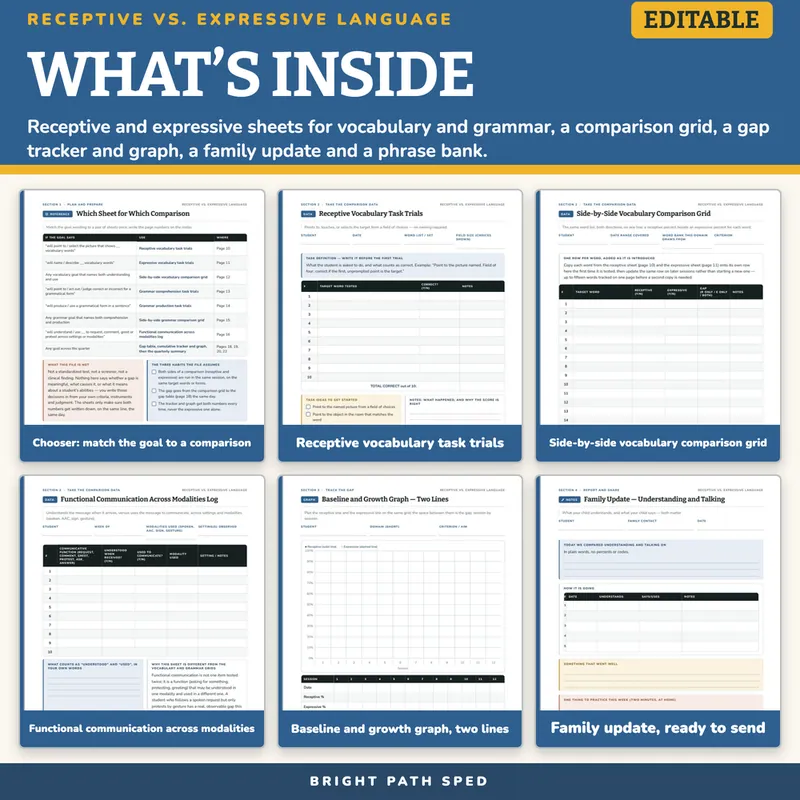
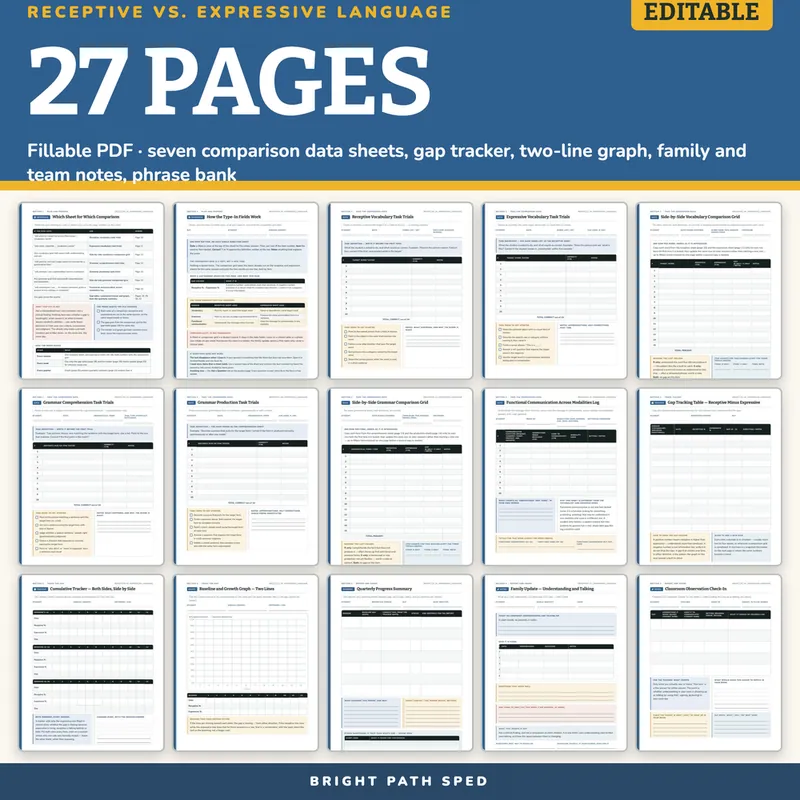
EVERYTHING INSIDE - 27 pages
Setup
- Start Here: Three Steps - setting up a comparison, running both sides every session, plotting and sharing
- Binder Cover and Divider Tabs - a print-and-cut binder cover for the student or caseload, four divider tabs (one per section), and a before-the-first-session checklist
- Which Sheet for Which Comparison - a chooser that matches goal wording to a receptive/expressive pair, and a table of how the paper moves each day, week and quarter
- How the Type-In Fields Work - what the fields do, a table of the three domains this file compares, and how to read a gap number
Seven Comparison Data Sheets
- Receptive Vocabulary Task Trials and Expressive Vocabulary Task Trials - ten items each, one direction per sheet
- Side-by-Side Vocabulary Comparison Grid - up to fifteen words on one line, receptive and expressive marked side by side with an R-only / E-only / both column
- Grammar Comprehension Task Trials and Grammar Production Task Trials - ten items each, one direction per sheet
- Side-by-Side Grammar Comparison Grid - up to fifteen forms on one line, same side-by-side layout
- Functional Communication Across Modalities Log - ten communicative functions (request, comment, greet, protest, ask, answer), each marked understood-when-received and used-to-communicate, with the modality used
Tracking And Reporting
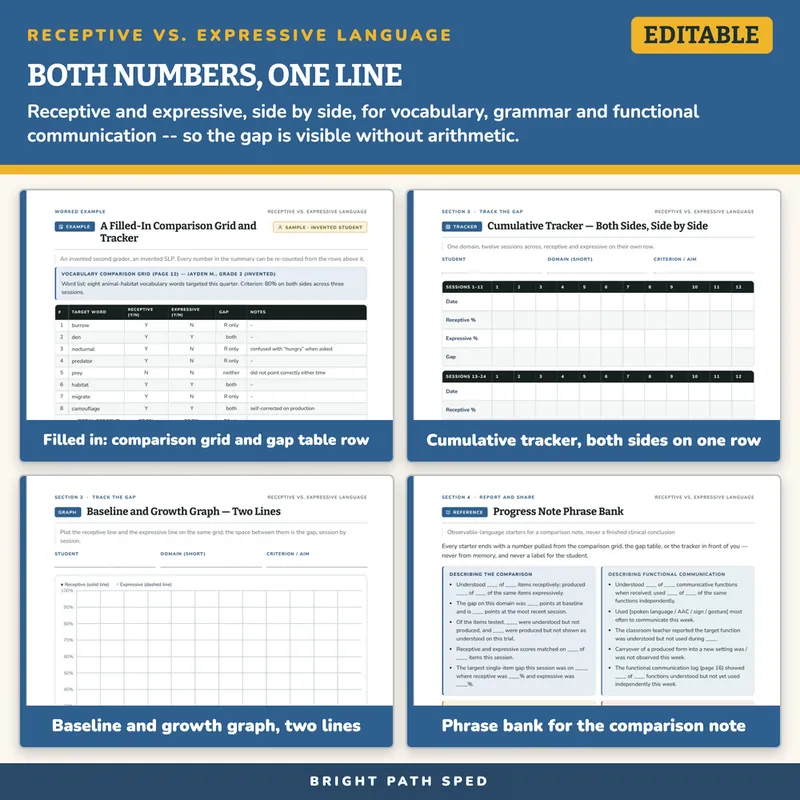
- Gap Tracking Table - fifteen rows: domain, date, receptive percent, expressive percent, the gap (receptive minus expressive), and direction
- Cumulative Tracker - thirty-six sessions across three blocks, receptive percent, expressive percent and gap each on their own row
- Baseline and Growth Graph - two lines (receptive and expressive) on one grid across twelve sessions, so a closing or widening gap is visible without arithmetic
- Quarterly Progress Summary - baseline gap, current gap, status and one sentence, one row per domain
- Family Update - a comm-page template comparing understanding and talking in family words, with a place for the family to reply
- Classroom Observation Check-In - handed to the classroom teacher for one week, the second audience this file is built for
- Progress Note Phrase Bank - twenty observable-language starters across four groups (the comparison, functional communication, the trend, next steps), every one finished with a real number
- A filled-in example: a comparison grid and gap-table row from an invented second grader, every number checked against its own table
What This Is, And What It Is Not
It is a fillable PDF. Open it in Acrobat Reader, type the task, the date, and both counts for each comparison, and Save As once per student. It works offline with no account or subscription. It is NOT a Google Sheets, Doc, or PowerPoint file, and it does not calculate a percent or draw the graph for you.
It is not a standardized or norm-referenced test, not a screener, and not a clinical finding. Nothing here names a condition, states an eligibility rule, or says what a gap means about a student's abilities. Your own criteria, instruments and judgment decide that; the sheets only make sure both numbers get written down, side by side, the same day.
Who This Is For
School-based SLPs building a data picture of understanding versus talking on vocabulary, grammar or functional communication goals. Bilingual and general caseloads alike; classroom teachers who receive the one-week check-in; families who receive the update; case managers who report the quarterly summary.