Report Card Qualifiers
- 30 pages
- Not Grade Specific
- PDF, fillable
$1.75 $3.50 on Teachers Pay Teachers
Half the Teachers Pay Teachers price. The same PDF, sold direct.
DownloadOr get it with All-Access: pick any 20 resources a month for $7.
New here? Your first month of All-Access is half off with code TEACHERTOK
Already bought this, or a member?
Instant download. One teacher's license: colleagues need their own copy. Each file carries a license number.
Also on Teachers Pay Teachers: see the Bright Path Sped store
About this resource
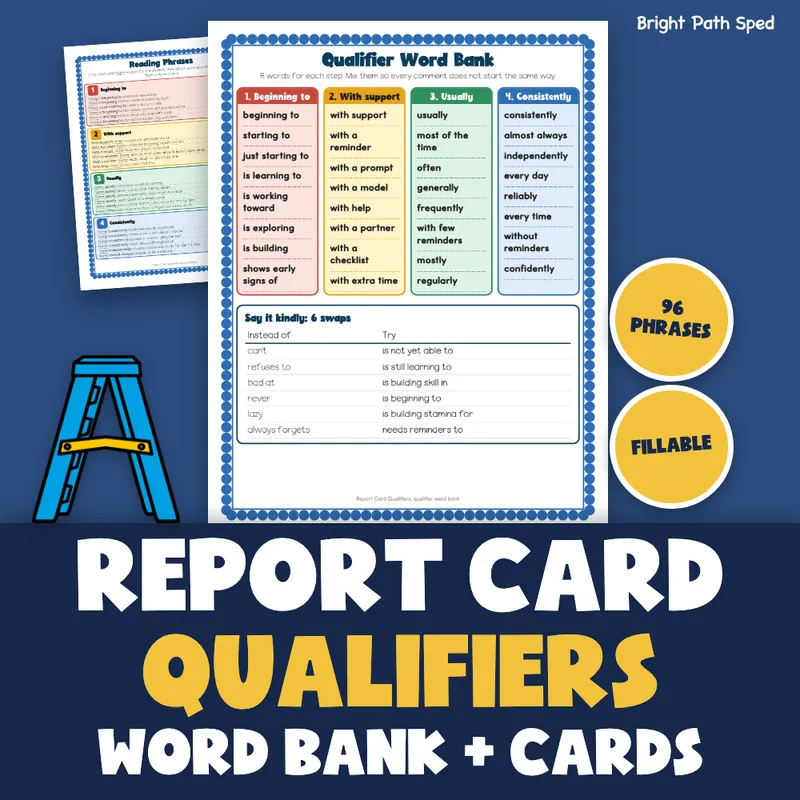
Stop starting every report card comment the same way. Report Card Qualifiers gives you the words that say how often and how independently a student does something: beginning to, with support, usually, consistently. It is a fillable PDF with a four-step ladder, 96 finished comment phrases for reading, math, writing and behavior, cut-apart qualifier cards and strips, and comment builders you can type into. It is written for any classroom, with no grade-percent claims and no state wording.
What Is Included
- A four-step ladder (page 4): 1 Beginning to, 2 With support, 3 Usually, 4 Consistently, with what each step looks like in class
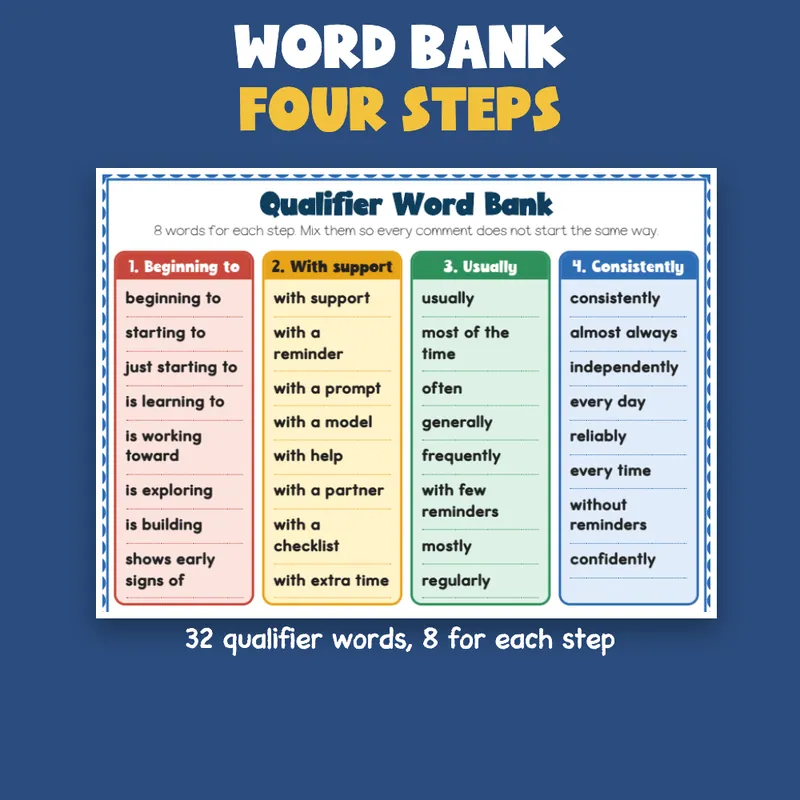
- A word bank of 32 qualifier words, 8 for each step, and 6 kind swaps for words that sound harsh (page 5)
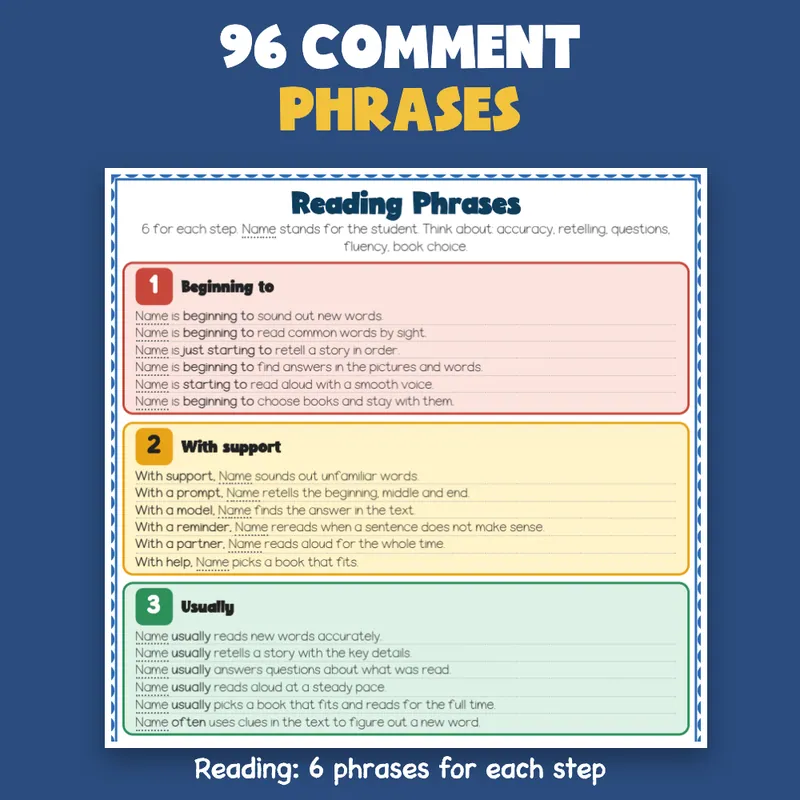
- 96 comment phrases: 6 for each of the 4 steps in reading, math, writing and behavior, one page for each area (pages 7-10)
- A next-steps and supports page: 12 supports to name, 8 next-step starters and a three-move comment recipe (page 11)
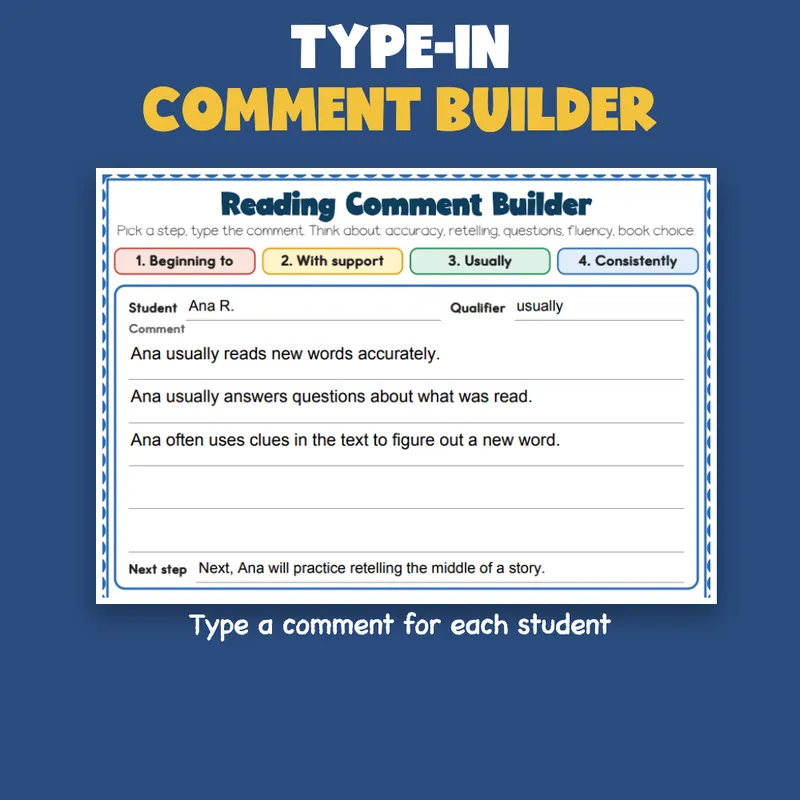
- 5 comment builders with type-in lines: one each for reading, math, writing and behavior (2 students on a page, 5 comment lines each), and one that holds a student in all four areas (pages 12-16)
- A class grid for 17 students with a step for reading, math, writing and behavior, and a one-student year grid with 8 skill rows across 4 terms (pages 17-18)
- 40 qualifier cards, 8 to a page: 32 printed (8 for each step) and 8 blank cards you type (pages 19-23)
- 24 sentence strips: 12 with a qualifier printed and 12 blank (pages 24-25)
- A family page where you type what each step means in your class (page 26)
- A binder cover and spine, and 8 divider tabs: 5 printed and 3 you type (pages 27-28)
- A filled example with an invented student and four invented classmates (page 6), a Start Here page, a how-to page, a What's Next page and a credits page
- 30 pages in all
Pairs With
Looking for the form itself? See our Report Card Template, a one-page quarter report card with skill checklists and a family comments page. These qualifier words and strips fit right into it.
How To Use It
1. Decide the step by what you saw in class, using the ladder.
2. Copy a phrase from the area's page, or type your own on a comment builder. Add a next step.
3. Keep the class on the grid for the term, then copy the comments into your school's report card.
4. Print the cards and strips on card stock, cut on the dashed lines and sort them by step. Laminate to reuse.
What This Is, And What It Is Not
It is a fillable PDF with type-in lines, and it prints on letter paper. The printed phrases and the qualifier words on the cards cannot be edited inside the file; use the blank cards, blank strips and comment builders to type your own words. A long sentence is cut off at the end of its line, so use the next line. Some web browsers show the fields but do not save what you type, so use a PDF reader app and save your copy. It is not Google Slides, Docs or PowerPoint. The steps describe what you saw in class; they are not scores or grade ranges, and the phrases are a starting point, so your school's own report card wording and rules come first. It does not replace your school's report card or grading system.
Who This Is For
Classroom teachers, special education teachers, co-teachers, specials teachers and tutors who write report card or progress comments and want fresh, kind, specific wording. Nothing in it is tied to a state, a province or a grade, so it fits elementary and middle classrooms. Special education teachers can use the support words and next-step starters to describe what helps a student.