Intensive Reading Intervention Progress Monitoring Data Sheets Editable
- 17 pages
- Not Grade Specific
- PDF, fillable
$4.00
DownloadOr get it with All-Access: pick any 20 resources a month for $7.
New here? Your first month of All-Access is half off with code TEACHERTOK
Already bought this, or a member?
Instant download. One teacher's license: colleagues need their own copy. Each file carries a license number.
Also on Teachers Pay Teachers: see the Bright Path Sped store
About this resource
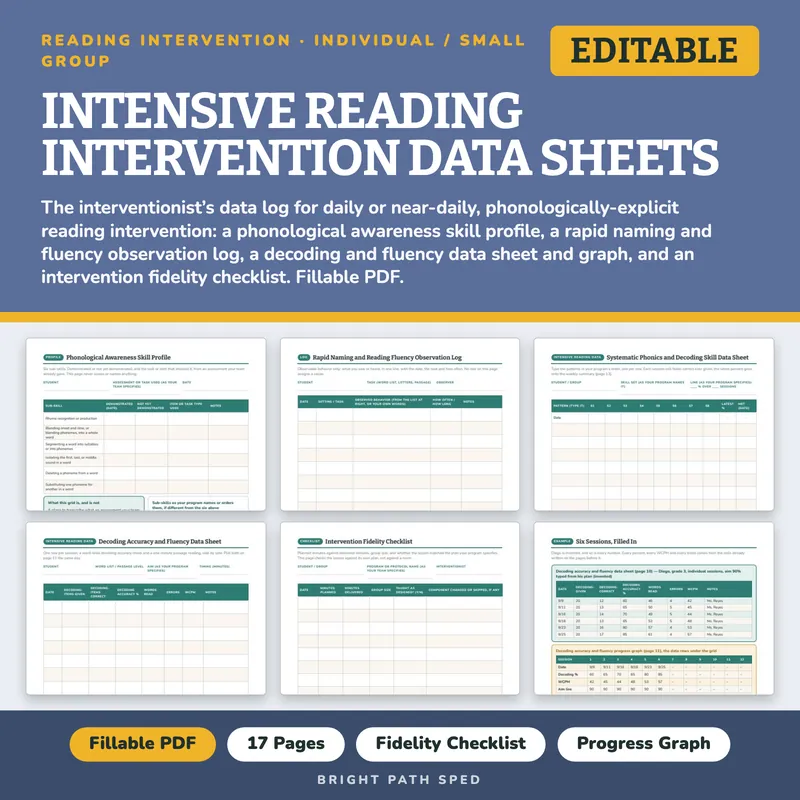
The narrower, more intensive companion to the general Reading Intervention Data Sheets — built for a student in daily or near-daily, individual or very-small-group, phonologically-explicit reading intervention. A caseload roster, a lesson plan and log, a phonological awareness skill profile, a rapid naming and reading fluency observation log, a systematic phonics and decoding skill data sheet, a decoding accuracy and fluency data sheet and progress graph, an intervention fidelity checklist, a weekly progress monitoring summary, a family progress note, an intervention review and next-step decision sheet, and a filled-in example. Type the roster, the sub-skill list and the pattern list once, Save As per student, pen the marks and scores at the table.
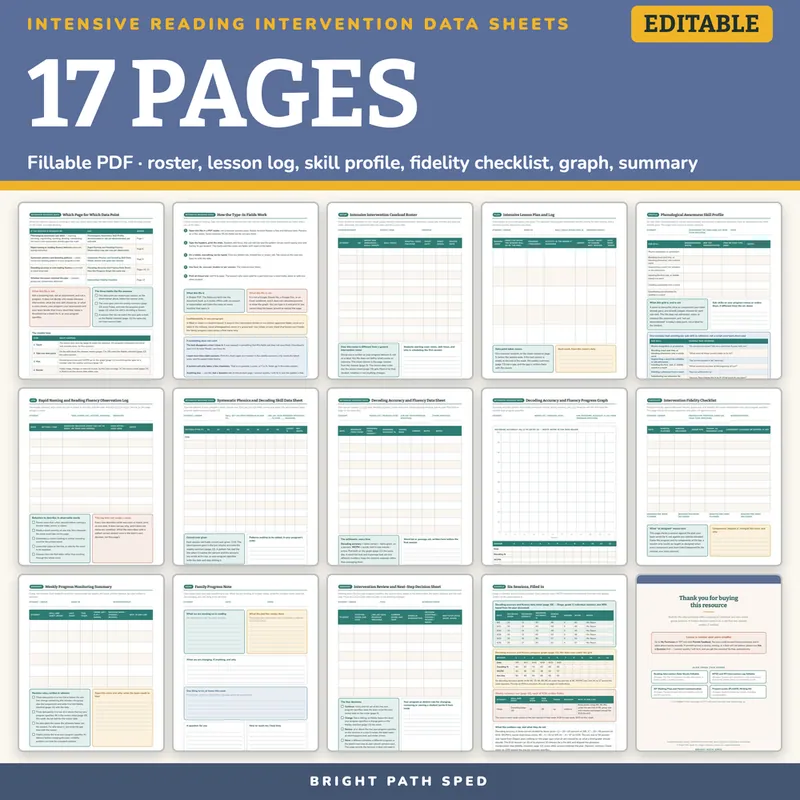
WHAT IS INCLUDED — 17 pages, FIELDS_TBD type-in fields
Setup
- Which Page for Which Data Point — a chooser matching five intensive-session data needs to the sheet that carries them, and a four-step "weekly loop" table
- How the Type-In Fields Work — one page, so nobody emails you
- Intensive Intervention Caseload Roster — 12 rows: student, grade, group size (individual or small group), skill focus, minutes/days per week, start date, the sheet that takes the data, review date
- Intensive Lesson Plan and Log — 5 sessions: objective, program component, activity in order, absent, notes, and a tick that says the data point was taken
Data Sheets And Log
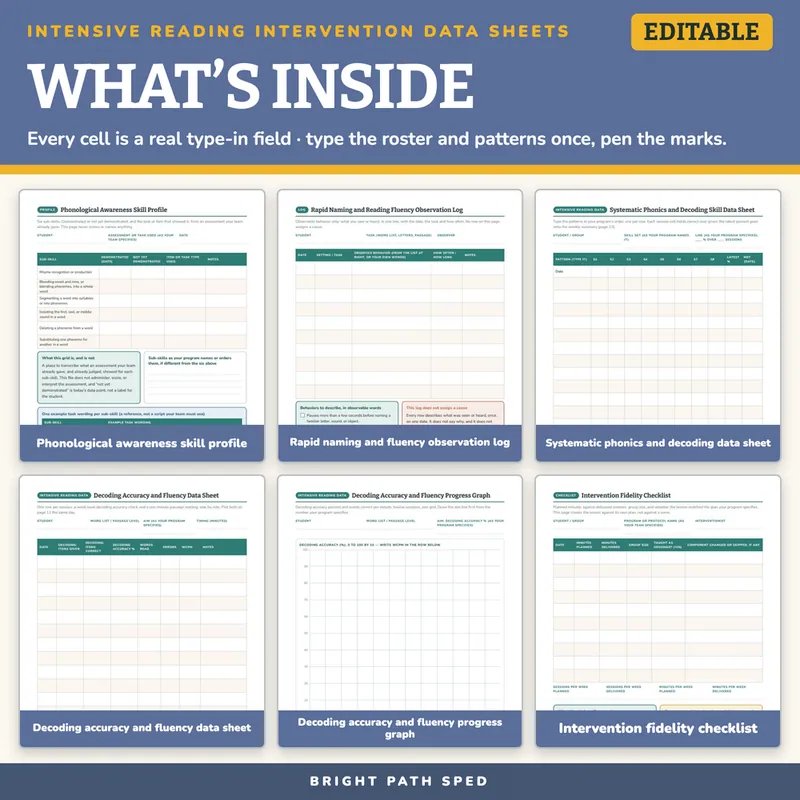
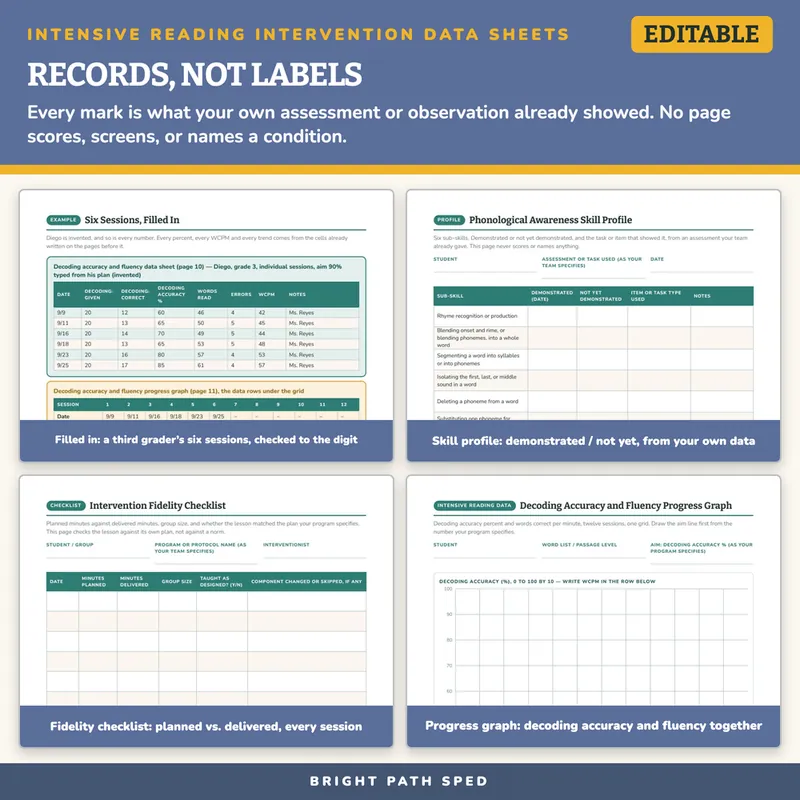
- Phonological Awareness Skill Profile — 6 sub-skills (rhyming, blending, segmenting, isolating, deleting, substituting), each marked demonstrated (with date) or not yet demonstrated, plus the assessment or task used, and a reference table of one example task wording per sub-skill
- Rapid Naming and Reading Fluency Observation Log — 10 rows for date, setting/task, observed behavior, how often/how long, and notes; a card lists five observable-behavior examples (pauses before naming, misreads a word it read correctly earlier, loses place on the line, and so on) — never a cause
- Systematic Phonics and Decoding Skill Data Sheet — 12 pattern rows by 8 sessions, correct over given per cell, latest percent and met-date columns
- Decoding Accuracy and Fluency Data Sheet — 12 rows: a word-level decoding accuracy check (items given, items correct, accuracy percent) beside a one-minute passage reading (words read, errors, WCPM)
- Decoding Accuracy and Fluency Progress Graph — a 0–100 by 10 grid for decoding accuracy percent, 12 sessions, with a 4-row data table underneath (date, decoding percent, WCPM, aim line) so both metrics travel together
Tracking, Fidelity And Decisions
- Intervention Fidelity Checklist — 10 rows: minutes planned vs. delivered, group size, taught as designed (Y/N), component changed or skipped; plus a planned-vs-delivered sessions/minutes-per-week summary
- Weekly Progress Monitoring Summary — 6 rows: last week, this week, trend, decision, with four decision rules printed in advance
- Family Progress Note — what we are working on in reading, what the numbers show, what we are changing, one thing to try at home
- Intervention Review and Next-Step Decision Sheet — 8 rows: starting score, the line your program specifies, current score, weeks in intervention, decision (continue/change/review/move), next step; four decision rules printed in advance
- A filled-in example for an invented third grader (Diego): six sessions of decoding accuracy and WCPM data, the same six sessions on the fidelity checklist, and the Friday weekly-summary decision that came out of them
What This Is, And What It Is Not
It is a fillable PDF. Open it in a PDF reader, click a line, a box or a cell, type, press Tab to move on, and Save As once per student. It works offline with no account or subscription. It is NOT a Google Sheets file, a Google Doc or a PowerPoint presentation.
It is not a screening tool, not an assessment, and not a program. It does not decide which students need intensive intervention, does not administer or score any assessment, and does not set or state a threshold anywhere — every place a criterion or a dosage number would go says "as your program specifies" or "as your team specifies" and gives a blank. The phonological awareness page only transcribes what an assessment your team already gave, and already judged, showed for that sub-skill on that date; "not yet demonstrated" is a data point, not a label. The rapid naming and fluency log records observable behavior only, never a cause. The fidelity checklist checks a session against the plan your team wrote for it, not against any outside standard. No age, eligibility, or IDEA-timeline claim anywhere.
Who This Is For
Reading interventionists, special education teachers and reading specialists delivering individual or very-small-group, phonologically-explicit intervention outside the general Tier 2 caseload, and the case managers or coaches who monitor fidelity across a building's intensive groups.
You might also need
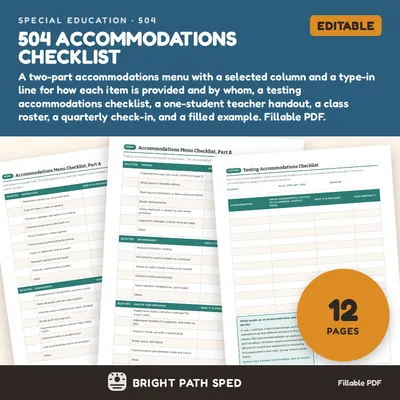
504 Accommodations Checklist Editable
$3.00 or with All-Access
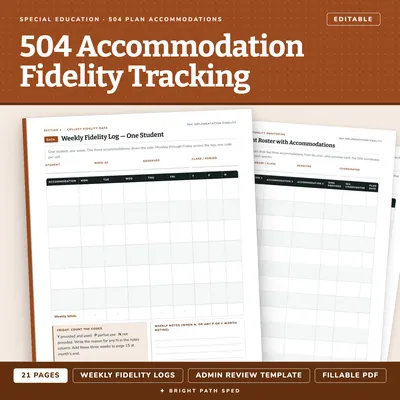
504 Plan Accommodation Implementation Fidelity Data Collection Editable
$3.50 or with All-Access
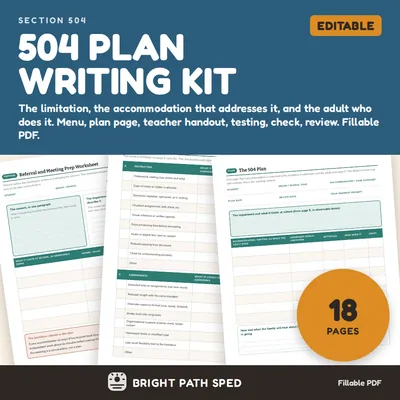
504 Plan Template Accommodations Checklist Teacher Handout
$5.00 or with All-Access
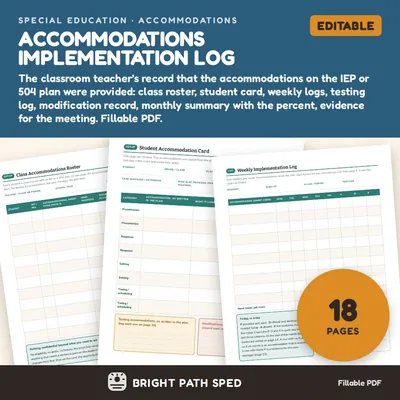
Accommodations Implementation Log Editable
$5.00 or with All-Access