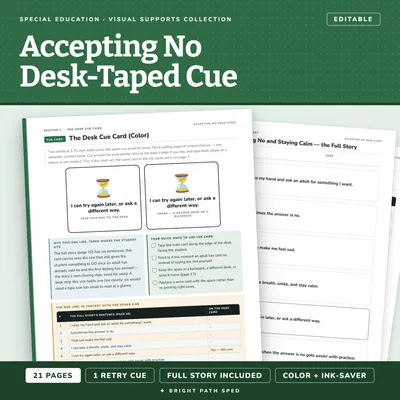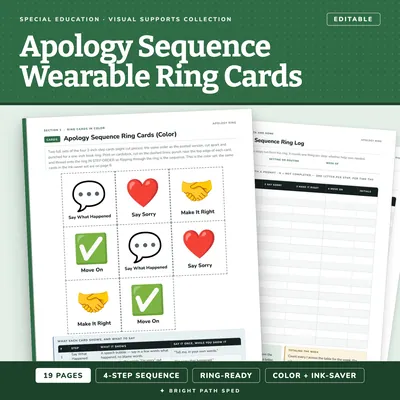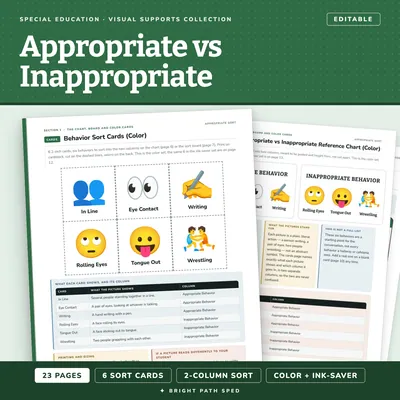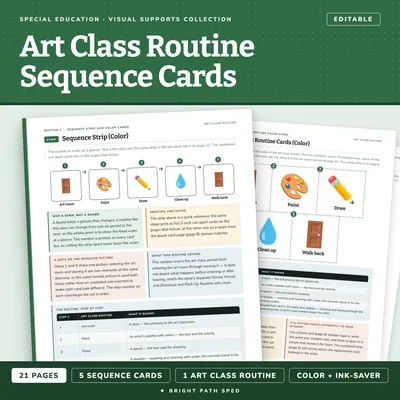
Interoception Body Signal Check-In Cards
- 22 pages
- Not Grade Specific
$3.50
DownloadOr get it with All-Access: pick any 20 resources a month for $7.
New here? Your first month of All-Access is half off with code TEACHERTOK
Already bought this, or a member?
Instant download. One teacher's license: colleagues need their own copy. Each file carries a license number.
Also on Teachers Pay Teachers: see the Bright Path Sped store
About this resource
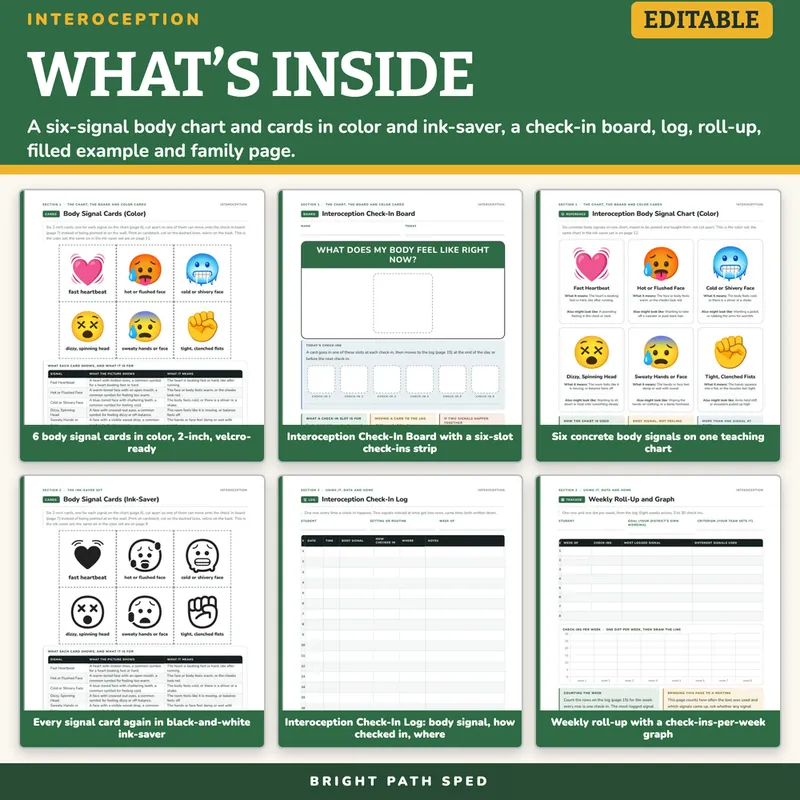
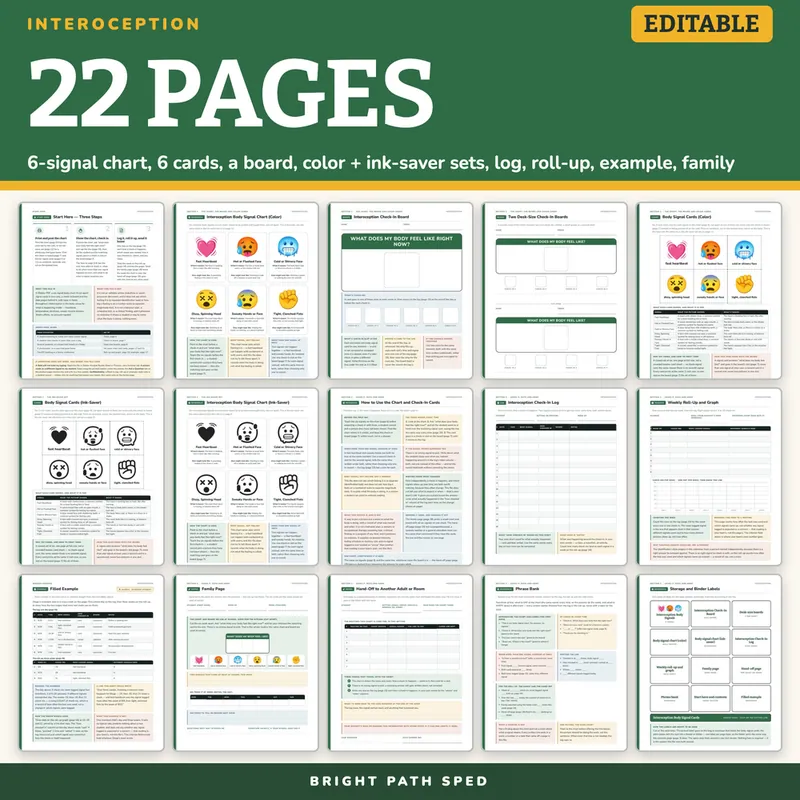
EVERYTHING INSIDE — 22 pages, 213 type-in fields
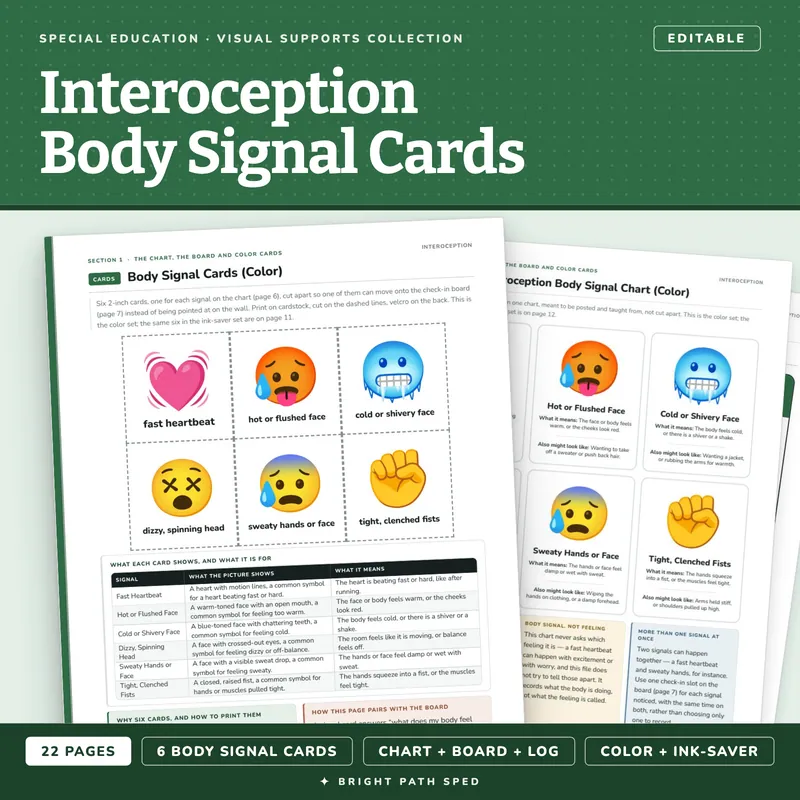
- An Interoception Body Signal Chart: six concrete body signals (fast heartbeat, hot or flushed face, cold or shivery face, dizzy/spinning head, sweaty hands or face, tight/clenched fists) on one teaching chart, meant to be posted on a wall, not cut apart
- 6 signal cards, 2 inches square, sized for velcro dots: a picture and a plain-language caption for each signal, no numbers and no color-coding
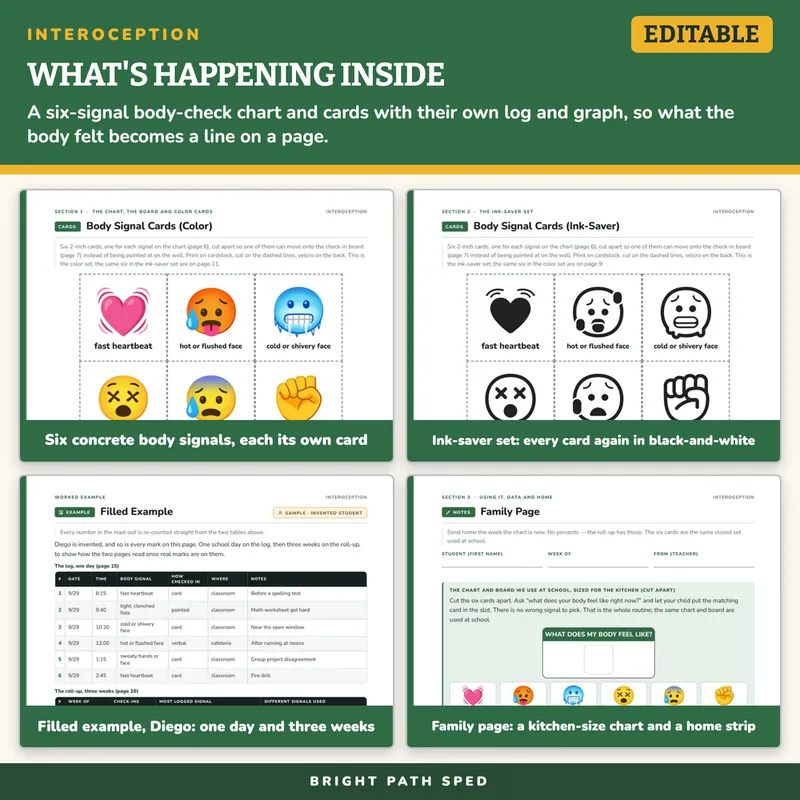
- Every card and the chart twice: a full-color set for the wall and the board, and a black-and-white ink-saver set for the photocopier
- An Interoception Check-In Board with one main "What Does My Body Feel Like Right Now?" panel (a slot for the matching signal card) and a six-slot "Today's Check-Ins" strip with a time line under each
- Two desk-size check-in boards on one sheet, for a folder or a second setting
- A how-to page: before the first day, the three moves every time, what to do when more than one signal happens at once, if the signal picked surprises you, why this is body signal — not feeling, not a number
- An Interoception Check-In Log (16 rows: date, time, body signal, how checked in, where, notes)
- A weekly roll-up (8 weeks) with a check-ins-per-week graph
- A filled example — an invented student, one day on the log and three weeks on the roll-up, every number re-counted from its own row
- A family page with a kitchen-size chart and board and all six signals on one sheet
- A hand-off page so a paraprofessional or another classroom runs the same chart and board the same way
- A phrase bank: 20 lines in 5 groups (spoken lines for the chart and board, written starters for the log, the roll-up, the family page and the hand-off)
- A storage and binder label sheet: 12 labels and a spine strip
- Start Here, a contents page with page thumbnails, and a "what's next" back page
A third self-report question, next to this collection's other two. Most feelings tools ask WHICH feeling it is, or HOW BIG it feels — this one asks what the BODY is doing: a fast heartbeat, a hot or cold face, a dizzy head, sweaty hands, tight fists. Six concrete, nameable signals, each a cut-apart card, with a check-in board, a log, a weekly roll-up and a phrase bank behind them, so a body signal named at check-in turns into a line on a page a case manager can bring to a meeting.
The Chart And Cards
- The chart: all 6 signals on one page, for teaching and for the wall, each with what the picture shows and what it might also look like
- The signal cards (6) — fast heartbeat, hot or flushed face, cold or shivery face, dizzy/spinning head, sweaty hands or face, tight/clenched fists — cut apart so one can move onto the check-in board
Every picture was chosen to be named in one word by a young child, in color AND in the black-and-white set; a candidate that failed in either set, or that already carried a different fixed meaning elsewhere, was left out. Cards are 2 inches square; the board's slot is sized to match.
The Board
- Interoception Check-In Board — one "What Does My Body Feel Like Right Now?" panel with a slot for the signal card, and a "Today's Check-Ins" strip of six smaller slots with a time line under each.
- Two desk-size check-in boards — two boards on one sheet, cut apart, for a folder or a second student.
The boards carry no pictures, so they print the same in color or black and white.
What This Is, And What It Is Not
It is a fillable PDF: type into the board's slots and time lines, the log, the roll-up, the family page and the hand-off page, or print and use a pen. The chart and card pages print on cardstock or plain paper; the cards cut along dashed lines. It works offline with no account or subscription. It is NOT an editable online slideshow or word-processor document.
It is a way for a student to notice and name what the body is doing right now, with that check-in written down. It is NOT a picture-card set for identifying WHICH feeling it is (a separate identification task — see "More in the collection" below) and it is NOT a numbered magnitude scale for how big a feeling is (a different, numbered product also in this collection). It is not a behavior plan, a sensory or occupational-therapy screening tool, a clinical finding, or a program of any kind, and it promises no outcome. It carries no prompt hierarchy, fading schedule or mastery rule; it does not say why a signal happened or what to do about it, and no signal logged is ever treated as "worse" than another — how the chart is used with a student, and for how long, is what your team's plan says. The goal line and the criterion field are blanks for your district's own wording and your team's own number. The log counts two things: which signal was named, and how the check-in itself happened.
Who This Is For
Special education teachers and paraprofessionals building body-awareness and self-report skills with students, case managers who need that use to show up as data, and the families who get the home page sent home.
More In The Collection
Alongside Feelings Chart and Check-In Cards (which answers "WHICH feeling is it?" with a ten-word picture chart — no body-signal pictures and no number scale) and Feelings Intensity Scale Cards and Log (a five-level numbered chart for "HOW BIG does it feel?" — a magnitude scale, not a body-signal set); more picture-card sets are being added to the collection regularly, all on the same cards-plus-data shape.
Pictures (color pages): Noto Emoji by Google, Apache License 2.0. Pictures (ink-saver pages): Fluent Emoji, Copyright (c) Microsoft Corporation, MIT License.