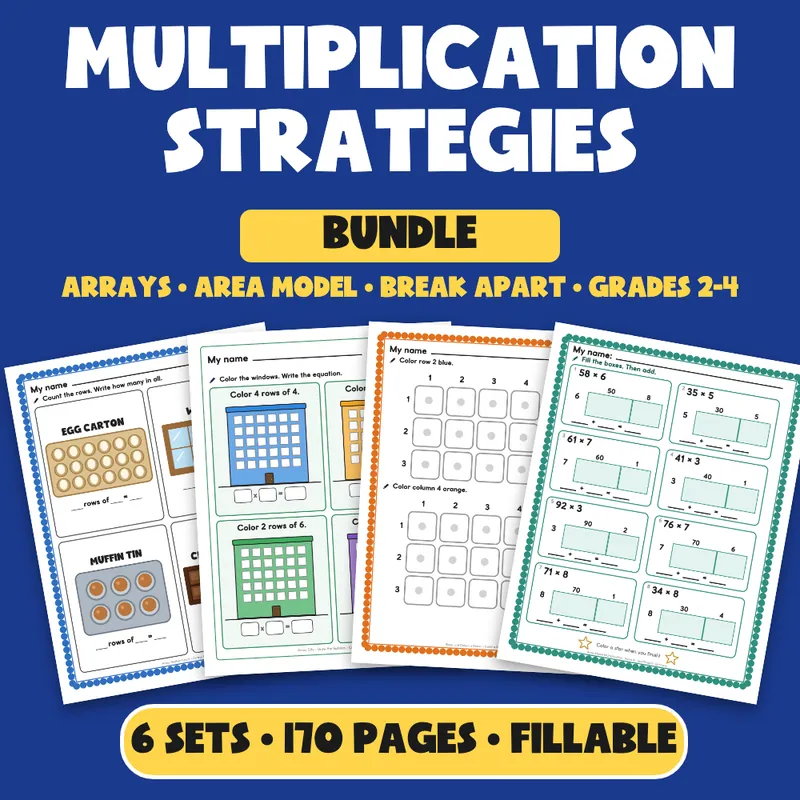
Multiplication Strategies Bundle
- 2nd, 3rd, 4th
$7.47 $14.95 on Teachers Pay Teachers
Half the Teachers Pay Teachers price. The same PDF, sold direct.
DownloadOr get it with All-Access: pick any 20 resources a month for $7.
New here? Your first month of All-Access is half off with code TEACHERTOK
Already bought this, or a member?
Instant download. One teacher's license: colleagues need their own copy. Each file carries a license number.
Also on Teachers Pay Teachers: see the Bright Path Sped store
What's in the bundle (6)
About this resource
Multiplication makes more sense when a student can see it. This bundle teaches the same facts three ways: arrays (rows and columns), the area model and break apart. Six sets, one purchase. Each set is a complete kit for one skill, with student pages, answer keys and the records you need around them.
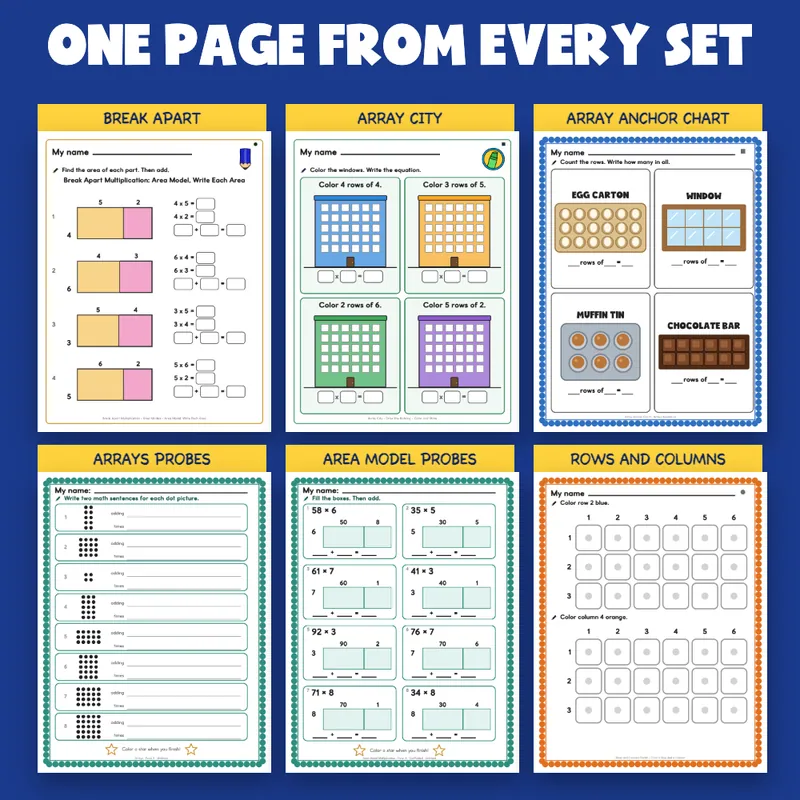
WHAT IS IN THE BUNDLE - 6 PDFs, 170 pages
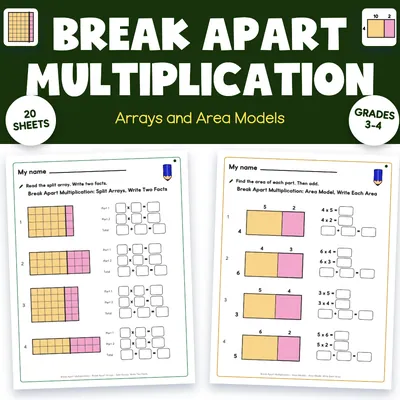
- Break Apart Multiplication (grades 3-4) - 31 pages: Start Here, 20 practice pages that break numbers apart with arrays, area models and tens and ones, 2 cut-and-glue pages, 3 answer keys, a tracker and roll-up, a filled example with an invented student, a family page and What's Next.
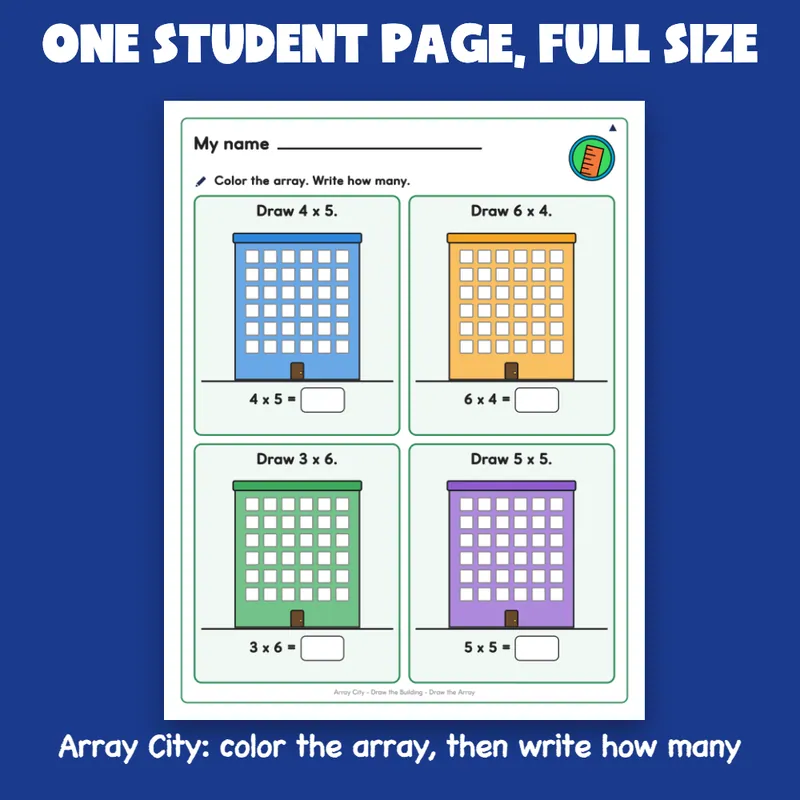
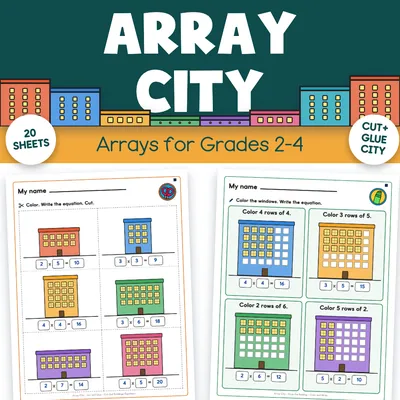
- Array City (grades 2-4) - 30 pages: Start Here, 20 practice pages on rows, columns, equations, windows and a parking-lot story, 2 cut-and-glue pages, 2 answer keys, a tracker and roll-up, a filled example with an invented student, a family page and What's Next.
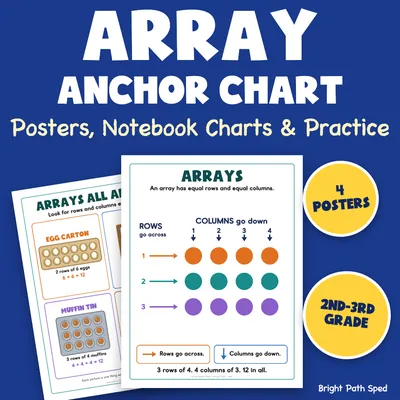
- Array Anchor Chart (grades 2-3) - 31 pages: Start Here, a five-routine teaching page, 6 anchor chart pages for arrays, repeated addition and equal groups, 2 cut-apart chart pages, 12 practice pages, a filled example with an invented child, 2 answer keys, a note home, a phrase bank, and a binder cover, spine and tabs.
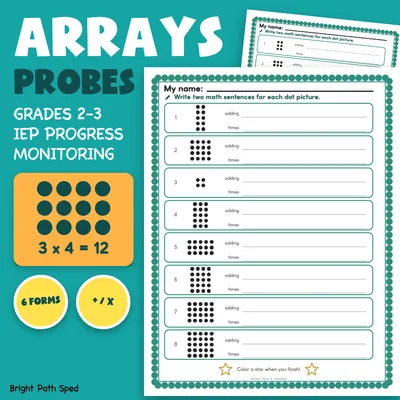
- Arrays Probes - 22 pages: How This Pack Works, a binder cover, spine label and divider tabs, goal and directions, 8 probe pages of dot pictures, 3 answer-key and scoring pages (Forms A-C, Forms D-F and a one-minute form), teacher notes on the errors, a data log and graph, a caseload summary, a filled-in data log with an invented student, and a family update and team handoff.
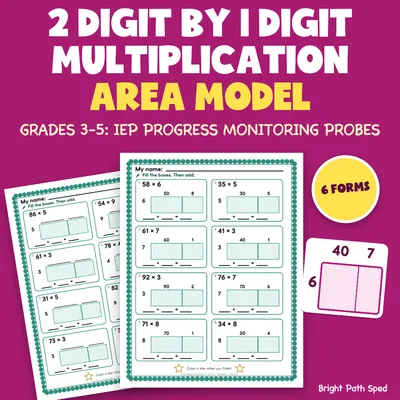
- Area Model Multiplication Probes (2 digit by 1 digit) - 19 pages: How This Pack Works, a binder cover, spine label and divider tabs, goal and directions, 6 probe pages (fill the boxes, then add), 2 answer-key and scoring pages, teacher notes, a data log and graph, a caseload summary, a filled-in data log with an invented student, and a family update and team handoff.
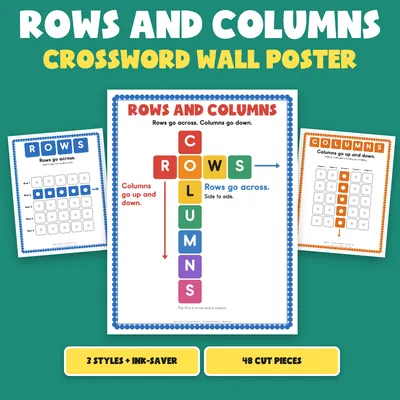
- Rows and Columns Poster (37 pages): Start Here, a five-routine teaching page, 14 poster pages for rows, columns and both, 5 cut-apart pages of array cards and grids, 7 practice pages, a filled example with an invented child, 2 answer keys, a note home, a phrase bank, and a binder cover, spine and tabs.
In Every Set
- A how-to page first: Start Here in four sets, How This Pack Works in the two probe sets
- A filled example with an invented student, labeled as invented on the page
- Answer keys for the scored pages, so a paraprofessional or a student can check the work
- A page for families: a home page, a note home, or a family update
- Student pages with a "My name" line and a short direction
Built For The Student Holding The Page
Student pages have a "My name" line and a short direction, with drawn arrays, boxes and windows to work from. The keys, records and family pages are separate pages, so the student's page stays clean.
Who Is It For
Teachers of grades 2-4, special education and resource room teachers, interventionists, co-teachers, tutors and homeschool families who want one place for the array, area model and break apart strategies.
Type In, Or Print
Each of the 6 files is a fillable PDF: click a box, type, then save one copy per student. You can also print any page and write by hand. It works offline with no account or subscription. It is not Google Slides, not Google Docs and not PowerPoint. Printing supplies are not included.
What This Is, And What It Is Not
A set of multiplication practice pages with the record-keeping around them. It is not a timed test, a screener or a clinical tool, and it makes no claim about any student's age or rate of progress. No claim of alignment to any one state's standards; check the wording against your own curriculum.