Semantic Feature Analysis
- 28 pages
- Kindergarten, 1st, 2nd, 3rd, 4th, 5th
$1.75 $3.50 on Teachers Pay Teachers
Half the Teachers Pay Teachers price. The same PDF, sold direct.
DownloadOr get it with All-Access: pick any 20 resources a month for $7.
New here? Your first month of All-Access is half off with code TEACHERTOK
Already bought this, or a member?
Instant download. One teacher's license: colleagues need their own copy. Each file carries a license number.
Also on Teachers Pay Teachers: see the Bright Path Sped store
About this resource
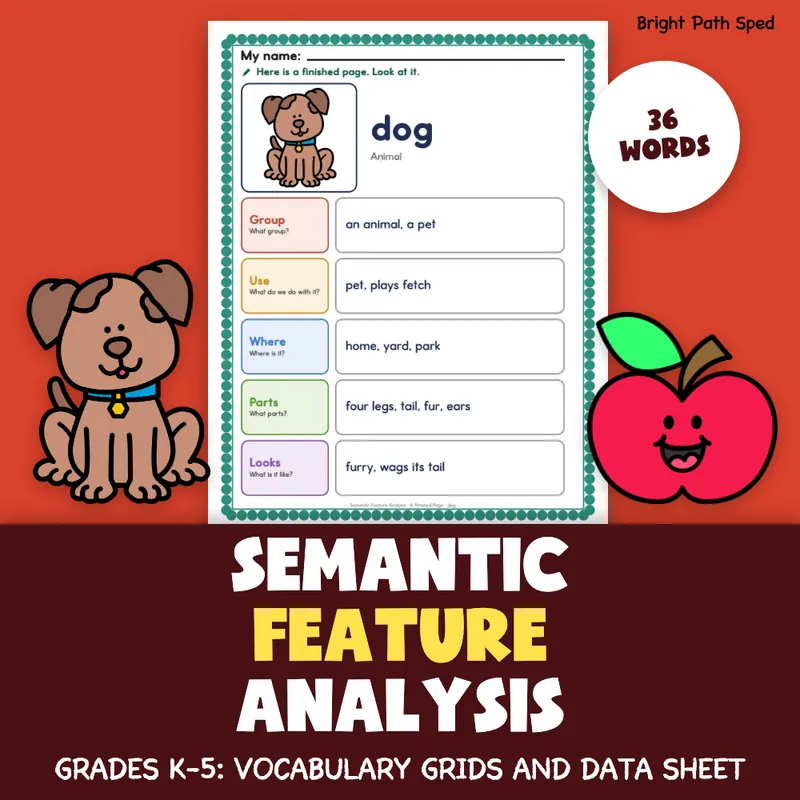
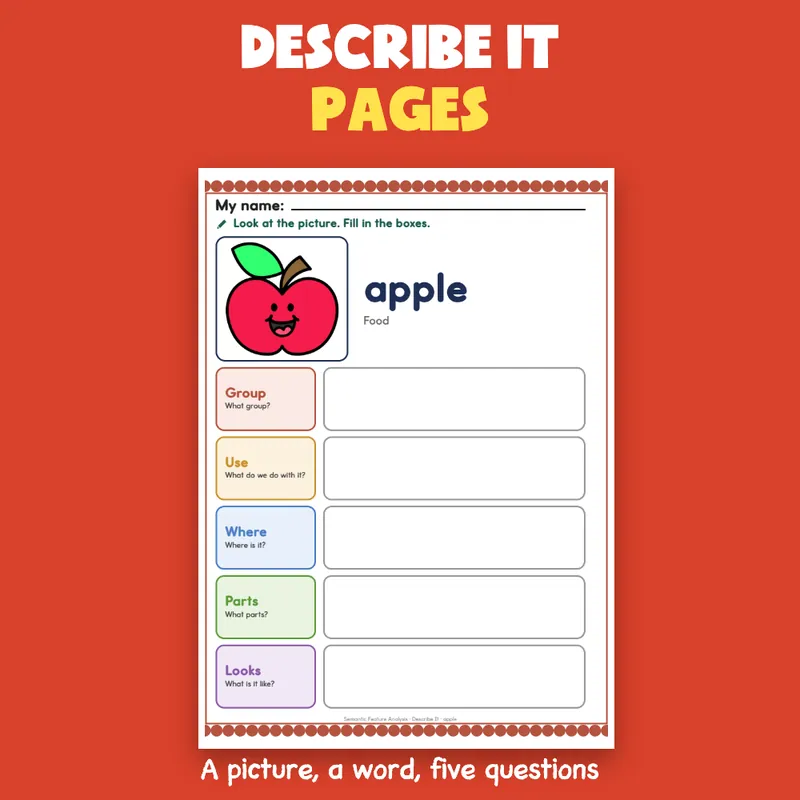
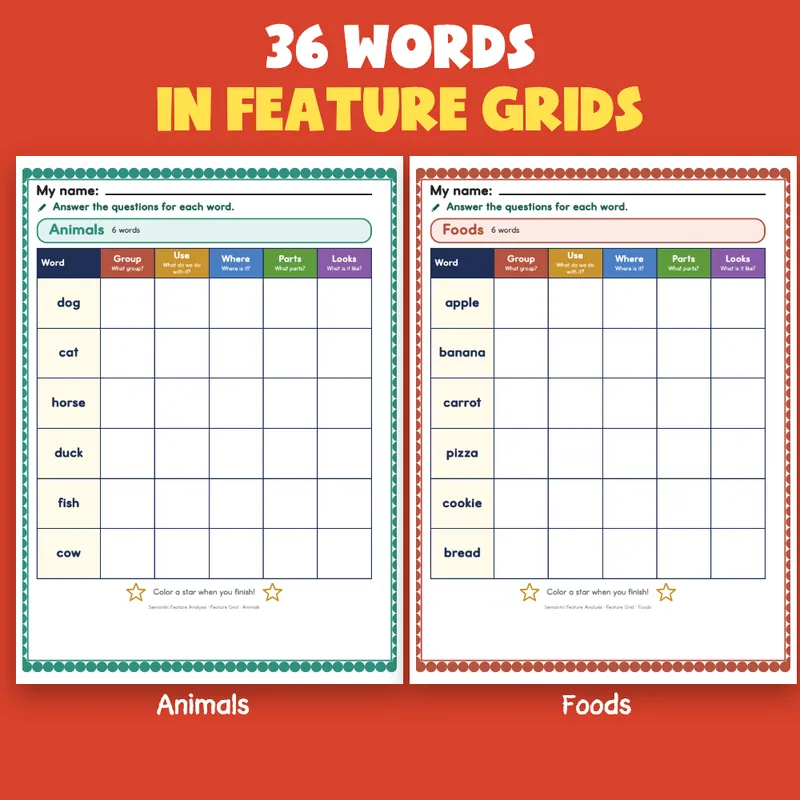
Semantic Feature Analysis grids for describing words, ready to print or type into. For each word the child answers five questions: what group is it in, what do we do with it, where is it, what parts does it have, what is it like. Six Describe It pages give one big picture and five boxes. Six feature grids hold thirty-six everyday words, six to a page. A blank grid takes your own words. An accuracy data sheet and graph keep the numbers.
WHAT IS INCLUDED - 378 type-in fields, thirty-six words in six sets, six Describe It pages, a finished model page, a blank grid, a word bank, an accuracy data sheet and graph, a filled example, sample answers for every word, a family update page, binder cover and tabs
Start Here (Page 3)
- Three steps and a table that names every page in the file by number
My Five Questions (Page 5) And A Finished Page (Page 6)
- The five questions shown on one word, with a picture and sample answers
- A filled-in Describe It page to show a child before they start
Describe It, One Word A Page (Pages 7-12)
- Cat, apple, hammer, coat, school and table, each with a big colored picture
- A big My name line, one short instruction with a pencil picture, five labeled boxes with room to write
Feature Grids (Pages 13-18)
- Animals, Foods, Tools, Clothes, Places and Furniture: six words each, thirty-six in all
- Five columns on every grid: Group, Use, Where, Parts, Looks, each with a kid-worded question
- Every cell is a type-in box and also a pencil box on paper
- A blank feature grid (page 19) for six words of your own
Words To Help Me (Page 20)
- A word bank for each of the five questions, in big type, for a child who needs a word to start
Accuracy Data Sheet And Graph (Pages 21-22)
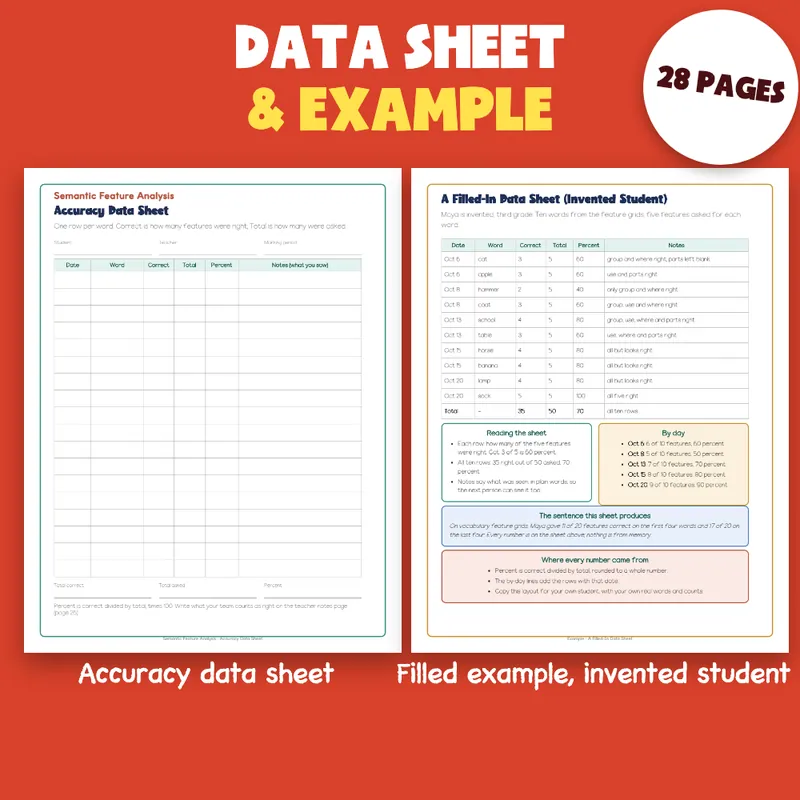
- Date, word, correct, total and percent for eighteen words, with notes lines and totals
- A graph with twelve sessions across and percent up the side, and a snapshot box for a meeting
A Filled Example (Page 23)
- An invented student, ten words, with the percent, a by-day summary and the sentence the sheet produces. Every number is checked against its own table.
Sample Answers (Pages 24-25)
- One sample answer for every word and every feature, so a paraprofessional can check a grid. Many other true answers are right; your team decides what counts.
Teacher Notes, Family Update, Binder Cover (Pages 26, 27, 4)
- What each column asks, how to count right, a blank for your team's own counting rule
- A note home with blanks, a game for home that needs no paper, a team handoff and a meeting sentence
- A binder cover and six divider tabs
What This Is, And What It Is Not
It is a fillable PDF. The grid cells, the data sheet, the graph notes and the family page are type-in fields: open the file in a PDF reader, click a box, type, and Save As once per student. Every student page also prints clean, so a child can write in it with a pencil.
It is vocabulary practice with a data sheet. It is not a test, it has no norms or benchmark scores, and it does not tell you how to teach or what a child's answers mean. The words, the answers you count and the aim are yours. Your district's own rules go on the blank lines provided. It is not a Google Slides, Docs or PowerPoint file.
Who This Is For
Kindergarten through fifth grade special education and general education teachers, speech-language professionals who want a clean describing-words grid, and the paraprofessionals who run it.