Student Led IEP Meeting Toolkit Editable
- 22 pages
- Not Grade Specific
- PDF, fillable
$5.00
DownloadOr get it with All-Access: pick any 20 resources a month for $7.
New here? Your first month of All-Access is half off with code TEACHERTOK
Already bought this, or a member?
Instant download. One teacher's license: colleagues need their own copy. Each file carries a license number.
Also on Teachers Pay Teachers: see the Bright Path Sped store
About this resource
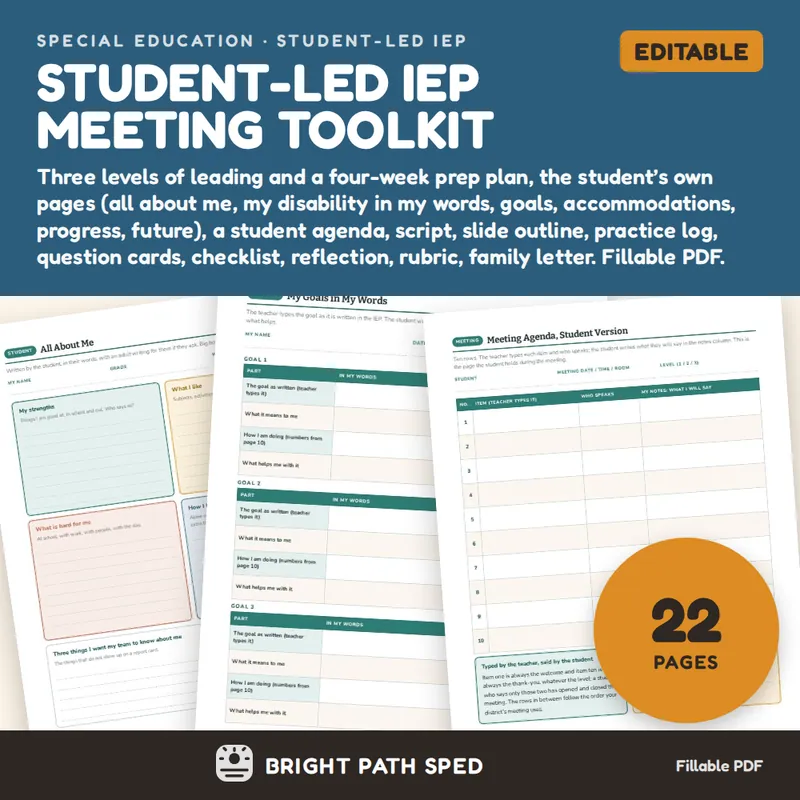
The student opens the meeting, presents part of it in their own words, and closes it. This is the paper that gets them there, as a fillable PDF: pick how much the student leads, work a four-week prep plan, hand the student their own pages, type the agenda they will hold at the table, practice it, run it, score it, and reflect on it. Type the teacher pages once and Save As per student; the student pages print blank or fill on a tablet.
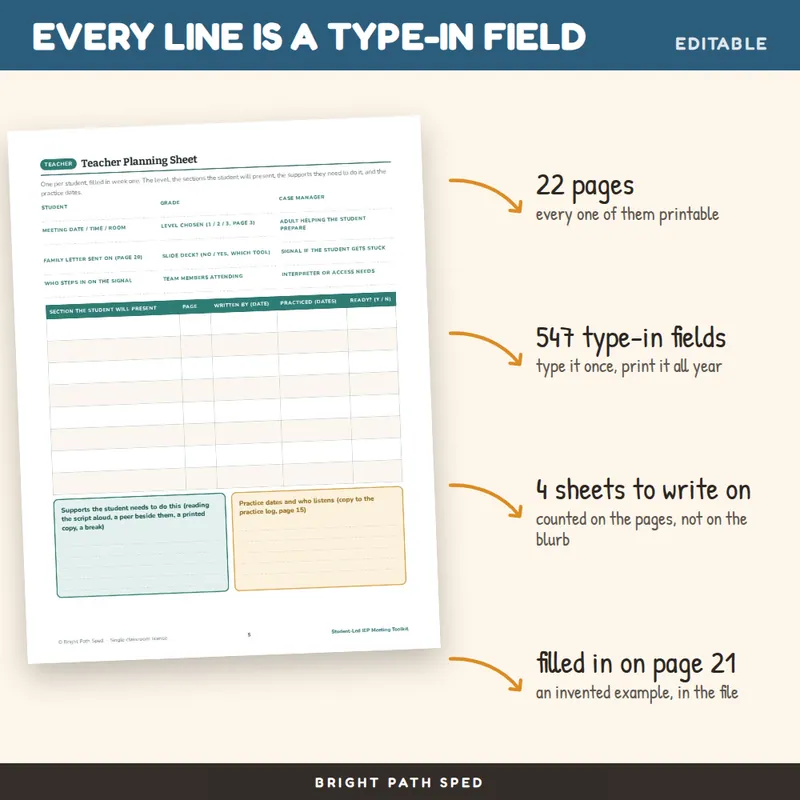
WHAT IS INCLUDED - 22 pages, 547 type-in fields
Setup
- How to Run a Student-Led IEP in Four Weeks - three levels of leading (attends and shares, presents a section, runs the agenda), what the student and the teacher each do at every level, and a four-week table that says which page gets done in which week and by whom
- How the Type-In Fields Work - one page, so nobody emails you
- Teacher Planning Sheet - twelve fields (level, meeting details, the adult helping, the signal if the student gets stuck, who steps in), an eight-row table of the sections the student will present with practice dates, and boxes for supports and practice plans
The Student'S Own Pages
- All About Me - strengths, what I like, what is hard for me, how I learn best, three things I want my team to know; big write-in boxes with typed prompts
- My Disability and How It Affects My Learning - in my words: what is harder, what is not, what I want my teachers to know, what to keep doing and stop doing, and how I explain it to a new adult; sentence starters, no label named anywhere
- My Goals in My Words - three goals, each with the goal as written (the teacher types it), what it means to me, how I am doing, and what helps
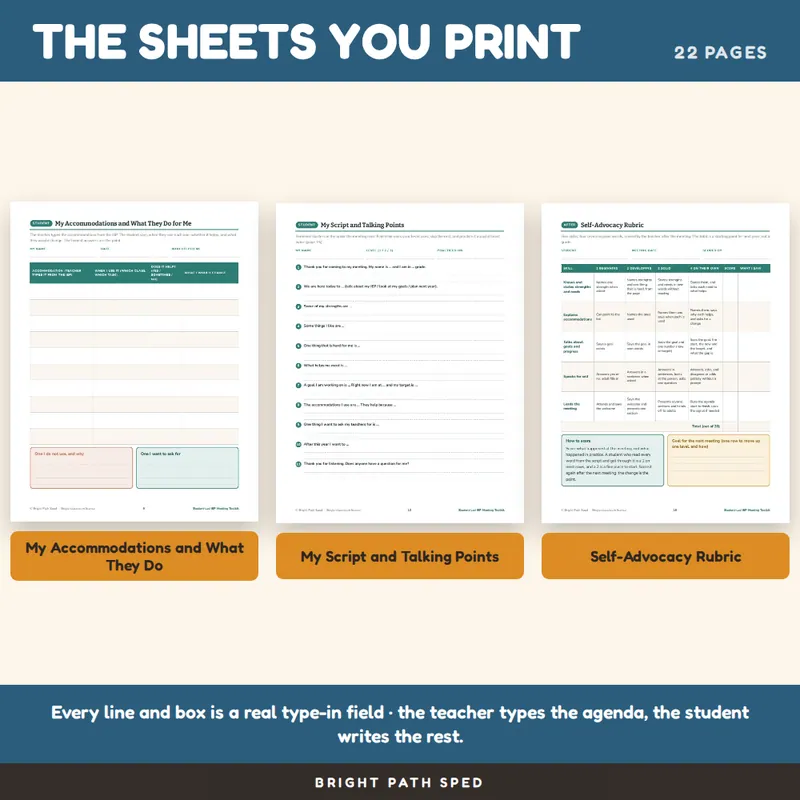
- My Accommodations and What They Do for Me - ten rows: the accommodation, when I use it, does it help, what I would change; plus one I do not use and one I want to ask for
- My Progress - three goals by where I started, where I am now, the target, and the difference; what I am proud of, what to work on next, and the sheet or graph I looked at
- My Future - after this year and after school: classes, things to get better at, jobs, where I want to live, and one next step for each
The Meeting
- Meeting Agenda, Student Version - ten rows: item, who speaks, and my notes on what I will say; typed by the teacher, said by the student
- My Script and Talking Points - eleven sentence starters in meeting order, from "Thank you for coming" to "Does anyone have a question for me?", each with lines to finish it
- Presentation Slide Outline - six slide boxes with a suggested title and bullet lines, for the student who builds a slide deck in whatever tool the school uses
- Practice Log - six rehearsals: date, who listened, what went well, the one thing to fix next time
- Team Question Cards - twelve questions a team member may ask, each with lines for the answer
- Meeting Day Checklist - the student's half (bring, say, do) and the teacher's half (seating, tech, timing)
After
- Reflection After the Meeting - the student's half and the teacher's half, then one sentence for the file
- Self-Advocacy Rubric - five skills by four levels written in plain words, a score column, a what-I-saw column, a total out of 20, and a goal for the next meeting
- Family Letter and Invitation - typed blanks: what a student-led meeting is, what the student will present, how to help before and at the meeting, a reply slip
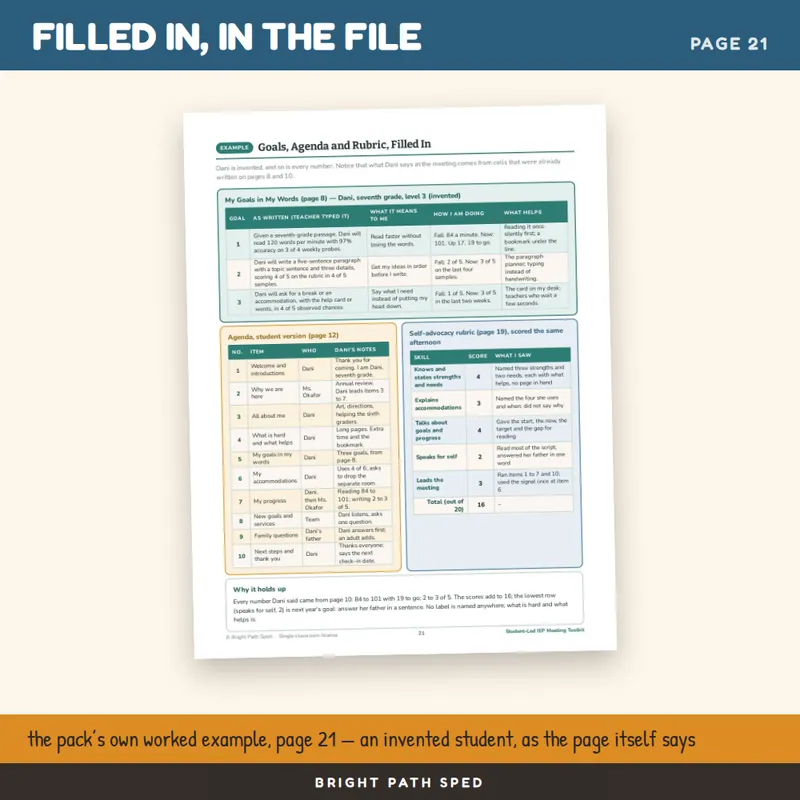
- A filled-in example for an invented seventh grader: the goals-in-my-words page, the student agenda, and the rubric scored with a total that adds up
What This Is, And What It Is Not
It is a fillable PDF. Open it in a PDF reader, click a line, a box or a cell, type, press Tab to move on, and Save As once per student. It works offline with no account or subscription. It is NOT a slide deck, a word-processor file or a spreadsheet, and it does not become one; the slide outline plans a deck the student builds in whatever tool your school uses.
It is not a rule about who must attend an IEP meeting or at what age a student takes part. Your district decides that, and the page leaves a line for its rule. Nothing on the disability page names a category or a label; the student writes what is harder for them and what helps.
Who This Is For
Special education teachers and case managers in grades 3 through 12 who want the student to run part of the annual meeting, transition teachers whose students will lead the meeting every year from here on, and the general education teachers, counselors and families who sit at the table and would like to hear from the student first.
You might also need
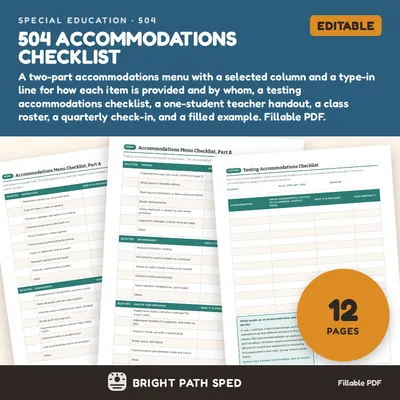
504 Accommodations Checklist Editable
$3.00 or with All-Access
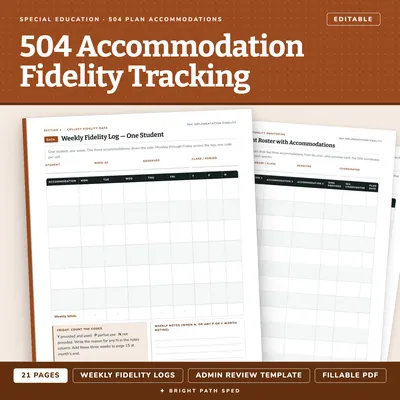
504 Plan Accommodation Implementation Fidelity Data Collection Editable
$3.50 or with All-Access
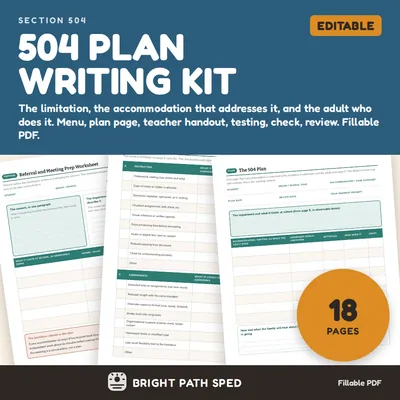
504 Plan Template Accommodations Checklist Teacher Handout
$5.00 or with All-Access
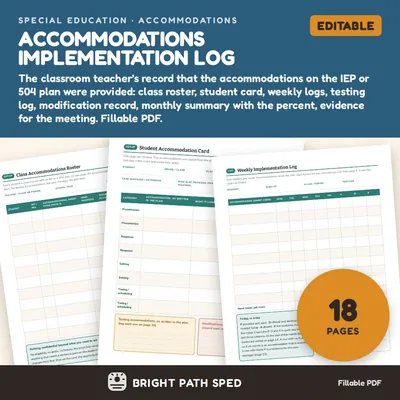
Accommodations Implementation Log Editable
$5.00 or with All-Access