The Lion and the Mouse Book Companion
- 26 pages
- PreK, Kindergarten, 1st, 2nd
$2.25 $4.50 on Teachers Pay Teachers
Half the Teachers Pay Teachers price. The same PDF, sold direct.
DownloadOr get it with All-Access: pick any 20 resources a month for $7.
New here? Your first month of All-Access is half off with code TEACHERTOK
Already bought this, or a member?
Instant download. One teacher's license: colleagues need their own copy. Each file carries a license number.
Also on Teachers Pay Teachers: see the Bright Path Sped store
About this resource
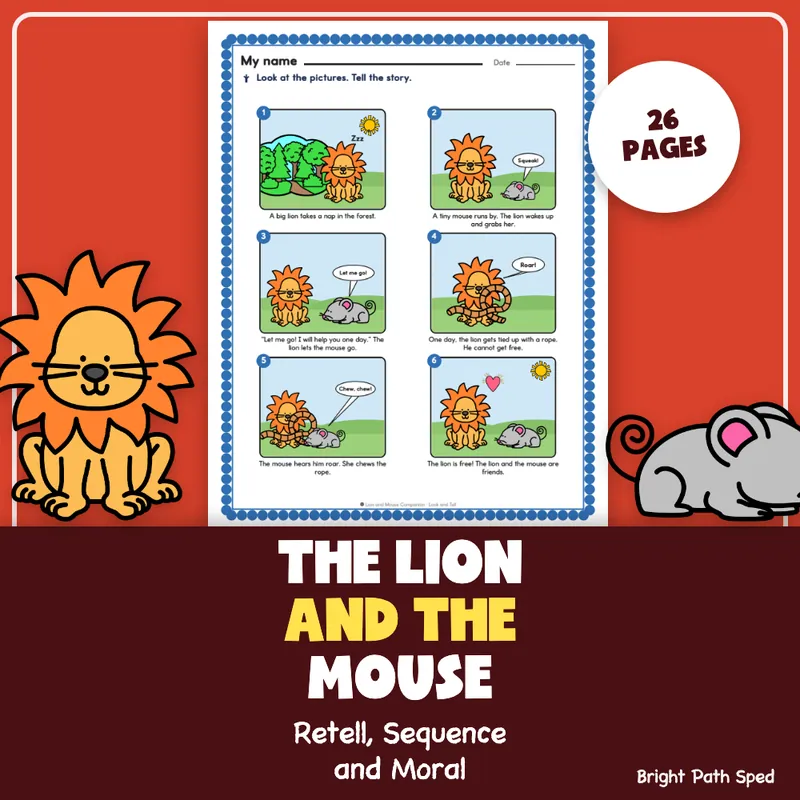
The Lion and the Mouse, ready to print. Aesop's fable is retold in six short steps in our own words: a lion naps, a tiny mouse runs by, the lion lets her go, the lion is tied up with a rope, the mouse chews it free, and they become friends. Children look at the story, learn the words, put the pictures in order, cut and glue, write, build a story map, find the moral and talk about kindness. Type the name and the numbers, or print the pages and write by hand.
EVERYTHING INSIDE (26 pages)
- A 6-step retelling with a sentence under each of six pictures (First, Next, Then, After that, Soon, Last).
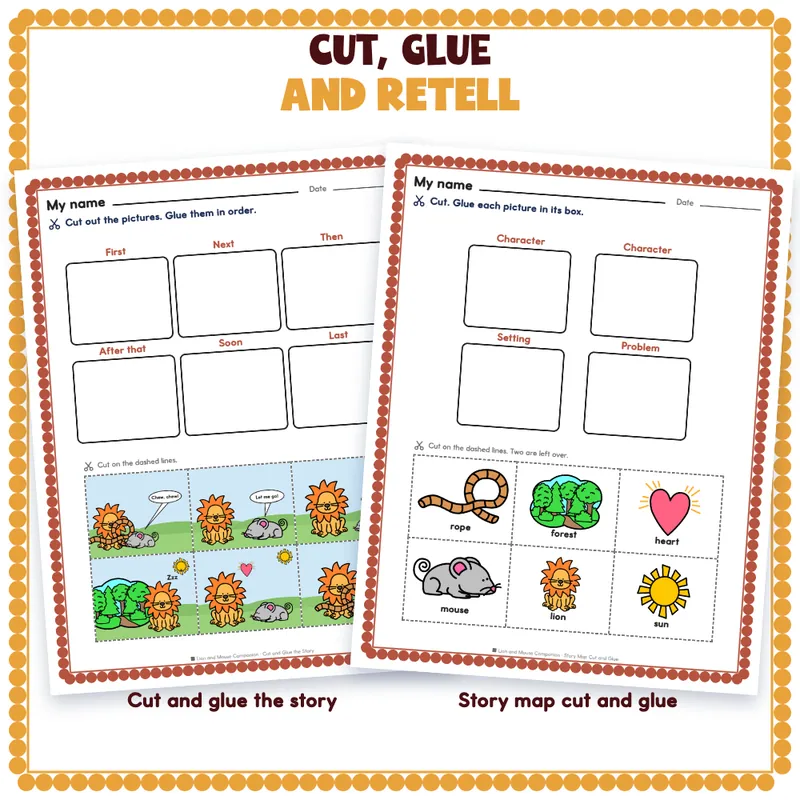
- 13 student pages: look and tell, match the words, number the pictures, cut and glue the story, two writing pages, a story map to draw and write, a story map to cut and glue, what happens next, a moral match, kindness in action, a circle-the-picture questions page and an answer-with-a-sentence page.
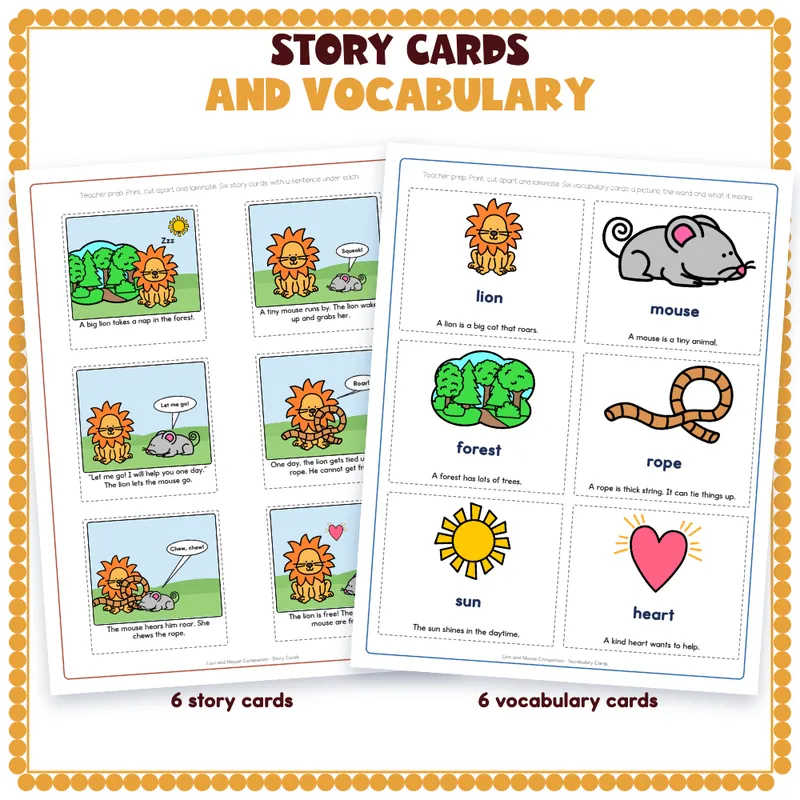
- 3 card sheets, 18 cards: 6 story cards with sentences, 6 story cards with pictures only, and 6 vocabulary cards (lion, mouse, forest, rope, sun, heart) with a picture, the word and what it means. Print, cut apart and laminate for a table or a pocket chart.
- Cut and glue: 12 pieces on two pages, six on each, edge to edge in a grid, each piece about 2.2 by 1.8 inches. The story page uses all six pieces. The story map page has four boxes (two characters, a setting and a problem) and two extra pieces that go nowhere.
- Questions: 4 circle-the-picture questions and 4 questions to answer with a sentence, plus a "who did it" page.
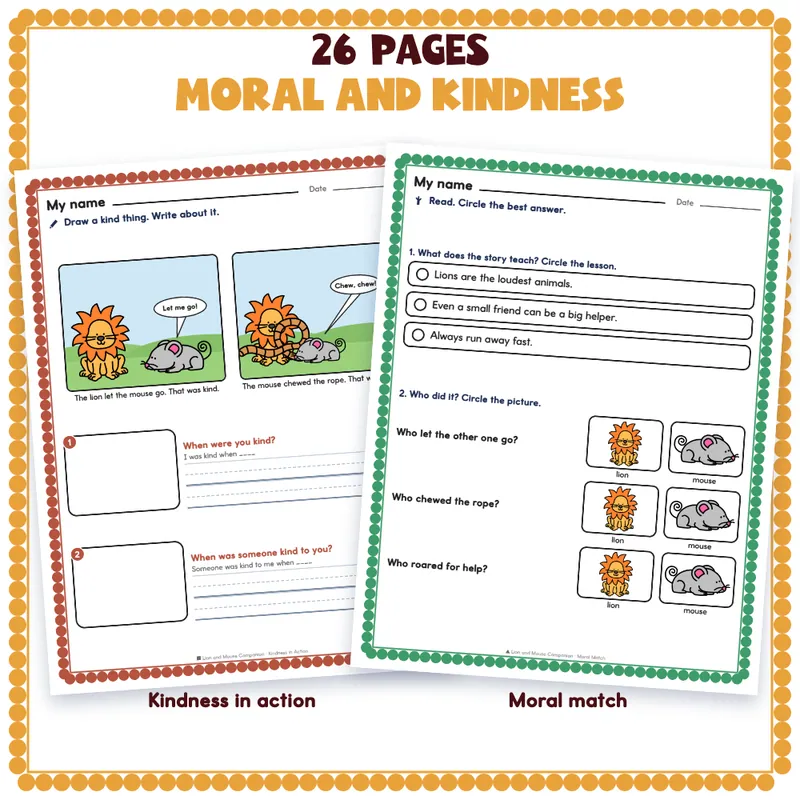
- Moral Match: circle the lesson that fits the story, then circle who did each kind act.
- Kindness in Action: look at two kind acts in the story, then draw and write about a time you were kind and a time someone was kind to you.
- What Happens Next: 4 items; look at the story so far and circle the picture that comes next.
- For you: an answer key, a tracker with 13 rows, a filled example for an invented student with a roll-up, a family page, a phrase bank of 17 starters in 5 groups, a binder cover and spine label, Start Here, the terms of use and a thank-you page with what to try next.
Built For The Child Holding The Page
Each student page has a big "My name" line, one short instruction with a small picture, and big pictures. A small shape in the page foot shows the step: a circle to start, a square for building and a triangle for ready for more. Nothing on a student page is written for an adult.
Type In, Or Print
The name and date on every student page, the number boxes, the sentence lines, the tracker, the roll-up, the family page and the notes areas are type-in fields in any PDF reader. You can also print any page. Print at 100 percent with fit-to-page turned off so the cut pieces stay a comfortable size. This is a fillable PDF; it is not a Google Slides or PowerPoint file.
More Story Sequencing From Bright Path Sped
Retelling in order is a skill that grows with practice.
Who This Is For
PreK, Kindergarten, 1st and 2nd grade classrooms, self-contained and resource rooms, centers, speech and language groups, and families who want a clear picture retelling of a fable children already know. Your team decides which pages each child works on.
What This Is, And What It Is Not
This is working paper for retelling, sequencing and talking about the lesson of a fable. The answer key shows the order of the pictures and the answers, and any sentence that says the same thing is right. It has no scores, no benchmarks and no grade-level claims. It is not a reading program, and it does not include a published book: the fable is Aesop's, retold in our own words.