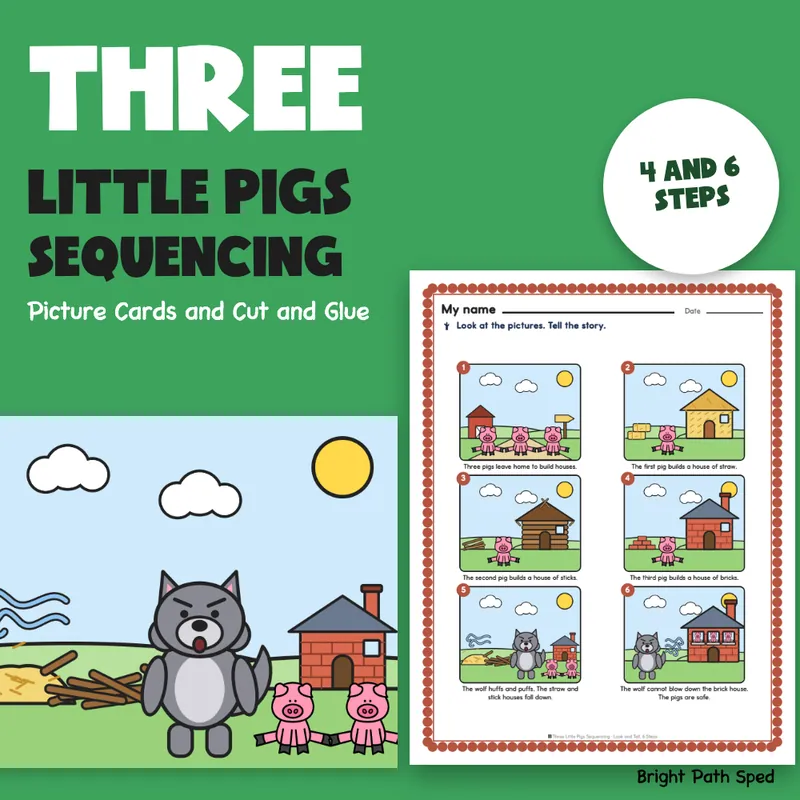
Three Little Pigs Sequencing
- 26 pages
- Kindergarten, 1st, 2nd
$2.00 $4.00 on Teachers Pay Teachers
Half the Teachers Pay Teachers price. The same PDF, sold direct.
DownloadOr get it with All-Access: pick any 20 resources a month for $7.
New here? Your first month of All-Access is half off with code TEACHERTOK
Already bought this, or a member?
Instant download. One teacher's license: colleagues need their own copy. Each file carries a license number.
Also on Teachers Pay Teachers: see the Bright Path Sped store
About this resource
Three Little Pigs sequencing, ready to print. Two retellings of the traditional story, a 4-step version and a 6-step version, drawn as clear picture scenes: a straw house, a stick house, a brick house, a wolf that huffs and puffs, and three pigs. Children look at the story, put the pictures in order, cut and glue them, and write a sentence for each one. Type the name and the numbers, or print the pages and write by hand.
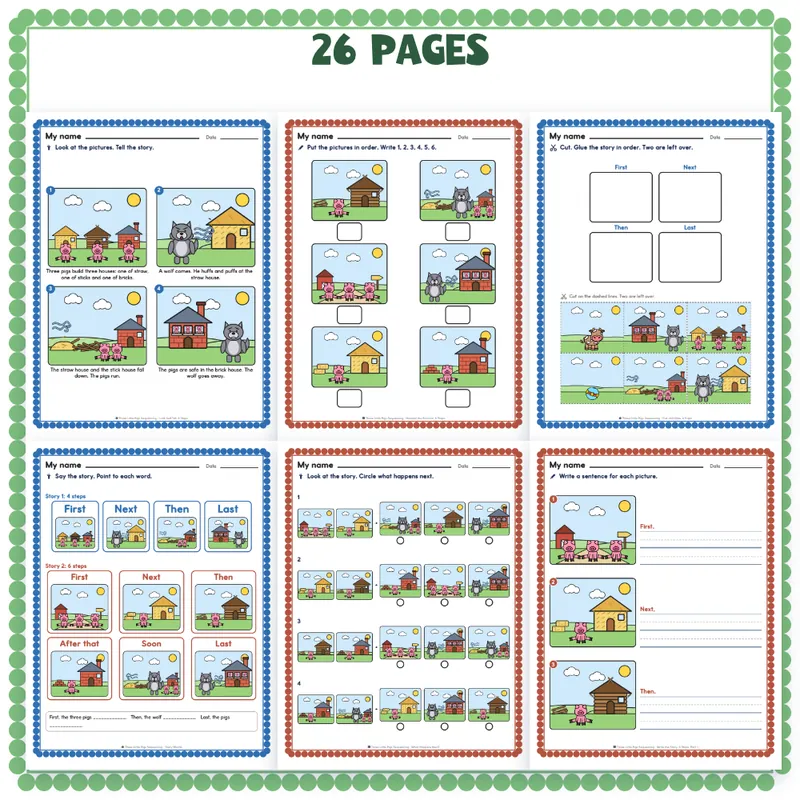
EVERYTHING INSIDE (26 pages)
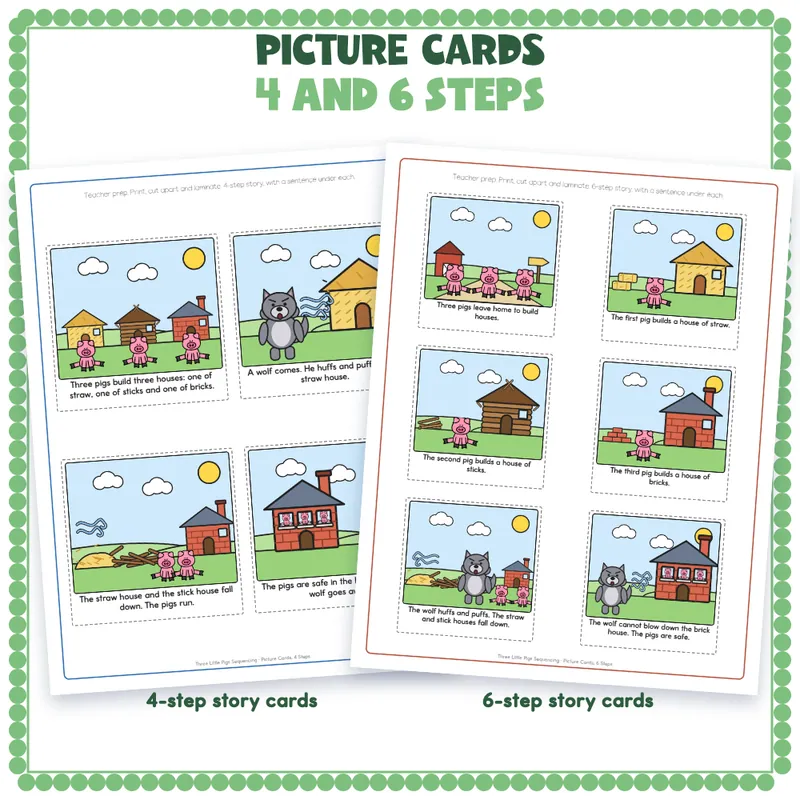
- A 4-step story and a 6-step story, 10 drawn pictures in all, with our own sentence under each.
- 12 student pages: two look-and-tell pages, a First-Next-Then-Last word bank, two number pages, two cut-and-glue pages, three writing pages, a tell-about-the-story page and a what-happens-next page.
- 4 picture-card sheets (20 cards): the 4-step and the 6-step story, each with a sentence under every card and again with pictures only. Print, cut apart and laminate for retelling at a table or in a pocket chart.
- Number the pictures: the pictures are printed out of order with a number box under each one.
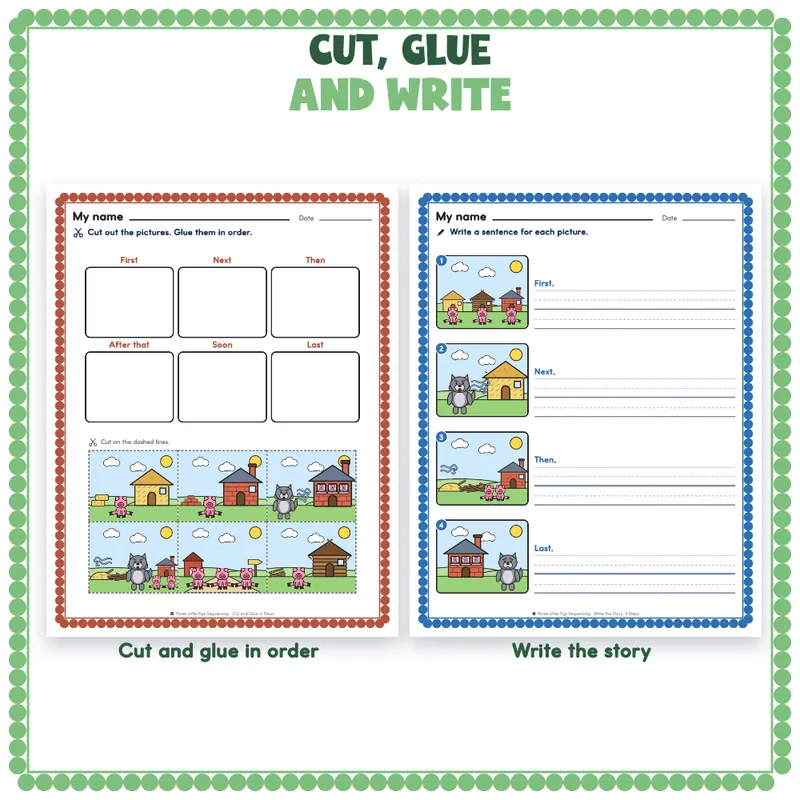
- Cut and glue: 12 pieces on two pages, six on each, edge to edge in a grid, each piece about 2.2 by 1.8 inches. The 6-step page uses six story pieces. The 4-step page has the four story pieces plus two pictures that are not in the story (a cow and a ball), and it says two are left over. Every glue box is the same size as a piece and is labeled First, Next, Then and Last (First, Next, Then, After that, Soon and Last on the 6-step page).
- Write the story: a sentence for every picture, with two writing lines each, 20 lines in all.
- Tell About the Story: draw and write who is in the story, where it happens, what goes wrong and how it ends.
- What Happens Next: four items; look at the story so far and circle the picture that comes next.
- For you: an answer key, a tracker with 13 rows, a filled example for an invented student with a roll-up by number of steps, a family page, a phrase bank of 17 starters in 5 groups, a binder cover and spine label, Start Here, the terms of use and a thank-you page with what to try next.
Built For The Child Holding The Page
Each student page has a big "My name" line, one short instruction with a small picture, and big pictures. The border color and a small shape in the page foot show the story length (a circle for 4 steps, a square for 6 steps). Nothing on a student page is written for an adult.
Type In, Or Print
The name and date on every student page, the number boxes, the sentence lines, the tracker, the roll-up, the family page and the notes areas are type-in fields in any PDF reader. You can also print any page. Print at 100 percent with fit-to-page turned off so the cut pieces stay a comfortable size. This is a fillable PDF; it is not a Google Slides or PowerPoint file.
Who This Is For
Kindergarten, 1st and 2nd grade classrooms, self-contained and resource rooms, centers, speech and language groups, and families who want a clear picture retelling of a story children already know. Your team decides which length each child works on.
What This Is, And What It Is Not
This is working paper for story sequencing practice. The answer key shows the order of the pictures, and any sentence that says the same thing is right. It has no scores, no benchmarks and no grade-level claims. It is not a reading program, and it does not include a published book: the story is retold in our own words.