Check In Check Out Behavior Sheet
- 21 pages
- 6th, 7th, 8th, 9th, 10th, 11th, 12th
- PDF, fillable
$2.50 $5.00 on Teachers Pay Teachers
Half the Teachers Pay Teachers price. The same PDF, sold direct.
DownloadOr get it with All-Access: pick any 20 resources a month for $7.
New here? Your first month of All-Access is half off with code TEACHERTOK
Already bought this, or a member?
Instant download. One teacher's license: colleagues need their own copy. Each file carries a license number.
Also on Teachers Pay Teachers: see the Bright Path Sped store
About this resource
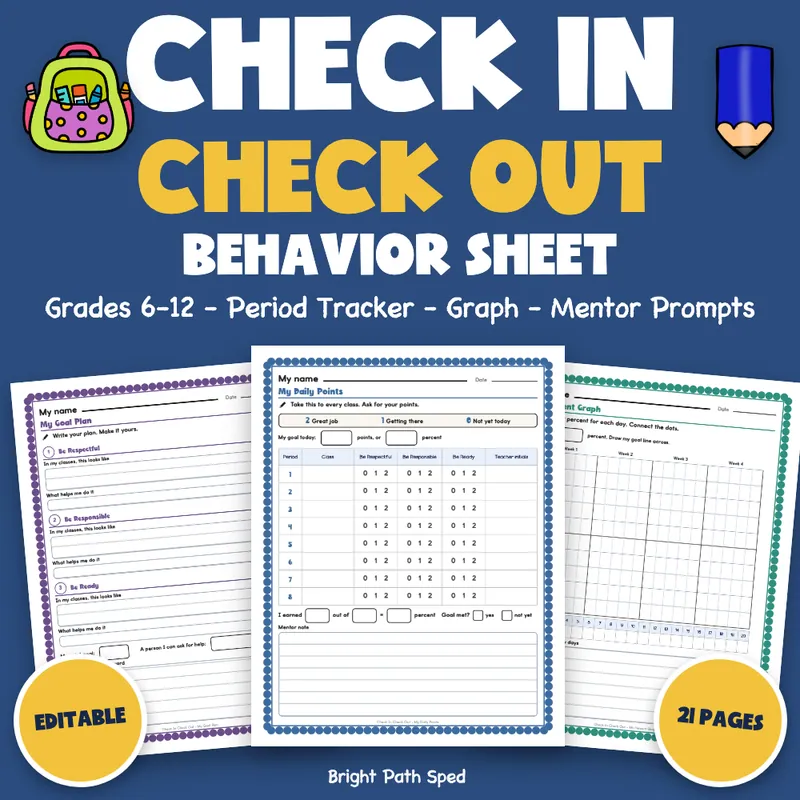
Running check in check out for a middle or high school student? One point sheet goes to every class, each teacher marks it in a few seconds, and the mentor adds it up at the end of the day. This set has the period-by-period sheet, the weekly sheet, the graph, the student's own goal plan and the conversation prompts, so nothing has to be made from scratch. Print it, or type into it.
EVERYTHING INSIDE (21 pages)
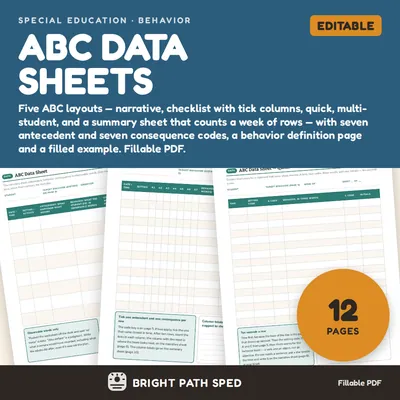
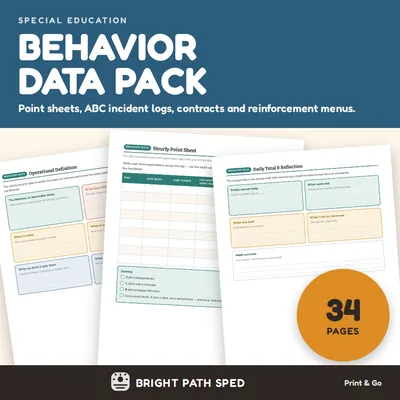
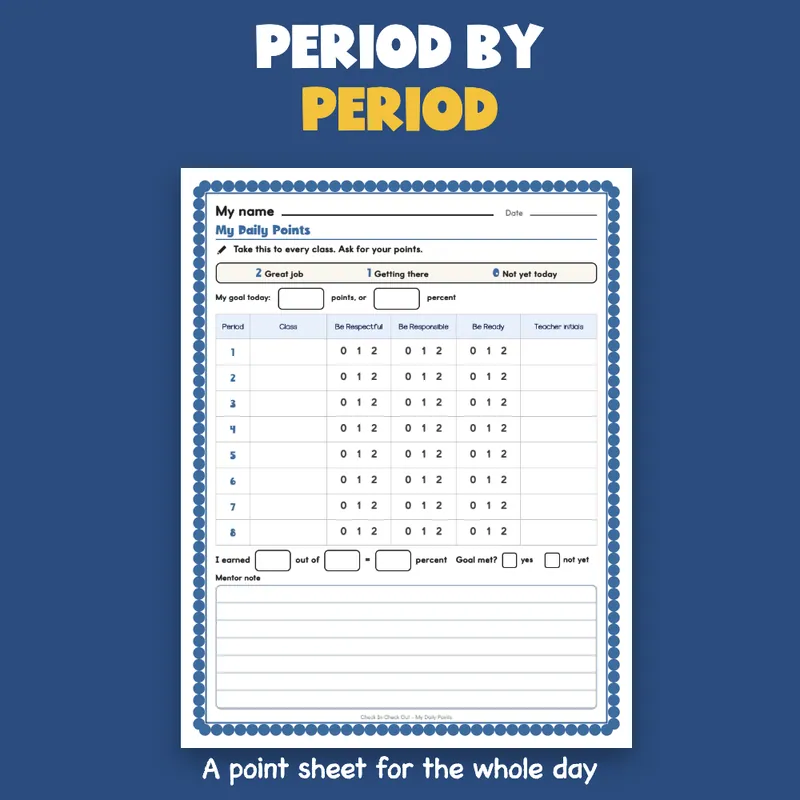
- 3 daily point sheets: 8 periods by 3 expectations (be respectful, be responsible, be ready) with 0-1-2 to circle, a 4-block version with a comment on every block, and a blank sheet where you type your own expectations and your own words for 2, 1 and 0
- Every daily sheet has a goal box, a points-earned / points-possible / percent line, a goal-met check and a mentor note
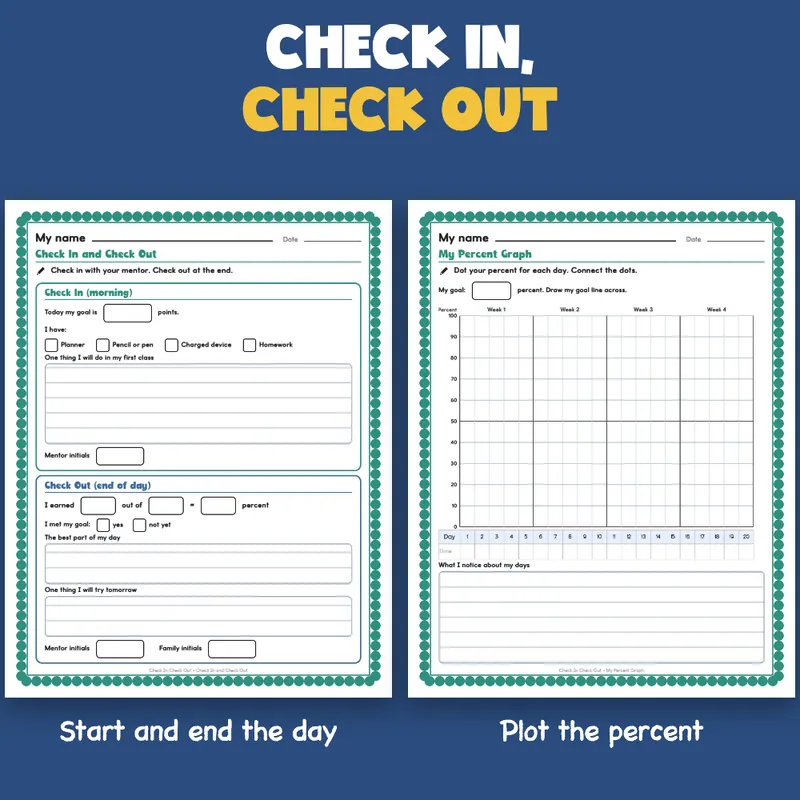
- 1 check-in and check-out slip (supplies check, goal for the day, best part of the day, one thing to try tomorrow, mentor and family initials)
- 1 weekly sheet (Monday to Friday, with a week total)
- 1 percent graph, 20 school days in 4 weeks, 0 to 100 percent, hand-plotted, with a goal line and a row for dates
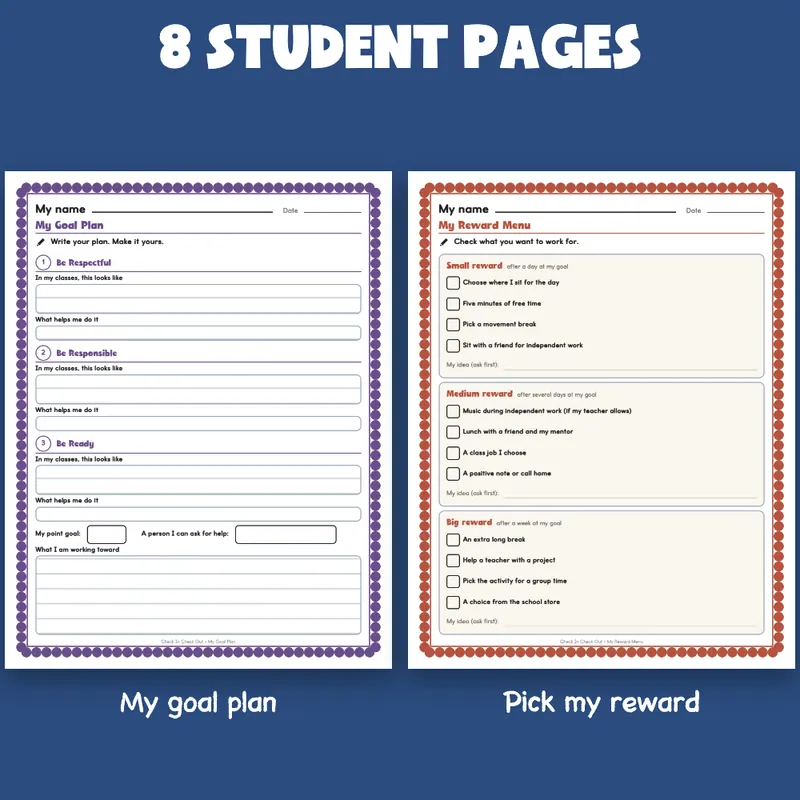
- 1 student goal plan (what each expectation looks like in my classes, what helps me)
- 1 weekly reflection for the student (what worked, what was hard, one thing to try)
- 1 reward menu the student picks from: 12 rewards in 3 tiers, plus a blank line in each tier for the student's own idea (ask first)
- 16 mentor prompt cards: 8 for check-in and 8 for check-out, each with a notes line
- 8 comment starters in observable language, on the how-to page
- 1 how-to page for adults, with the point math written out
- 1 family note with blanks for your own words
- 1 team review page that rolls four weeks up
- 2 filled example pages for an invented student (one day, one week with the graph dotted in)
- 1 binder cover and 6 divider labels (cut by the teacher)
- Start Here and a thank-you page
8 of the 21 pages are the ones the student carries or writes on, each with a "My name" line and one short instruction. The rest are for the mentor and the team.
How It Runs
1. Check in: greet the student, look at the goal, check supplies, ask one prompt.
2. The student takes the sheet to every class. Each teacher marks 2, 1 or 0 for each expectation and initials.
3. Check out: add the points, find the percent, name one thing that went well, plan for tomorrow.
4. Dot the percent on the graph, fill in the weekly sheet, and send the family note when you choose.
The Point Math Is Written Out
A period is worth 3 expectations x 2 points = 6. A full 8-period day is 48 possible points. A period the student was not in is left out of both numbers. The filled example (an invented student) shows a 7-period day: 35 of 42 points, 83 percent, against a goal of 80 percent.
Type In, Or Print
The class and initials cells, the goal boxes, the totals, the ruled boxes and the check boxes are type-in fields in any PDF reader: click one, type, then save. The blank sheet lets you retype the three expectations and the meaning of 2, 1 and 0. The same pages print clean in black and white. This is a fillable PDF; it is not a Google Slides or PowerPoint file.
Who This Is For
What This Is, And What It Is Not
A set of pages to run a daily point sheet, start a conversation and keep the numbers. It is not a school policy, a behavior plan, a screener or a clinical tool, and it does not state a goal percent, a reward rule or a next step: there are blank lines for yours. The rewards are examples; your school decides what is offered. Every student in the file is invented, and the filled example says so.